Indian Military Approves Large-Scale Acquisition of 114 Rafale Jets
Strategic and Geographical Advantages Considered... Foreign Policy Also a Factor
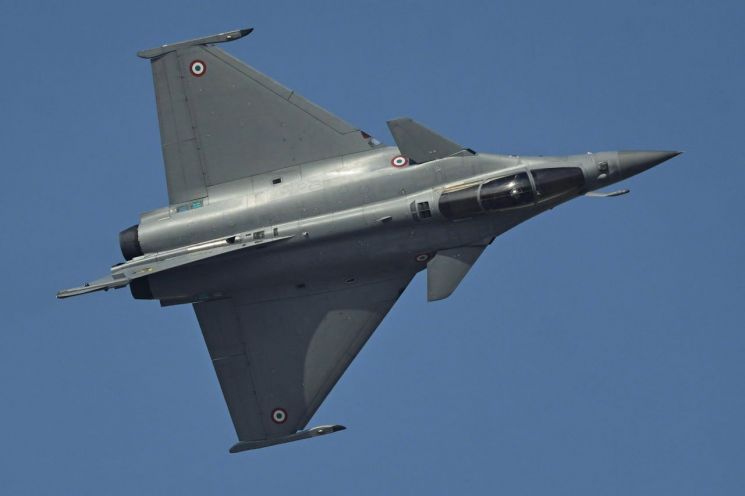
The Indian Ministry of Defense has announced a large-scale acquisition of French-made Rafale fighter jets, even though one was shot down in an engagement with Pakistan last year, drawing significant attention to the reasons behind this decision. Analysts suggest that despite the shootdown incident, it would have been difficult for India to give up on the Rafale, as it is well-suited to the country's terrain and strategic needs. Some also argue that India's neutral foreign policy, aimed at avoiding excessive dependence on the United States, played a significant role in this decision.
India Approves Acquisition of 114 French Rafale Fighter Jets... Domestic Production Also Planned
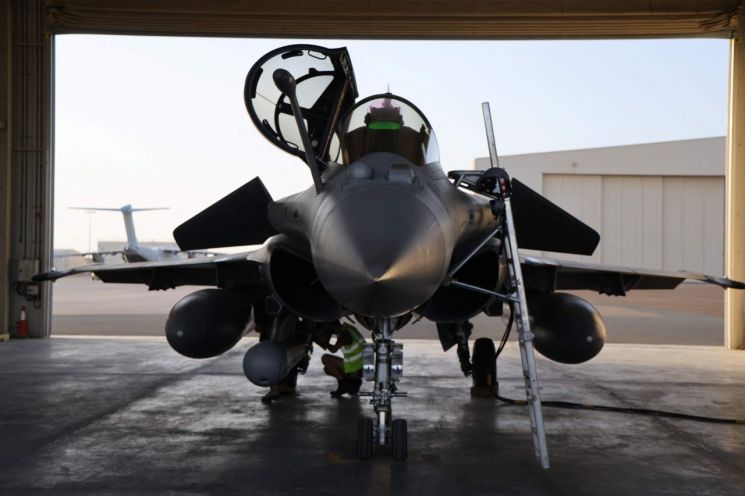
According to Bloomberg News on the 18th (local time), India's Defense Procurement Board has approved a plan to acquire 114 French Rafale fighter jets. This marks the first time that India, which has primarily relied on Russian-made fighters, will acquire more than 100 French-made fighter jets at once. Until now, India had operated about 30 Rafale jets, and in May last year, one Rafale was shot down by a Chinese-made PL-15 missile during an engagement with Pakistani forces.
Afterward, there were predictions that further acquisition of Rafale jets would be unlikely, but the Indian government defied expectations by proceeding with a large-scale purchase. An internal investigation by the Indian military found that the cause of the shootdown was not a defect in the Rafale itself but rather shortcomings in the Indian military's information warfare and operational execution, so the Rafale acquisition plan remained unchanged.
Alongside this large-scale Rafale acquisition, domestic production and partial technology transfer are also expected. The Indian and French governments are reportedly planning for about 80% of the 114 Rafale jets to be co-produced in India with Dassault, the French manufacturer, and are pursuing a technology transfer agreement. Once the technology transfer is complete, it is expected that about 50 to 60 percent of the Rafale's components-including the airframe, electronics, and engines-will be manufactured using Indian-made parts.
Optimized for India's Terrain and Strategy... Also Aims to Reduce U.S. Dependence
The main reason the Indian government ultimately selected the Rafale is that it is considered the most effective fighter jet for India's terrain and operational strategies. The Rafale boasts more real-world combat experience and can be deployed across a wider range of environments compared to other fighters in its class.
According to The Guardian, the Rafale has demonstrated a sortie rate of over 90% in countries that have adopted it. The sortie rate measures how frequently a fighter can be deployed to the battlefield within a 24-hour period; the Rafale's ease of maintenance and weapons replacement allows for rapid redeployment, which is a significant advantage in actual combat. For comparison, the Russian Su-35-often compared with the Rafale in terms of price-can conduct three sorties in 24 hours, while the Rafale is known to be capable of five.
Additionally, the Rafale is highly regarded for its ability to conduct both high-altitude aerial combat in the Himalayan border region between China and India and short-range dogfights near the Pakistan border. Among 4.5-generation fighter jets, the Rafale offers the broadest operational range and can be equipped with more weapons relative to its airframe size, giving it a clear advantage in actual combat.
Some observers also claim that the Indian government deliberately chose the Rafale to avoid excessive military dependence on the United States or any single country. The local media outlet India News Network reported, "The top priority for the Indian Ministry of Defense in this Rafale deal was the ability to manufacture the aircraft in India and to localize a significant portion of the components," adding, "Amid growing strategic uncertainties, India is prioritizing strengthening its own defense production capabilities to avoid being swayed by any particular country."
© The Asia Business Daily(www.asiae.co.kr). All rights reserved.
![Clutching a Stolen Dior Bag, Saying "I Hate Being Poor but Real"... The Grotesque Con of a "Human Knockoff" [Slate]](https://cwcontent.asiae.co.kr/asiaresize/183/2026021902243444107_1771435474.jpg)


















