Gyeonggi Province ushered in the era of “200,000 electric vehicles and 10,000 hydrogen vehicles” last year.
On January 19, Gyeonggi Province announced that, as of the end of last year, the number of registered eco-friendly vehicles in the province had reached 207,075 electric vehicles and 10,064 hydrogen vehicles. Accordingly, Gyeonggi Province will expand electric vehicle charging stations and install 12 additional hydrogen charging stations. Currently, 45 hydrogen charging stations are in operation.
This year, Gyeonggi Province will provide a total of 692.8 billion won in subsidies to residents who purchase electric or hydrogen vehicles to further promote the adoption of eco-friendly cars. This is a 22% increase compared to the previous year’s 568.7 billion won.
Gyeonggi Province has allocated 464.7 billion won for electric vehicle purchase subsidies. The subsidy amounts are as follows: up to 8.3 million won for passenger cars, up to 91 million won for vans, up to 149.5 million won for children’s school buses, and up to 18.3 million won for trucks.
Notably, starting this year, residents who scrap or sell an internal combustion engine vehicle that is more than three years old after its initial release and purchase an electric vehicle will receive an additional subsidy of up to 1.3 million won. This measure aims to reduce the financial burden on residents purchasing electric vehicles.
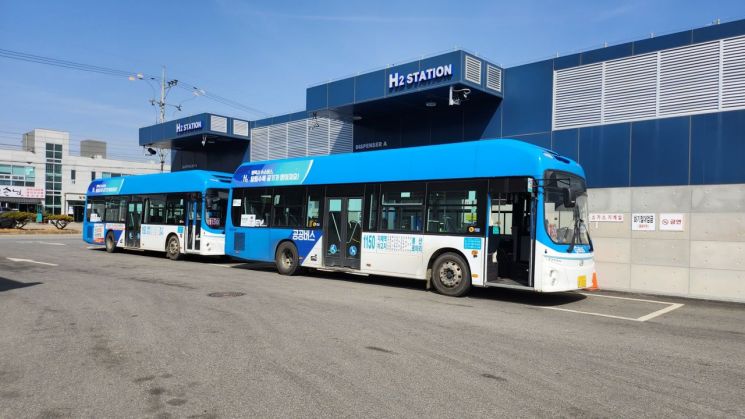
The budget for hydrogen vehicle purchase subsidies has been set at 228.1 billion won. The subsidy amounts are up to 35 million won for passenger cars and up to 346.4 million won for buses. Considering the increased demand from hydrogen bus operators, who benefit from long-distance operation, the province will support 535 hydrogen buses, a 72% increase compared to last year.
Although electric vehicles experienced a temporary stagnation in demand due to the “casualization” (a temporary lull before mass adoption), a record 39,736 units were supplied last year, representing a 33% increase compared to 2024. The supply of hydrogen vehicles, which had previously lagged due to a lack of diverse models, also rose to 1,759 units last year-a 155% increase compared to 2024-following the launch of new hydrogen passenger car models and greater variety in bus models.
Residents wishing to purchase an eco-friendly vehicle can visit a nearby car dealership for guidance. After consultation, they can fill out and submit a purchase support application and contract, after which the dealership will handle the necessary paperwork with the relevant city or county office.
Jung Hankyu, Director of the Advanced Mobility Industry Division of Gyeonggi Province, stated, “As demand for eco-friendly vehicles begins to recover in earnest, we will actively promote support programs this year so that Gyeonggi Province can play a leading role in accelerating the adoption of eco-friendly vehicles. We encourage many residents to participate in the eco-friendly vehicle purchase support program.”
© The Asia Business Daily(www.asiae.co.kr). All rights reserved.

















