282 Billion Won Invested in Food Tech Research Support Center
Establishing a Virtuous Food Cycle System
Integrating School Meals, Branding, and Local Food Policies
Expanding Manufacturing City Capabilities into the Agri-Food Sector
Presenting a Model for Urban-Rural Coexistence
Starting in 2026, Gumi City in North Gyeongsang Province will actively promote the food tech industry by integrating advanced technologies, aiming to establish a “virtuous cycle for food” that connects production, processing, distribution, and consumption. The city plans to leverage its strengths as a manufacturing hub to expand into the agri-food sector and create a new industrial model for urban-rural coexistence.
The central hub of this initiative is the Smart Manufacturing Food Tech Research Support Center. Gumi City was selected as the final recipient in the Ministry of Agriculture, Food and Rural Affairs’ “2026 Food Tech Research Support Center Establishment” project, and will invest a total of 28.2 billion won in the Imun-ri area of Sunsan-eup over three years, from 2026 to 2028.
This project, which includes 12.5 billion won in national funding, will create a smart manufacturing demonstration and research facility with a total floor area of approximately 3,574 square meters.
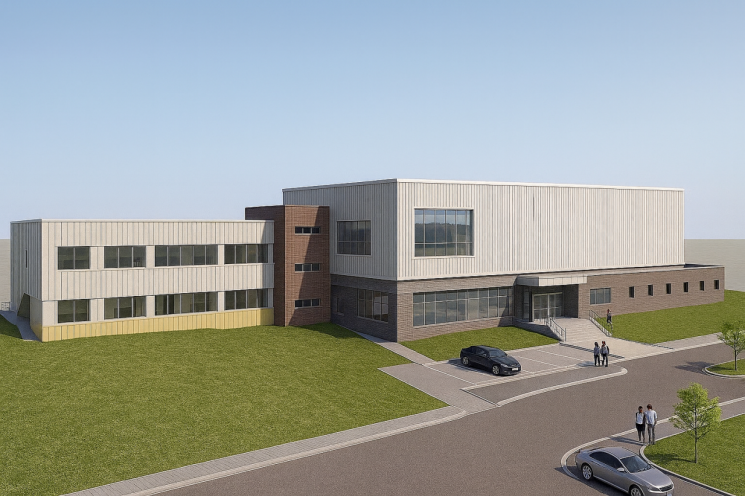
The center will play a key role in designing AI data-based smart food manufacturing processes, pilot production demonstrations, and supporting quality and hygiene management, thereby facilitating the digital transformation of food manufacturing processes.
By linking with local food industry infrastructure such as the Agricultural Product Processing Technology Support Center and the Gyeongbuk Branch of the Korea Food Research Institute, which is scheduled for completion in 2028, the city will establish a comprehensive support system covering the entire cycle from research to commercialization. In addition, Gumi’s accumulated expertise in smart manufacturing from the electronics industry will be integrated to strengthen the foundation for the local food tech industry’s growth.
Another pillar of the virtuous food cycle is school meals. Starting in 2026, Gumi City will revamp its school meal support program to significantly expand the supply of processed foods made from local agricultural and livestock products.
When schools and kindergartens purchase items such as sauces, rice cakes, tofu, traditional sweets, yogurt, and scorched rice made with more than 60% locally produced agricultural and livestock products, the city will subsidize 50% of the purchase cost. The program will cover approximately 180 kindergartens, elementary, middle, high, and special schools in the city, benefiting around 57,000 students.
To support this, the city will increase the related budget by 27% from 579 million won to 736 million won compared to 2025, and will also expand opportunities for local food manufacturing and processing companies to participate in school meal programs.
Gumi City will also pursue a branding strategy to enhance the competitiveness of local agricultural specialties. The budget for promoting the joint brand “Ilseonjeongpum” has been increased from 100 million won to 180 million won to diversify promotional channels. In addition to existing billboard advertisements in major metropolitan areas, the city will strengthen online promotions through YouTube and social media, aiming to raise awareness of Gumi as a producer of clean agricultural products beyond its image as an industrial city.
In addition, Gumi City will establish a comprehensive regional food policy plan (2026-2030) to systematize its mid- to long-term food strategies.
Focusing on the Gumi Food Integrated Support Center, the city will work to strengthen the operation of local food direct sales stores, establish a planned production system, and expand welfare meal programs. To this end, the city has increased its contribution to the Integrated Support Center from 1.35 billion won to 1.97 billion won.
Gumi City plans to use the establishment of the Food Tech Research Support Center as an opportunity to accelerate industrial innovation by combining manufacturing capabilities with the agricultural sector, and to inject new vitality into local agriculture through a virtuous food cycle structure that fosters growth for both producers and consumers.
Gumi Mayor Kim Jangho stated, “This project is significant in that it lays the administrative foundation for supporting the digital transformation of agri-food manufacturing processes,” adding, “We hope the mid- to long-term food policies will be implemented without a hitch.”
© The Asia Business Daily(www.asiae.co.kr). All rights reserved.
![Clutching a Stolen Dior Bag, Saying "I Hate Being Poor but Real"... The Grotesque Con of a "Human Knockoff" [Slate]](https://cwcontent.asiae.co.kr/asiaresize/183/2026021902243444107_1771435474.jpg)
















