Trump to Deliver Special Address on January 21
European Leaders Scheduled to Speak One Day Earlier
NATO Alliance Fractures Over Trump's Ambition to Annex Greenland
Trump Imposes Tariffs on Eight European Countries... EU Considers Retaliatory Tariffs
U.S. Treasury Secretary and Former Vice President Voice Support for Greenland Annexation
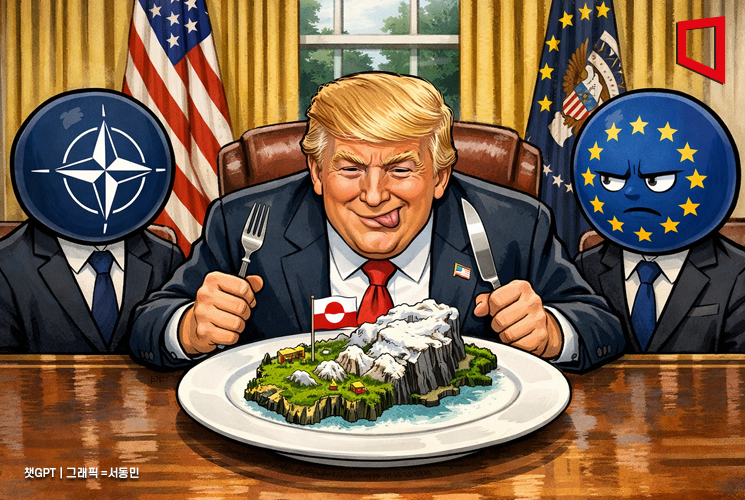
The "Atlantic Alliance," which has supported the Western bloc since World War II, now faces the risk of collapse due to the United States' ambitions to annex Greenland. Against this backdrop, global attention is focused on U.S. President Donald Trump's special address at the World Economic Forum (WEF) in Davos.
According to Bloomberg on January 18 (local time), President Trump is scheduled to deliver a special address at the Davos Forum on January 21 at 8:30 a.m., speaking for about 45 minutes. This marks his third attendance at the event during his presidency. Last year, shortly after the start of his second term in January, he delivered his WEF speech virtually.
What the world is watching in this speech are President Trump's remarks on current issues that could impact the global economy, such as the Russia-Ukraine war, anti-government protests in Iran, Venezuela, and Greenland. Tensions between Trump and major European countries over Greenland have been escalating.
As President Trump continued to express his ambitions to annex Greenland, on January 15, eight countries-Denmark, Norway, Sweden, France, Germany, the United Kingdom, the Netherlands, and Finland-decided to deploy small military units, including reconnaissance troops, to Greenland. In response, on January 17, President Trump posted on Truth Social, stating, "Starting February 1, a 10% tariff will be imposed on all goods exported to the United States from the aforementioned countries," and "From June 1, tariffs will increase to 25% and will remain in place until an agreement is reached for the United States to fully purchase Greenland."
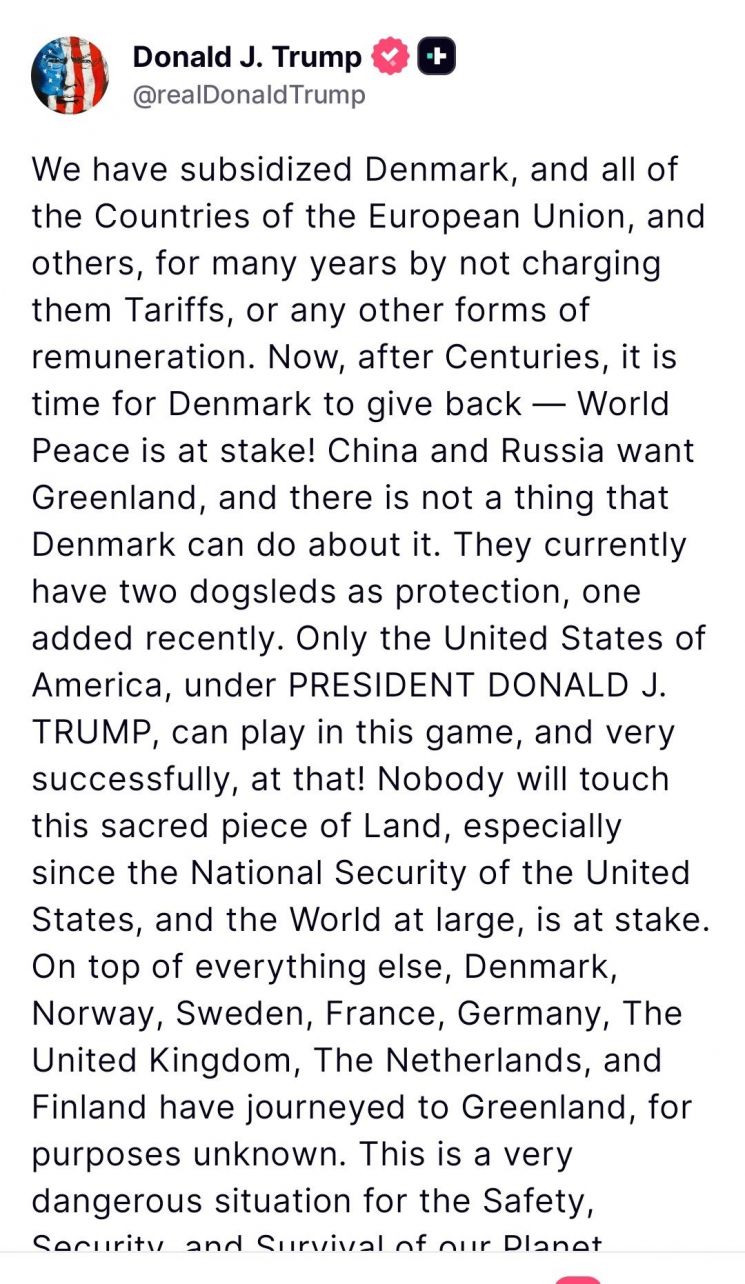
In response to President Trump's tariff threats, the European Union is considering countermeasures. One option under review is the introduction of the Anti-Coercion Instrument (ACI), known as the "trade bazooka." The ACI is a measure that restricts trade in services, foreign direct investment, financial markets, public procurement, and intellectual property rights against third countries that economically threaten the EU or its member states. Although the EU legislated the ACI in 2023, it has never been used. Last year, during trade negotiations with the United States, the EU even considered imposing retaliatory tariffs worth 159 trillion won.
Such a strong European response is expected to serve as leverage to enhance negotiating power when meeting President Trump at the Davos Forum. One day before President Trump's special address, European Commission President Ursula von der Leyen, French President Emmanuel Macron, and Canadian Prime Minister Mark Carney will deliver speeches. They are reportedly planning to emphasize the importance of the North Atlantic Treaty Organization (NATO) at this event.
Some observers suggest that, given the importance of the NATO alliance, the conflict between President Trump and the EU could be dramatically resolved. However, considering that both former and current officials of the Trump administration are emphasizing the security significance of annexing Greenland, it remains uncertain whether President Trump will easily back down.
U.S. Treasury Secretary Scott Bessent said in an interview with NBC on January 18, "European leaders will come to realize that they need to remain under America's security umbrella," adding, "If Russia or another country attacks Greenland, we will be drawn into that war."
He continued, "We are building the Golden Dome, the next-generation missile defense system. President Trump is strategic, and he is looking ahead to potential conflicts in the Arctic beyond this year and next." In particular, Secretary Bessent commented on the EU's consideration of retaliatory tariffs against the United States, stating, "The trade agreement is not yet finalized, and emergency measures (additional tariffs) could be very different from other agreements." This is interpreted to mean that if Europe imposes retaliatory tariffs, the United States could respond with additional tariffs of its own.
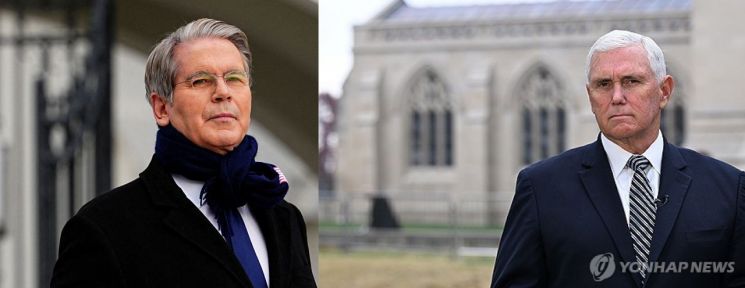 Scott Bessent, U.S. Treasury Secretary (left), and former Vice President Mike Pence Photo by Reuters Yonhap News
On the same day, former Vice President Mike Pence, who served in the first Trump administration, said in an interview with CNN, "Right now, I think the issue is not 'what' the President is trying to achieve, but 'how' he is trying to achieve it," adding, "The 'what' being pursued here is entirely in line with America's interests."
However, former Vice President Pence also stated, "In my view, I am concerned about the use of questionable constitutional authority to unilaterally impose tariffs on NATO allies to achieve this goal," and, "I am as concerned about this as I am about the threat of military invasion (of Greenland). That threat no longer seems to be under discussion," he added.
The Davos Forum is an annual gathering held every January in Davos, a Swiss winter resort, where leaders of major countries and global business executives convene to discuss global issues. This year, under the theme "A Spirit of Dialogue," the forum will focus on five key questions aimed at connecting a divided world and securing future growth drivers.
Bloomberg reported that President Trump may address issues that could affect the global economy, such as the Russia-Ukraine war, anti-government protests in Iran, Venezuela, and Greenland. However, with this year's midterm elections approaching, it is expected that he will use this opportunity to announce detailed policies for stabilizing housing prices in order to strengthen his support base.
© The Asia Business Daily(www.asiae.co.kr). All rights reserved.



















