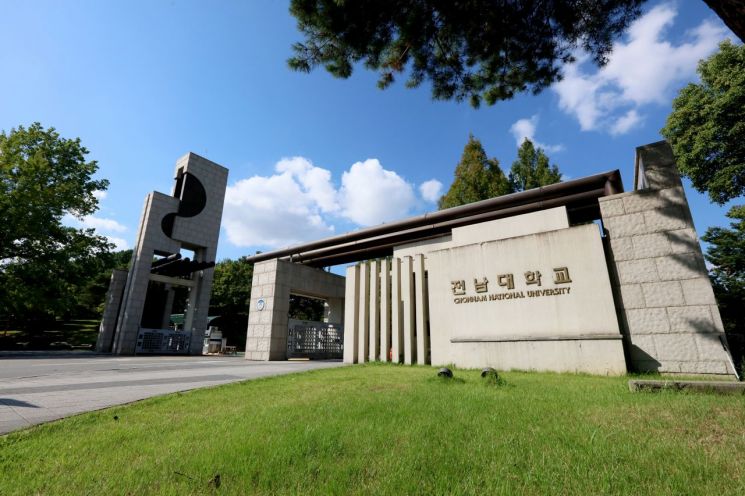
Jeonnam National University announced on January 19 that a research team led by Professor Nam Jutaek from the College of Pharmacy has developed a new metallo-immunotherapy nanoparticle formulation technology that can overcome the limitations of existing immuno-oncology drugs.
Recently, the paradigm of cancer treatment has shifted toward immuno-oncology drugs, which activate the patient's immune system to eliminate cancer cells through anti-cancer immune responses. In particular, cyclic dinucleotides (CDNs), which activate the STING (Stimulator of Interferon Genes) pathway, are being actively studied in clinical settings. However, these negatively charged small molecules have critical drawbacks, such as being easily degraded and excreted in the body and exhibiting low cell membrane permeability, which limits their effectiveness.
To address these issues, the research team developed a nano-immunotherapeutic agent by loading a manganese ion and CDN coordination complex into the internal pores of porous silica nanoparticles, allowing both manganese ions and CDNs to act as active pharmaceutical ingredients. As a key design element, manganese ions, which are essential minerals in the body, can amplify the activation of the STING pathway, and the use of biodegradable porous silica nanoparticles enhances biocompatibility.
The biodegradable silica nanoparticles gradually decompose within the tumor microenvironment, releasing manganese and CDNs. The released manganese and CDNs induce immunogenic cancer cell death and strongly stimulate the STING pathway in dendritic cells, thereby activating T cells and producing an in situ anti-cancer vaccine effect. Additionally, the in situ anti-cancer vaccine modulates the responses of various immune cells, including macrophages, NK cells, MDSCs (myeloid-derived suppressor cells), and Tregs (regulatory T cells), converting "cold tumors" with no anti-cancer immune response into "hot tumors" with active anti-cancer immune responses.
In vivo animal experiments using a melanoma cancer model confirmed that not only was the local tumor effectively treated, but a systemic immune response was also induced, which treated lung metastases and suppressed cancer recurrence. Furthermore, when combined with an aPD-1 antibody-based immune checkpoint inhibitor, the synergistic anti-cancer immune response enabled even more effective treatment of both local and metastatic lung tumors.
This study demonstrates the potential of metallo-immunotherapy nanotechnology, which can enhance the efficacy of immunotherapy using biocompatible nanomaterials, and is expected to serve as a nanoformulation platform for various pharmaceuticals in the future.
The research was supported by the Mid-Career Research Program and the Focused Basic Research Program of the National Research Foundation of Korea. The results were published in the Journal of Controlled Release.
© The Asia Business Daily(www.asiae.co.kr). All rights reserved.
![User Who Sold Erroneously Deposited Bitcoins to Repay Debt and Fund Entertainment... What Did the Supreme Court Decide in 2021? [Legal Issue Check]](https://cwcontent.asiae.co.kr/asiaresize/183/2026020910431234020_1770601391.png)