Ministry of Health and Welfare Expects to Fill Regional Healthcare Gaps
Forty New Specialists to Be Recruited in Eight Essential Fields Including Internal Medicine, Surgery, Obstetrics and Gynecology, and Pediatrics
The pilot project for the "Contract-Based Regional Essential Doctor System" will be further expanded to address regional disparities in healthcare and the shortage of medical personnel in local areas.
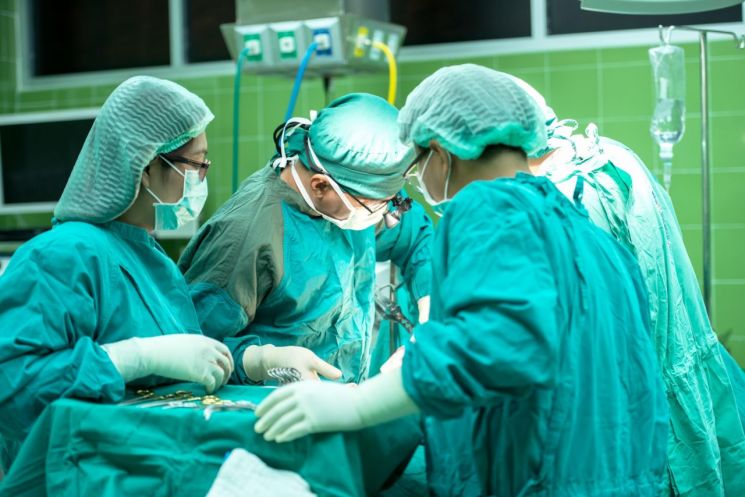
The Ministry of Health and Welfare announced on January 19 that it will conduct an open call to select two new metropolitan local governments to participate in the pilot project for the Contract-Based Regional Essential Doctor System, with applications accepted until February 6.
This project is a joint initiative by the government and local authorities to support regional work allowances and improve living conditions, enabling doctors (specialists) to provide essential medical services and work long-term at regional medical institutions of general hospital level or higher. Introduced in July last year, the program recruited a total of 90 doctors in four regions-Gangwon, Gyeongnam, Jeonnam, and Jeju-by the end of the year.

In particular, the legal basis for implementing the project was clarified with the enactment of the "Act on the Training and Support of Regional Doctors" in December last year.
Through this open call, two cities or provinces will be selected, each recruiting 20 specialists as contract-based regional doctors, for a total of 40. The government will allocate a budget of 2,794 million won for this purpose.
The selected doctors will receive a regional work allowance of 4 million won per month in addition to their salary, along with benefits provided by each local government, such as housing, transportation, children's education, and leisure support.
Eligible applicants are specialists who will work at regional medical institutions of general hospital level or higher. The eligible medical fields are limited to eight essential specialties most urgently needed in the field: internal medicine, surgery, obstetrics and gynecology, pediatrics, emergency medicine, cardiovascular and thoracic surgery, neurology, and neurosurgery.
The Ministry of Health and Welfare will accept project operation plans from local governments until February 6, finalize the target regions after evaluation by the selection committee, and begin the recruitment process at medical institutions in the selected areas. Full-scale support is expected to begin in the second half of the year.
Ko Hyungwoo, Director of Essential Medical Support at the Ministry of Health and Welfare, stated, "Cooperation between local governments and medical institutions is more important than ever to overcome regional healthcare challenges," and urged local governments to actively participate in this pilot project, which will be expanded from this year."
© The Asia Business Daily(www.asiae.co.kr). All rights reserved.
![Clutching a Stolen Dior Bag, Saying "I Hate Being Poor but Real"... The Grotesque Con of a "Human Knockoff" [Slate]](https://cwcontent.asiae.co.kr/asiaresize/183/2026021902243444107_1771435474.jpg)

















