"Concerns Over Compromising Fairness"
A candidate who failed the practical section of the National Medical Licensing Examination demanded the disclosure of the grading criteria, but the court rejected the request, stating, "If disclosed, the fairness and very existence of the practical examination could be threatened."
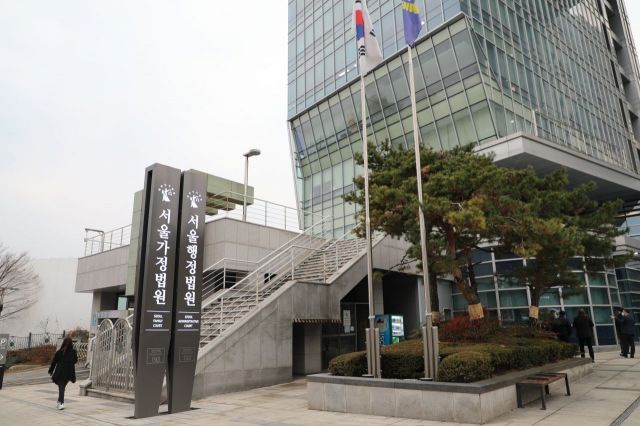
According to the legal community on January 19, the Seoul Administrative Court's Division 8 (Presiding Judge Yang Sunjoo) recently ruled against the plaintiff in a lawsuit filed by an individual, identified as A, who failed the practical section of the National Medical Licensing Examination and sought to overturn the Korea Health Personnel Licensing Examination Institute's (KHPLEI) refusal to disclose information.
A received a total score of 717.897 in the practical examination, falling short of the passing score (718 points) by 0.103 points. The number of passing items was also five, one short of the required six. In response, A requested the KHPLEI to disclose the grading elements, the scores for each stage of the grading scale, performance characteristics, and the criteria scores for passing and failing for the items not passed.
However, the KHPLEI determined that disclosing this information could significantly impede the fair execution of examination work and concluded that it falls under the non-disclosure provisions of the Information Disclosure Act. A filed a lawsuit, arguing, "The examination has already ended, and partial disclosure is possible, so a complete refusal to disclose is unlawful."
The court sided with the KHPLEI. The panel stated, "The practical section of the National Medical Licensing Examination is operated using a question bank system and is evaluated according to detailed grading items. If the content and structure of the grading items are disclosed, candidates may prepare for the exam based on the disclosed criteria, making it difficult to conduct a genuine assessment of their abilities."
The court added, "Due to the nature of the exam, grading items inevitably involve a certain degree of subjectivity. If these are disclosed, disputes over the validity of the criteria would become frequent, causing significant disruptions to the grading process itself, and ultimately, the very existence of the practical examination could be jeopardized." The court concluded that the KHPLEI's refusal to disclose the information was lawful.
© The Asia Business Daily(www.asiae.co.kr). All rights reserved.

















