Jeonbuk National University Gochang Campus, a Sanctuary for Specialized Hanok Education
Former Researchers and History Majors Fuel Passion for Hanok Training
Yeonhwajeong Library in Jeonju Blends Tradition and Modernity with Natural Ventilation and Micropile Construction
Professor Nam Haekyung: "Producing Talents Skilled in Both Theory and Practice Is the Key to Industrializing Hanok"
Ministry of Land to Recruit Additional Training Institutions and Consider Industry-Academia-Research Cluster
"People from cultural heritage restoration companies often say this: those who only learn with their heads get lost on site. That's why I came to learn with my own hands. You have to physically understand the structure through hands-on practice to be able to draw blueprints right away."
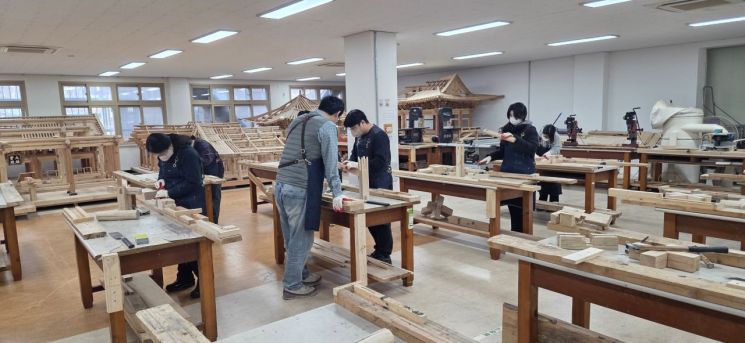
On January 16, at the Jeonbuk National University Gochang Campus, a campus specializing in hanok, Lee Mo (41) was fully immersed in the scent of wood as he pushed a large plane. He said, "I've loved history since I was young and often went on field trips. Seeing damaged cultural heritage, I wanted to repair them myself. Jongmyo Jeongjeon, which is praised by world-renowned architects, is undoubtedly the greatest architectural structure. My dream is to become a true craftsman who continues our culture."
After working for about five years as a researcher in public administration, Lee left his stable job due to his passion for Korean cultural heritage and hanok, and picked up a plane. He is currently a third-year student in the Department of Hanok Architecture at Jeonbuk National University and plans to work at cultural heritage restoration sites after graduation. Among those sweating through hands-on training at the workshop was another third-year student, Jin Bin (33). Having majored in history and become fascinated by the reality of hanok, he said, "Jeonbuk National University Gochang Campus is the only place in the country with such a well-equipped practical training environment, so I chose to come here."
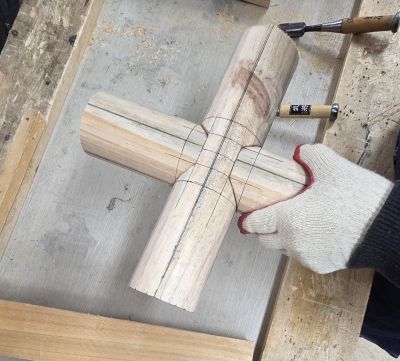
The process they were practicing was "Wangjji matching" (Sambunteok matching), a core technique for constructing the framework of a hanok, which involves aligning timber members orthogonally. The "Hanok Architecture Policy Field Visit" event, hosted by the Ministry of Land, Infrastructure and Transport from January 15 for two days at the Gochang Campus and hanok buildings in Jeonju, was an opportunity to witness not only the government's commitment to fostering hanok as a strategic industry beyond simple traditional preservation, but also the passion at the field level.
Nam Hae-kyung, Professor Emeritus at Jeonbuk National University, explained, "Jeonbuk National University is the only university in the country with a Department of Hanok Architecture, and the Gochang Campus, as a 'Hanok Bauhaus' that combines theory and practice, is producing skilled professionals." "Bauhaus" refers to the comprehensive art school founded in early 20th-century Germany, which emphasized the combination of art and technology and became the foundation of modern design. The comparison highlights that the Gochang Campus is not just about building houses, but is a "sanctuary of specialized hanok education" that teaches both the artistry and the specialized construction techniques of hanok.
If the passion of Gochang nurtures "people," the Yeonhwajeong Library at Deokjin Pond in Jeonju is a "masterpiece" created by those people. The architect in charge of this project, Lim Chae-yeop, CEO of Taekwon-V Architects, is a professional who completed the "Hanok Specialist Training Program" at the Gochang Campus.
Opened in 2022, Yeonhwajeong Library is a complex cultural space that harmonizes traditional grandeur with modern sensibilities through its "ㄱ"-shaped hip-and-gable roof. CEO Lim recalled, "To meet the project budget, we initially considered Russian timber, but Jeonju City insisted on using only domestic timber, investing an additional 700 million won out of love for the project. I devoted myself to this building not for the design fee, but out of pride as a hanok specialist."
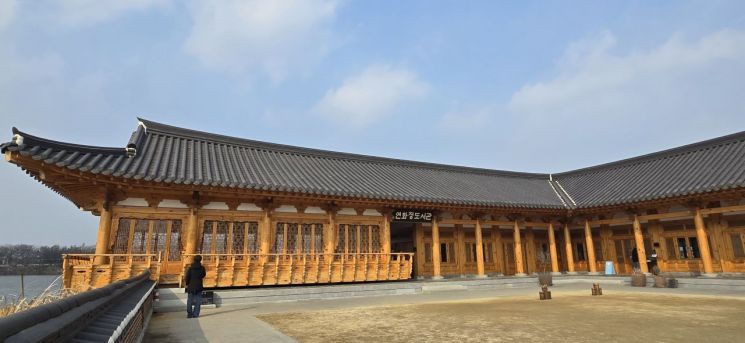
In particular, Yeonhwajeong was built using the micropile method, driving columns directly into the lakebed, creating the picturesque impression of a boat floating on water. The numaru, designed 45 centimeters higher than the library space, offers an optimal view of the pond's surface, and features a natural ventilation system that uses the temperature difference between the front and back yards-an example of the scientific wisdom of ancestors inherited in a modern way. Built without a single nail by fitting the timber members together, Yeonhwajeong Library is now a popular rest area for citizens and a tourist attraction for foreigners.
The Ministry of Land, Infrastructure and Transport will accelerate its hanok architecture promotion policy following this field visit. The government is pursuing a balanced growth strategy centered on "5 Regions and 3 Special Self-Governing Provinces," with plans to utilize hanok as an item for innovation in urban architectural design. To this end, the ministry will invest 300 million won in February to recruit additional specialized training institutions and is also considering creating a "hanok industry-academia-research cluster" that brings together design, material production, and maintenance.
Choi Areum, Director of the Architectural Culture and Landscape Division at the Ministry of Land, Infrastructure and Transport, said, "Hanok is an architectural asset that embodies the leisure and philosophy of our ancestors. We will strive to foster an ecosystem where hanok becomes a beloved landmark and everyday space, blending with local identity."
© The Asia Business Daily(www.asiae.co.kr). All rights reserved.