Workforce at Top 6 US Banks Down by 16,000
Headcount Falls to 1.09 Million, Lowest Since 2021
Net Profits Reach Highest Level Since 2021
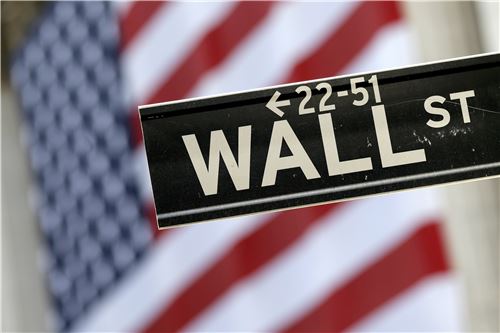 ▲Major US banks are concerned about losses due to energy company bankruptcies. The photo shows Wall Street, where major bank headquarters are located. (Photo by AP)
Major US banks reduced their workforce by more than 10,000 employees last year in an effort to cut costs. As a result, the number of employees at major banks reached its lowest level since 2021. Thanks to these workforce reductions and a booming stock market, the net profits of major banks hit their highest level since 2021.
According to Bloomberg on January 15 (local time), the total number of employees at the six largest financial institutions-JPMorgan Chase, Bank of America (BofA), Citigroup, Wells Fargo, Goldman Sachs, and Morgan Stanley-stood at 1.09 million as of the end of December last year. This represents a decrease of about 10,600 compared to the same period the previous year, marking the lowest level since 2021.
Banks had significantly expanded their workforce during the stock market boom at the height of the COVID-19 pandemic. However, as the economic downturn continued from 2022, they began implementing layoffs. Recently, many banks have reportedly been considering further workforce reductions for efficiency gains through the use of artificial intelligence (AI).
The largest restructuring last year took place at Wells Fargo. The number of Wells Fargo employees dropped by 12,000 year-on-year to 205,198. This was the result of 22 consecutive quarters of layoffs aimed at normalizing management. Wells Fargo is planning additional layoffs.
Citigroup also saw its total number of employees decrease by 3,000 compared to the previous year and plans to cut an additional 1,000 jobs. Bank of America (BofA) is reducing its workforce not through restructuring, but by refraining from new hires. The bank expects the number of employees to decrease naturally each year as retirements occur.
Morgan Stanley cut about 2,000 jobs in March last year, but ended up increasing its workforce by 2,500 as new employees were hired. Both Goldman Sachs and JPMorgan also saw their staff numbers rise. However, Goldman Sachs’ workforce increased by only 2% year-on-year, and JPMorgan’s growth rate was the lowest since the pandemic.
Contrary to the trend of workforce reduction, the net profits of the six largest financial institutions reached their highest level since 2021, according to the Wall Street Journal. The performance of investment banks (IB) was particularly notable. Last year, the five largest banks (JPMorgan Chase, BofA, Citigroup, Goldman Sachs, and Morgan Stanley) recorded trading revenue of 134 billion dollars (197 trillion won), a 15% increase from the previous year. This is the largest increase in five years.
This trend is expected to continue. David Solomon, CEO of Goldman Sachs, stated, "A very constructive environment is being created in the global M&A and capital markets sectors for 2026," adding, "There is a high possibility it will be a very good year."
The strong performance on Wall Street last year was partly influenced by US President Donald Trump. The policy uncertainty under President Trump and global tariff negotiations heightened investor anxiety, prompting banks to quickly rebalance their clients’ asset portfolios. In addition, the Trump administration’s regulatory easing and the Federal Reserve’s interest rate cuts contributed to the recovery of the M&A market, according to the Wall Street Journal.
© The Asia Business Daily(www.asiae.co.kr). All rights reserved.
















