Naver and NC AI, Eliminated in the First Phase, Declare Non-Participation in the Revival Round
Expected to Focus on Advancing Their Own AI Models
Kakao Also Says, "Not Considering a Second Attempt"
Companies Making a Second Attempt Must Dev
With the government’s Independent Artificial Intelligence (AI) Foundation Model Project unexpectedly opening additional recruitment for elite teams, attention is turning to which companies might join the project. However, since no major companies have expressed interest in participating in the so-called “second-chance round,” the selection of additional successful candidates has failed to generate early excitement.
According to the IT industry as of January 16, Naver Cloud, NC AI, and Kakao have all indicated that they will not participate in the second-chance round. Naver Cloud and NC AI were eliminated in the first phase evaluation, which concluded the previous day, but both companies stated that they “respect the decision of the Ministry of Science and ICT” and are not considering a second attempt. Kakao, which also failed to make the final list of the initial five elite teams, said on the previous day that it is “not considering a renewed challenge.”
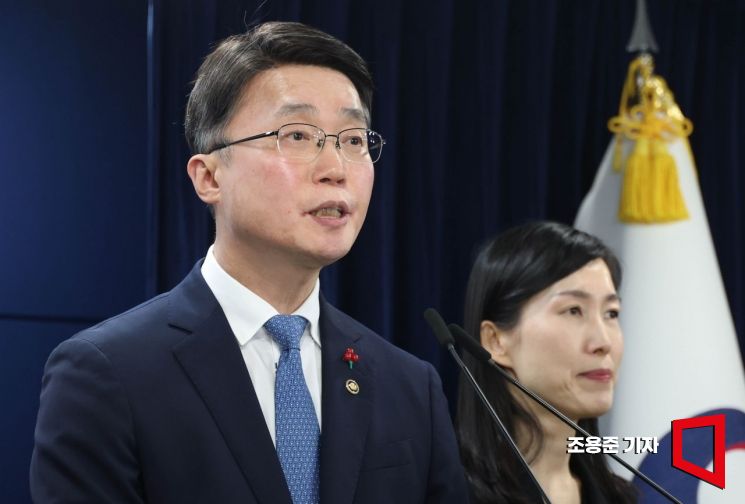 Ryu Jemyung, Vice Minister of Science and ICT, is announcing the "First Phase Evaluation Results of the Independent AI Foundation Model Project" at the Government Seoul Office in Jongno-gu, Seoul on January 15, 2026. Photo by Jo Yongjun
These companies are expected to focus on independently advancing their AI models rather than reapplying. An NC AI representative stated, “We will leverage the model and consortium partnerships developed this time to focus on technology development that can advance national industrial sectors, such as industry-specialized AI and physical AI.” Naver Cloud is also expected to continue developing its proprietary model, HyperCLOVA X, independently.
With leading candidates successively announcing their non-participation in the second-chance round, the outlook for future interest remains uncertain. The second-chance round is open to all companies: those that initially applied, those eliminated in the first phase, and even those that did not participate in the project at all. However, so far, no major company has expressed an intention to participate. KT, which did not make it into the initial five elite teams, is currently discussing internally whether to join the second-chance round.
Some observers have raised concerns about whether companies joining through the second-chance round can realistically develop an independent AI model in a relatively short period. To participate in this project, companies must develop their AI models “from scratch,” and building a model from the ground up in a short timeframe is a significant challenge. The Ministry of Science and ICT, which is overseeing the project, plans to announce the schedule for the second-chance round at a later date.
An industry insider commented, “It takes considerable time to assemble an elite team and lay out the blueprint for model development. Unless a company has already been preparing for this project, it will be difficult in practice to take on the second-chance round.” Another source added, “The schedule for the second-chance round should be meticulously planned to avoid any disputes over fairness.”
From the companies’ perspective, participating in the second-chance round itself could be a risk factor, as there is the burden of potentially being eliminated again after a renewed attempt. An AI industry representative said, “Companies making a renewed challenge will feel pressure to develop a model in a short time and demonstrate performance equal to those who passed the first phase. There is also the risk of being labeled as a company that failed twice, so they will make their participation decision very carefully.”
A Ministry of Science and ICT official stated, “Rather than being a matter of popularity, the fact that this is a nationally significant and high-profile project means that companies need considerable preparation and deliberation before deciding to participate.”
Meanwhile, there is also the possibility of controversy over “automatic advancement” for companies additionally selected through the second-chance round. Since Naver Cloud and NC AI, which were eliminated in the first phase, have declared they will not participate, any additional successful candidates will have to come from companies that did not make the initial five elite teams. In such cases, concerns about fairness may arise, as these companies would proceed directly to the second phase evaluation, bypassing the highly competitive first phase process.
© The Asia Business Daily(www.asiae.co.kr). All rights reserved.
![Clutching a Stolen Dior Bag, Saying "I Hate Being Poor but Real"... The Grotesque Con of a "Human Knockoff" [Slate]](https://cwcontent.asiae.co.kr/asiaresize/183/2026021902243444107_1771435474.jpg)
















