Ministry of Science and ICT to Invest 275.4 Billion Won in Nano and Materials R&D for 2026
67.8 Billion Won Allocated to New Projects and Tasks
Amid intensifying global supply chain instability and technological hegemony competition, the government is making large-scale investments in foundational nano and materials technologies, as well as AI-based research infrastructure. The strategy is to proactively secure core materials technologies with a five- to ten-year outlook and to accelerate the speed and success rate of materials research and development (R&D) by integrating data and artificial intelligence into research methodologies.
On January 16, the Ministry of Science and ICT announced the finalized implementation plan for the "2026 Nano and Materials R&D Project," totaling 275.4 billion won, and stated that the project will be fully launched. This plan comprises four projects, including nano and materials technology development, with 67.8 billion won allocated solely to new projects and tasks.
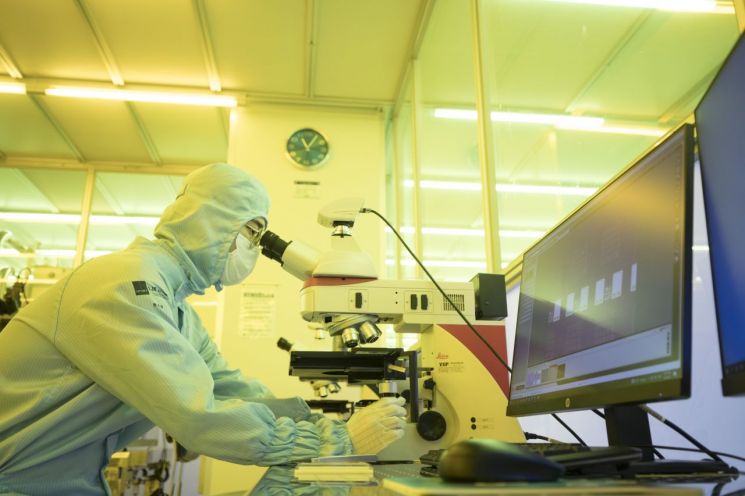 Photo to aid understanding of the article. UNIST researchers conducting experiments in the Semiconductor Nano Device Processing Laboratory. Photo by The Asia Business Daily Database
From Supply Chain Response to Future Materials... Accelerating Nano and Materials R&D
The ongoing Nano and Materials Technology Development Project focuses on achieving technological self-reliance in advanced materials to address global supply chain risks and on securing future materials technologies that will support national strategic technologies. Continued efforts will also be made to support young researchers tackling challenging problems through the Materials Global Young Connect program, to develop world-class foundational technologies via the Nano Future Materials Source Technology Development program, and to establish a robust foundation for nano and materials R&D.
In particular, the government will strategically support the development of the "Top 100 Advanced Materials," targeted for completion within five years, and the "Top 100 Future Materials," targeted for completion within ten years. Creative and challenging research in the nano sector will also continue, aimed at creating new industries and advancing key existing industries. To support this, the government plans to strengthen the foundation for AI and data utilization, such as building a materials research data ecosystem platform, and to reinforce the research infrastructure necessary for commercialization.
The newly launched "Future Materials Discovery Support+" project will support the development of new materials with unprecedented properties and functions, based on researchers' creative ideas and innovative methodologies. As a follow-up to the previous Future Materials Discovery Support Project (2015-2025), this initiative will actively incorporate digital technologies such as artificial intelligence to expand research methodologies in materials science. The three key focus areas are: ▲ novel materials with unexplored properties, ▲ human augmentation materials that overcome physical limitations, and ▲ environmentally friendly and sustainable materials.
Transforming Foundational Technologies into Industries... Growth and Talent Development in Parallel
The Advanced Materials Source Technology Growth Support Project is a new program designed to ensure that advanced materials source technologies do not remain as research outcomes but are further developed and commercialized as core national industries. Among completed projects, those with high commercialization potential will be selected for follow-up research with the goal of technology transfer.
Additionally, the government will launch a new Data-Integrated Advanced Materials Talent Development Project to systematically foster master's and doctoral-level experts in data-driven new materials, equipping them with both specialized materials knowledge and AI/data utilization skills.
The Ministry of Science and ICT stated, "We will actively support the development of foundational technologies in the nano and materials sectors in line with this implementation plan," and added, "Details such as the announcement of new projects for 2026 and the schedule for project proposals will be provided on the National Research Foundation of Korea website at the end of this month."
© The Asia Business Daily(www.asiae.co.kr). All rights reserved.

















