The Security Token Offering (STO) bill passed the National Assembly’s plenary session on January 15. As a result, a legal framework has been established for the issuance and distribution of blockchain-based securities, and investment contract securities, which previously faced distribution restrictions, are now expected to be tradable through securities firms.
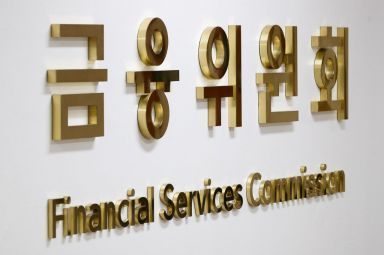
On this day, the National Assembly convened a plenary session and passed the STO Act, which includes amendments to the Act on Electronic Registration of Stocks and Bonds and the Financial Investment Services and Capital Markets Act.
The key aspect of this amendment is the institutionalization of STOs utilizing distributed ledger technology as a form of electronic securities, allowing them to be used as securities account ledgers. STOs record and manage the issuance and distribution information of securities on a blockchain-based distributed ledger. They are regulated as securities under the Capital Markets Act, just like traditional physical or electronic securities.
The revised Electronic Securities Act defines the concept of distributed ledgers. It also explicitly states that distributed ledgers can be used as securities account ledgers (electronic registration account ledgers), thereby permitting the issuance of securities in the form of token securities. To issue an STO, the issuer must comply with the legal procedures and requirements, notify the electronic registration institution in advance, and apply for registration.
Distributed ledgers are considered highly secure against unauthorized deletion or modification due to joint management of information and encryption technology. They also enable automation of rights, such as profit distribution, through the use of smart contracts.
Furthermore, the Financial Services Commission expects that the use of smart contracts will become more active within the newly established blockchain-based securities infrastructure. Since new types of securities, such as fractional investment securities (trust beneficiary certificates) and investment contract securities, have relatively non-standardized rights-such as profit sharing and incentive provision linked to underlying assets and projects-the use of smart contracts is anticipated to be particularly effective.
However, since token securities are also considered securities under the Capital Markets Act, unlicensed brokerage activities remain illegal, and existing disclosure and regulatory requirements, such as submitting a securities registration statement for public offerings, will continue to apply.
The amendment to the Capital Markets Act now permits the distribution of investment contract securities. Investment contract securities are a type of security under the Capital Markets Act, where investors participate in a joint business and are entitled to profits or losses based on business results. Currently, investment contract securities are being issued for businesses such as art exhibition, management, and sales, as well as Korean beef livestock projects.
Previously, the Capital Markets Act prohibited the distribution of investment contract securities through securities firms due to their non-standardized nature. As a result, issuers had to recruit investors directly. With the amendment, investment contract securities can now be brokered by securities firms like other securities. This is expected to improve investment accessibility and the provision of investment information.
The amendment will take effect in January next year, one year after its promulgation, following the establishment of a distributed ledger-based securities account management infrastructure and the refinement of detailed systems for investor protection. The Financial Services Commission plans to form a joint “Token Securities Council” with relevant institutions and proceed with preparations to ensure the smooth launch of a full-fledged token securities ecosystem as soon as the law is implemented.
The Token Securities Council will consist of the Financial Services Commission, the Financial Supervisory Service, the Korea Securities Depository, the Korea Financial Investment Association, market participants (including those in the financial investment and fintech sectors), and experts from academia and research institutes. A kick-off meeting is scheduled for next month.
© The Asia Business Daily(www.asiae.co.kr). All rights reserved.
!["The Woman Who Threw Herself into the Water Clutching a Stolen Dior Bag"...A Grotesque Success Story That Shakes the Korean Psyche [Slate]](https://cwcontent.asiae.co.kr/asiaresize/183/2026021902243444107_1771435474.jpg)
















