8 Parts, 23 Chapters, 312 Articles: Major Expansion of Special Provisions
Decentralization Designed Through Financial Support and Authority Transfer
Aiming for National Assembly Passage in February... Special City to Launch in July
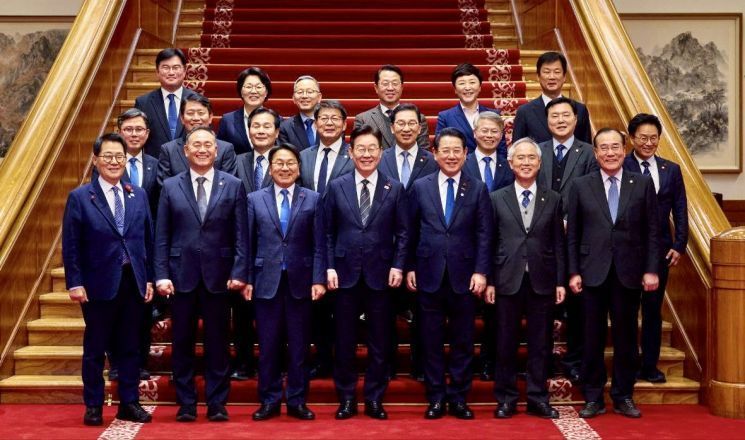 On the 9th, participants are taking a commemorative photo after discussions on the administrative integration of Gwangju and Jeonnam during a luncheon meeting presided over by President Lee Jae-myung at the Blue House. Photo by Gwangju City
A draft of the special law that will serve as the legal basis for the administrative integration of Gwangju and Jeonnam has been completed. This draft, consisting of over 300 articles, includes numerous special provisions to support the practical implementation of the integration.
Gwangju City and Jeonnam Province finalized the draft of the administrative integration special law on January 15, following working-level discussions. This draft will undergo internal discussions within the Democratic Party, government consultations, and a public deliberation process by the end of this month. After being adopted as the party’s official stance, it is scheduled to be submitted to the National Assembly’s provisional session in February. The target date for passage is February 28. If the special law passes the National Assembly, an integrated head of the new local government will be elected in the June 3 local elections, and the provisional “Gwangju-Jeonnam Special City” will be officially launched on July 1.
The tentative name of the special law is the “Special Act on the Establishment of Gwangju-Jeonnam Special City.” The bill consists of 8 parts, 23 chapters, and 312 articles, and contains approximately 300 special provisions. The draft released on this day also includes the concept of a “60-Minute Metropolitan Living Zone,” which aims to unify the living, transportation, and economic spheres of Gwangju and Jeonnam.
In addition, compared to the “Special Act on the Establishment of Daejeon-Chungnam Special City and the Creation of an Economic Science Capital” (7 parts, 21 chapters, 296 articles, and 257 special provisions), which was proposed in October last year, the Gwangju-Jeonnam draft features a greater number of parts, chapters, articles, and special provisions.
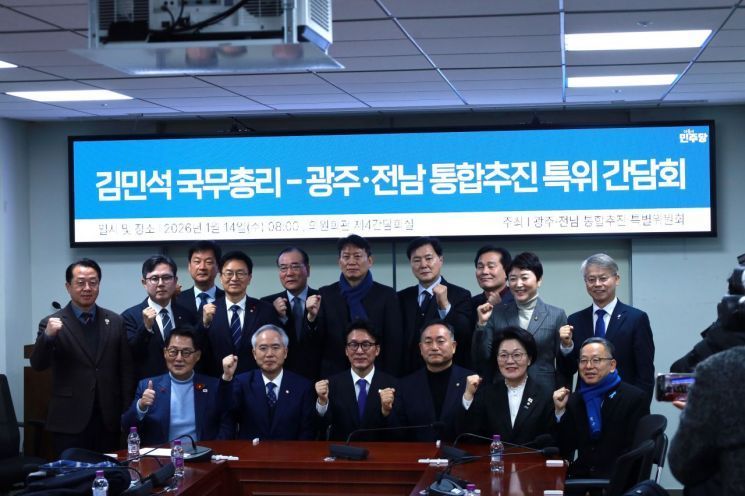 The Special Committee for the Integration Promotion of Gwangju and Jeonnam (Co-Chairmen Kim Won-yi and Yang Bunam, Members of the National Assembly) held a meeting on the 14th at the National Assembly with Prime Minister Kim Minseok and members of the National Assembly from Jeonnam and Gwangju. Photo by Kim Won-yi's Office
The general provisions specify the purpose of enacting the special law. The bill states that the special city will be established based on the spirit of Gwangju-rooted in the 5·18 Democratization Movement and the values of democracy, human rights, justice, and peace-achieved together by Gwangju and Jeonnam, inheriting a thousand years of Jeolla Province history. It also declares its aim to contribute to substantial local autonomy and balanced national growth through the harmonious development of future high-tech industries such as artificial intelligence, energy, and semiconductors, alongside agriculture and fisheries.
The bill’s eight parts cover strengthening autonomy, educational autonomy, artificial intelligence, energy, and cultural capital, improving the quality of life for special city residents, general provisions, and penalties. The 23 chapters include details on the establishment and support committee for the special city, delegation of central government authority and deregulation, strengthening the functions of local councils, self-government, finance, police, and audit, as well as special city development plans, high-tech and strategic industries, culture and tourism, agriculture, fisheries and livestock, climate and environment, global investment, spatial planning, metropolitan transportation and logistics infrastructure, social safety nets, and promoting balanced regional development. The 312 articles provide detailed rules to implement these measures.
The name of the special city will be “Gwangju-Jeonnam Special City,” but it may be changed later to reflect the opinions of the local council in accordance with the Local Autonomy Act. The current administrative structure of cities, counties, and districts, as well as the local tax system, will be maintained. Existing government office buildings in Gwangju and Jeonnam will be used to minimize administrative confusion and cost burdens.
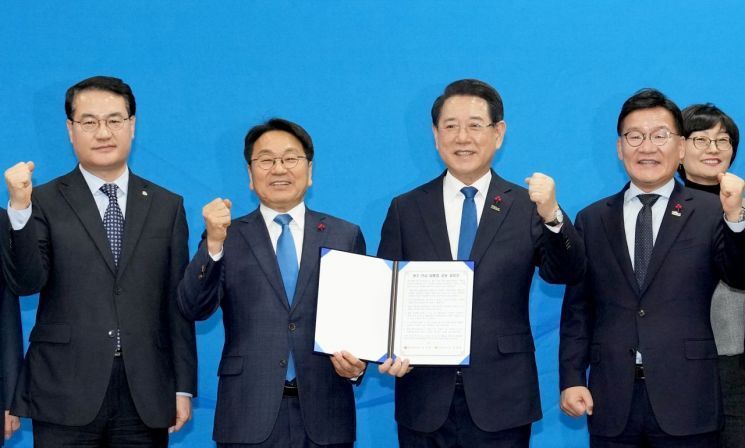 As the administrative integration of Gwangju and Jeonnam gains momentum, public opinion is increasingly suggesting that the integration of smaller regions within Jeonnam is now being put to the test. The photo shows a report meeting for residents of Gwangju and Jeonnam regarding the administrative integration. Provided by Jeonnam Province.
A support committee chaired by the Prime Minister will be established to assist with the launch and stabilization of the special city. The plan also includes transferring the authority, organization, and budget of special local administrative agencies related to small and medium enterprises, environment, employment, and labor to the special city.
In the area of finance, an additional 12 percent of the total ordinary grant tax will be provided for 20 years, and a portion of national taxes will be allocated as integrated economic support funds and integrated special (education) financial compensation funds. A separate account will be created within the Special Account for Balanced Regional Development, and the allocation weight for local consumption tax will be set at 300 percent based on Jeonnam’s standard. The establishment of a balanced development fund, exemptions from preliminary feasibility studies and investment reviews for large-scale projects, as well as tax reductions and rate adjustments through special city ordinances, will also be possible.
Other special provisions include the transfer of national tax grants, integrated special grants, exemptions from grant tax calculations, exemptions from preliminary feasibility studies, innovation city development, designation of artificial intelligence and hydrogen-specialized clusters, requiring the special mayor’s consent for the appointment of the special city police chief, establishment of an integrated fire headquarters, declaration of special disaster areas, creation of an integrated transportation account, setting teacher quotas, and establishing schools for gifted students. If these provisions are realized, Gwangju City and Jeonnam Province are expected to receive several trillion won in additional annual funding.
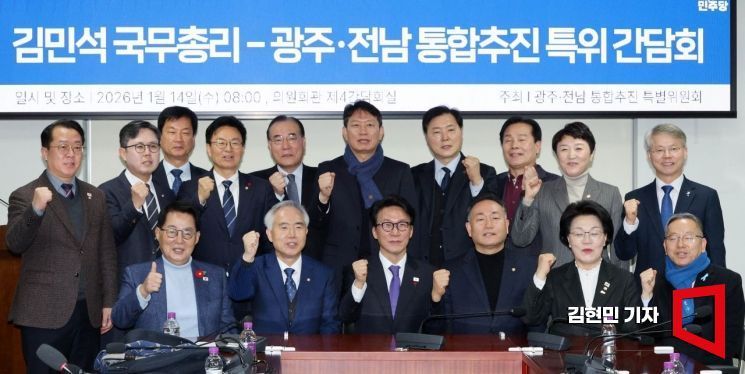 Prime Minister Kim Minseok is taking a commemorative photo with attending members of the Gwangju-Jeonnam Integration Promotion Special Committee meeting held at the National Assembly Members' Office Building on the 14th. Photo by Kim Hyunmin
Moving forward, a Democratic Party legislative hearing will be held on January 15, followed by Prime Minister Kim Minseok explaining the government’s special law and support measures on January 16. On the same day, the launch of the Mayors and County Governors’ Win-Win Council and the Pan-Provincial Administrative Integration Promotion Council is also scheduled. Regional public hearings will be held from January 19 to 31, and the collection of opinions from city and provincial councils and residents will continue through February. The special law is expected to be proposed as the Democratic Party’s official stance by the end of this month, with the goal of passing the bill at the National Assembly’s plenary session on February 28, the last day of the provisional session.
If the special law passes, preparations for the launch of the integrated special city will begin in earnest from March. After electing the integrated special city mayor in the June local elections, Gwangju and Jeonnam will officially launch the integrated local government, the Gwangju-Jeonnam Special City, on July 1, marking the first reunification in 40 years since their separation.
© The Asia Business Daily(www.asiae.co.kr). All rights reserved.
![Clutching a Stolen Dior Bag, Saying "I Hate Being Poor but Real"... The Grotesque Con of a "Human Knockoff" [Slate]](https://cwcontent.asiae.co.kr/asiaresize/183/2026021902243444107_1771435474.jpg)


















