Focusing on Hwangnyongsa Temple Site and Inwang-dong Temple Site...
Full-scale Restoration and Maintenance Phase Begins
Moving Beyond Excavation and Research...
Entering a Visitor-Oriented Maintenance Phase
The restoration and maintenance project for the core relics of the Silla Royal Capital in Gyeongju is accelerating its restoration and maintenance phases.
On January 15, Gyeongju City announced that it will allocate 32.689 billion won to the "Restoration and Maintenance Project for Core Relics of the Silla Royal Capital" in 2026, which aims to restore the spatial structure of the royal capital of Silla, the millennium-old capital.
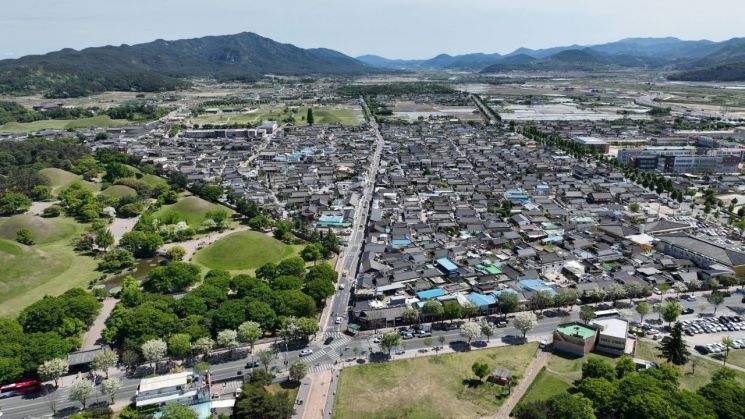
The restoration and maintenance project for the core relics of the Silla Royal Capital is a national key cultural heritage initiative that targets 14 core relics constituting the Silla royal capital, including Wolseong, Hwangnyongsa Temple Site, Donggung Palace and Wolji Pond, and Daereungwon. The project is being carried out in phases, including excavation and research, restoration and maintenance, and improvement of the visitor environment. The total project budget amounts to 1.015 trillion won.
This year, visible progress in maintenance is expected to be made, particularly at major sites such as the Hwangnyongsa Temple Site and Inwang-dong Temple Site.
At the Hwangnyongsa Temple Site, maintenance work to construct the foundations of the main buildings at the central temple precinct will begin in earnest.
In addition to work revealing the outlines of key spaces such as the Wooden Pagoda Site, Junggeumdang Site, and Bell and Drum Pavilion Sites, the project will also include drainage maintenance, landscaping, and installation of information facilities.
At the Inwang-dong Temple Site, the restoration of the East and West Stone Pagodas will enter full swing.
Following deliberation by the National Heritage Administration’s Repair Technology Committee and design approval, restoration construction is scheduled to begin in the first half of this year.
Meanwhile, at Wolseong, excavation and academic research will continue, while detailed designs will be carried out to improve the visitor environment and maintain the western area. At Donggung Palace and Wolji Pond, plans will be made for nighttime landscape maintenance and the establishment of a promotional exhibition hall.
At the Daereungwon area, excavation will continue, and designs for visitor convenience facilities in the Jjoksaem District will be promoted. In the Eastern Historic Area, a basic plan will be developed for improving the visitor environment at Cheomseongdae.
At Namsan and sites such as Woljeonggyo and Chunyangg-gyoji, relic maintenance and visitor environment improvement projects will proceed in parallel.
Gyeongju City plans to move beyond the previous focus on excavation and research and gradually expand restoration and maintenance so that citizens and tourists can experience the spatial structure of the royal capital firsthand.
Joo Nak-young, Mayor of Gyeongju, stated, "The restoration project for the core relics of the Silla Royal Capital is a long-term initiative that goes beyond the maintenance of individual relics to restore the historical context of the entire royal capital. Starting this year, we will accelerate the project to ensure tangible maintenance results at major relics."
© The Asia Business Daily(www.asiae.co.kr). All rights reserved.
![Clutching a Stolen Dior Bag, Saying "I Hate Being Poor but Real"... The Grotesque Con of a "Human Knockoff" [Slate]](https://cwcontent.asiae.co.kr/asiaresize/183/2026021902243444107_1771435474.jpg)
















