First Supreme Court Ruling on "Differential Franchise Fee" Lawsuit
Judiciary Puts the Brakes on Franchise "Distribution Margin" Practices
The Supreme Court has ruled that the “margin franchise fee” collected by Korea Pizza Hut from its franchisees when supplying raw materials constitutes unjust enrichment. As well-known domestic franchise owners have filed a series of lawsuits against headquarters over margin franchise fees, this ruling is expected to have a significant impact on the industry.
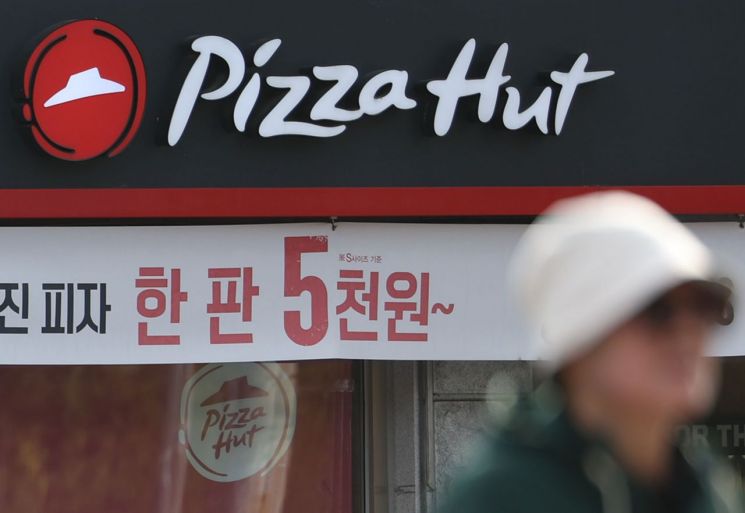
On January 15, the Supreme Court’s Third Division (Presiding Justice Lee Heungku) upheld a lower court ruling that partially sided with the plaintiffs in a lawsuit filed by 94 Korea Pizza Hut franchise owners, including Yang, against the headquarters, seeking the return of unjust enrichment.
Previously, in December 2020, Pizza Hut franchisees filed a lawsuit demanding the return of margin franchise fees that had been unfairly collected. They argued that, despite paying a fixed fee equivalent to 6% of total revenue, the headquarters charged an additional so-called margin franchise fee by adding a certain profit margin to the cost of raw materials supplied, without any legal or contractual basis, resulting in duplicate payments. The margin franchise fee refers to the difference between the price paid by franchisees for goods supplied by headquarters and the appropriate wholesale price-essentially, the distribution margin.
The court of first instance accepted the franchisees’ claim that the headquarters had received duplicate payments without legal or contractual grounds. The court ordered the headquarters to return more than 7.5 billion won to the plaintiffs, partially ruling in their favor. However, the court dismissed the plaintiffs’ claims regarding margin franchise fees for 2016-2018 and 2021, as information on those fees was not disclosed and therefore could not be accurately determined.
The Seoul High Court, which heard the case on appeal, ruled on September 11, 2024, that the headquarters must return a much larger amount-21 billion won-than recognized in the first trial. Like the first instance, the appellate court held that an agreement is required for the collection of margin franchise fees and found no grounds or agreement justifying the headquarters’ receipt of such fees. Furthermore, the appellate court determined that the headquarters is also responsible for returning the margin franchise fees from 2016 to 2018, which the first court did not recognize.
The Supreme Court’s ruling on this day was the same. The court stated, “We agree with the lower court’s view that a specific agreement is necessary to collect margin franchise fees between the franchisor and franchisee,” and added, “A concrete consensus is required for such collection.” The court further emphasized, “It is necessary to be cautious in recognizing the existence of an implicit agreement on terms unfavorable to the franchisee,” and concluded, “We accept the lower court’s decision not to recognize an implicit agreement between the plaintiffs and the defendant regarding the collection of margin franchise fees.”
Since the Supreme Court’s decision is now final, its judgment may be applied to other cases with similar key issues, drawing significant attention from the industry. Previously, after the appellate court ruled that Pizza Hut franchisees could recover a greater amount in margin franchise fees than in the first trial, more than ten franchise groups-including Lotte Fresh BHC, Baskin Robbins, Kyochon Chicken, Puradak Chicken, Twosome Place, Goobne Chicken, Cheogajip Yangnyeom Chicken, Duzzim, Gcova Chicken, Mom’s Touch, and Burger King-filed lawsuits against their respective headquarters seeking the return of margin franchise fees.
Hyun Minseok, attorney at YK Law Firm, who represented the franchisees and secured the victory, stated, “We welcome the court’s wise decision. This ruling is a wise and courageous decision by the judiciary that puts an end to the outdated practice of headquarters abusing their authority to designate essential items and collect unfair ‘tolls.’ Now is the time for the franchise industry to move away from the opaque margin franchise fee structure and fully transition to a ‘royalty-based model’ that transparently shares sales profits. Through this, I strongly hope that a true culture of mutual growth, where headquarters and franchisees share the fruits of success beyond a power-imbalanced relationship, will take root deeply in our society.”
© The Asia Business Daily(www.asiae.co.kr). All rights reserved.
![Clutching a Stolen Dior Bag, Saying "I Hate Being Poor but Real"... The Grotesque Con of a "Human Knockoff" [Slate]](https://cwcontent.asiae.co.kr/asiaresize/183/2026021902243444107_1771435474.jpg)
















