Australia Loses 400,000 Hectares to Wildfires
Finland Cancels Flights Amid Cold Snap
"Extreme Weather Events Cause Social and Economic Disruption"
While Australia is experiencing massive wildfires spreading amid extreme heat waves exceeding 40 degrees Celsius, Northern Europe is facing record-breaking cold snaps, with flight cancellations and other extreme weather events occurring around the world. Experts warn that these phenomena are the result of decades of accumulated greenhouse gas emissions, and that climate instability is likely to intensify in the future.
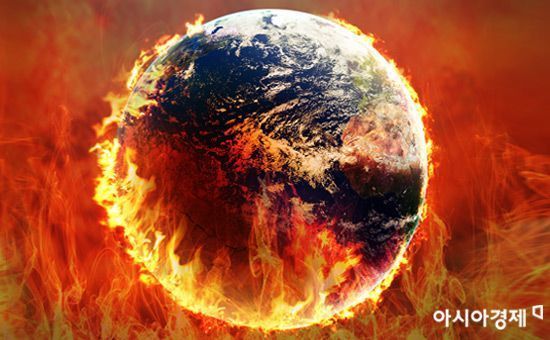
Extreme Weather Events Sweep the Globe
According to The Guardian, as of January 15 (local time), wildfires in Victoria, Australia, have destroyed at least 400,000 hectares and more than 700 buildings. This area is more than six times the size of Seoul (approximately 60,000 hectares). Local authorities stated that 12 large-scale wildfires, including the one in Harcourt, remain uncontained. Authorities assessed the situation as the worst in six years since the "Black Summer" wildfires of 2019-2020.
Concerns are mounting as temperatures in northern Victoria have soared up to 46 degrees Celsius, combined with strong winds, raising fears that the wildfires could spread beyond control. The average January temperature in Victoria is typically around 21 degrees Celsius, but if the heatwave continues, the risk of wildfires will rise significantly. Prolonged high temperatures rapidly deplete moisture from the ground and vegetation, making conditions extremely dry. Dry fuel does not extinguish easily, increasing the likelihood that fires will burn longer and spread wider.
In fact, researchers at the Institute for Basic Science (IBS) have presented findings that for every 1-degree Celsius increase in the global average temperature, the area lost to wildfires worldwide could increase by 14% annually. Rising temperatures increase wildfire risks, and the carbon dioxide released from wildfires further accelerates climate change, creating a vicious cycle.
In contrast, the opposite extreme is occurring in Northern Europe. In the Lapland region of northern Finland, a cold snap of minus 37 degrees Celsius on January 11 led to the cancellation of all flights, stranding thousands of tourists. Aircraft de-icing became impossible, and even ground maintenance and refueling equipment froze. The average winter temperature in Lapland is about minus 14 degrees Celsius, making this an exceptionally severe cold spell.
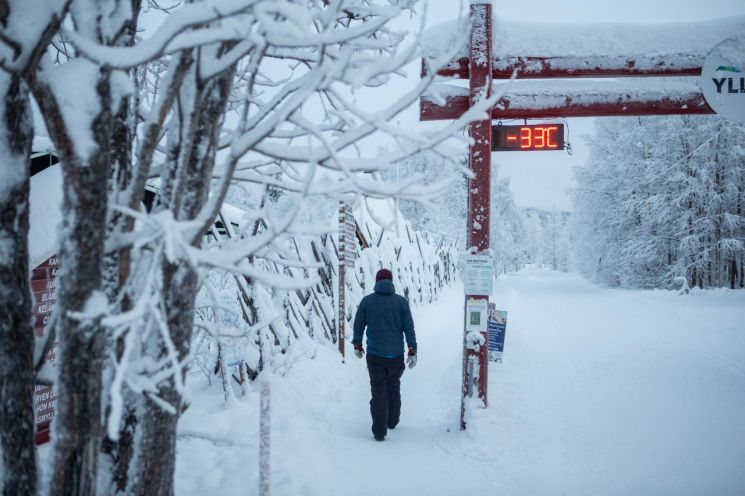 On the 9th (local time), a citizen was passing in front of a digital billboard displaying minus 33 degrees Celsius in Yll?s, Finland. Photo by AP Yonhap News
According to the Associated Press, "Finland is a country accustomed to harsh winters, but this year's cold snap affecting Northern, Central, and Eastern Europe is much more severe than usual," adding that "it has caused widespread transportation disruptions."
"Extreme Weather Events, the Result of Decades of Greenhouse Gas Emissions"
Extreme weather events are closely linked to the increase in greenhouse gas emissions that has continued for decades. The scientific journal Nature Geoscience reported, "Last year, the world clearly witnessed the consequences of failing to respond to climate change. In January, storms struck Mozambique and Madagascar; in July and August, Europe, the Mediterranean, and East Asia suffered heat waves; and at the end of the year, hurricanes and cyclones devastated the Caribbean and Southeast Asia." The journal added, "Extreme weather events cause enormous damage and socio-economic disruption. These disasters are by no means coincidental, but rather predictable outcomes of decades of increasing greenhouse gas emissions and insufficient mitigation efforts."
The problem is that greenhouse gas emissions are still not decreasing. According to the United Nations Environment Programme (UNEP) "Emissions Gap Report 2025," global greenhouse gas emissions reached an all-time high of 57.7 billion tons in 2024. This represents a 2.3% increase from the previous year, which is even higher than the average annual increase of 2.2% seen in the 2000s, a period marked by weak climate crisis responses. UNEP projects that if this trend continues, the global average temperature could rise by about 2.8 degrees Celsius above pre-industrial levels by 2100.
Last Year’s Annual Average Temperature: Second Highest on Record at 13.7 Degrees Celsius
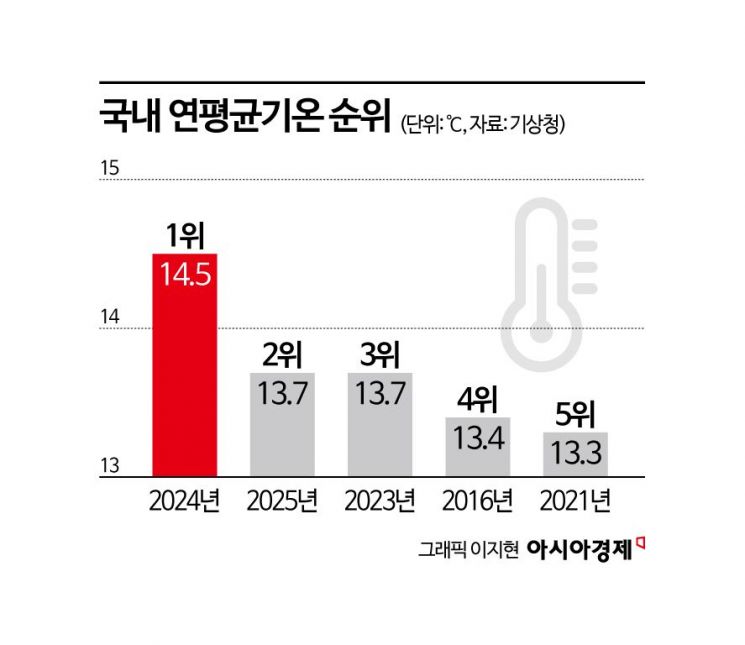
South Korea has also been directly hit by extreme weather. According to the "2025 Annual Climate Characteristics" report released by the Korea Meteorological Administration on January 6, last year’s annual average temperature was 13.7 degrees Celsius, the second highest since nationwide observation networks were established in 1973.
In particular, the number of heatwave days nationwide last year was 29.7, about 2.7 times the average (11 days), and the number of tropical nights was 16.4, 2.5 times the average (6.6 days). Seoul experienced 46 tropical nights, the highest ever recorded, and in 21 locations including Daejeon, Gwangju, and Busan, tropical nights began earlier than ever before. In Seogwipo, Jeju, tropical nights continued until October 13, the latest ever. The Korea Meteorological Administration cited the early and prolonged expansion of the hot and humid North Pacific High as the reason for the long-lasting heat from early summer through autumn.
Meanwhile, the abnormal temperature phenomena spreading globally are likely to intensify further in the future. Celeste Saulo, Secretary-General of the World Meteorological Organization (WMO), stated in November last year, "It has become virtually impossible to limit global warming to below 1.5 degrees Celsius in the coming years due to unprecedented sustained high temperatures and record greenhouse gas increases," but emphasized, "It is both possible and absolutely necessary to bring temperatures back to the 1.5-degree level by the end of the century."
© The Asia Business Daily(www.asiae.co.kr). All rights reserved.



















