25% Tariff on Re-exported Semiconductor Chips
Trade Minister Postpones Return from U.S. Visit
Tariffs on Critical Minerals Put on Hold
The Donald Trump administration has announced a 25% tariff on certain imported semiconductors and indicated that these tariff measures could be expanded to cover the broader semiconductor sector in the future. While a 25% tariff has been imposed on semiconductors such as Nvidia's H200 that are imported into the United States and then re-exported, tariffs on critical minerals have been temporarily suspended in consideration of the U.S.-China trade truce. Yeo Han-koo, Trade Minister at the Ministry of Trade, Industry and Energy, who is currently visiting the United States, has decided to postpone his return to South Korea in order to assess the impact of these measures on Korean companies.
25% Tariff Announced on Nvidia Chips for Export to China... Potential Expansion of Semiconductor Tariffs Suggested
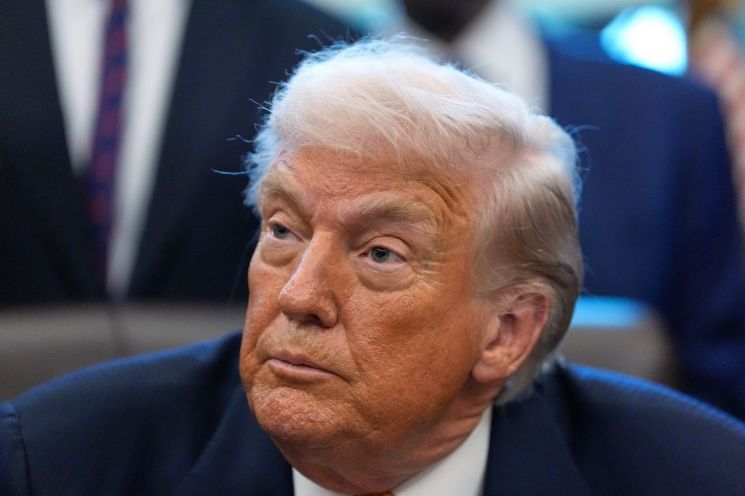
On this day, President Trump signed a proclamation imposing a 25% tariff on semiconductors such as Nvidia's H200 that are imported into the United States and then re-exported to other countries. After signing the proclamation, he referred to Nvidia's H200 as "not the highest specification, but a very good chip," adding, "China wants it, and others want it as well. We will earn 25% of the sales revenue from those chips."
Last December, President Trump had already announced that exports of the H200 to China would be permitted, and that 25% of the sales revenue would be paid to the United States.
This measure follows a report submitted by the U.S. Department of Commerce on December 22 last year, pursuant to Section 232 of the Trade Expansion Act, which investigated the impact of semiconductor imports on U.S. national security. In this report, the Secretary of Commerce stated that semiconductors, semiconductor manufacturing equipment, and related derivative products are being imported in volumes and under conditions that pose a threat to U.S. national security.
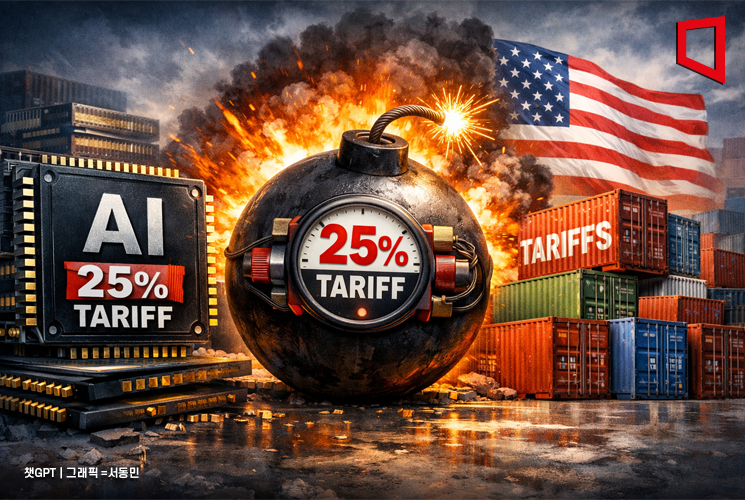
Accordingly, President Trump specified in the proclamation that a 25% tariff would be imposed on certain semiconductors imported into the United States if they do not contribute to building the U.S. technology supply chain or strengthening domestic manufacturing capacity for semiconductor derivatives. The White House stated that Nvidia's H200 and AMD's MT325X are among those subject to the 25% tariff. Nearly all of Nvidia's AI chips are manufactured by Taiwan's TSMC and shipped to the United States, so they go through a "re-import and re-export" process.
President Trump also explained that Section 232 of the Trade Expansion Act "grants the president the authority to adjust imports of items that are imported in volumes or under conditions that threaten national security," and that "this may include negotiations with foreign countries as well as a range of import adjustment measures, including tariffs."
In a separate fact sheet, the White House stated, "President Trump may soon impose broader tariffs on imports of semiconductors and their derivatives to promote domestic manufacturing in the United States, and is also considering the introduction of corresponding tariff offset programs."
President Trump cited areas exempt from the 25% semiconductor tariff, including U.S.-based data centers and U.S. domestic research and development or industrial applications. He also stated that other semiconductors deemed by the Secretary of Commerce to contribute to strengthening domestic manufacturing capacity would be subject to the exemption.
The Trade Minister, who is currently visiting the United States, has decided to postpone his scheduled return to South Korea in order to assess whether the semiconductor-related proclamation signed by President Trump on this day will have any impact on Korean companies. He explained, "I plan to stay an extra day to further assess the impact on us locally in the United States and to determine if there are additional people on the U.S. side that I need to meet."
Tariffs on Critical Minerals Temporarily Suspended... Trump Orders Start of Negotiations
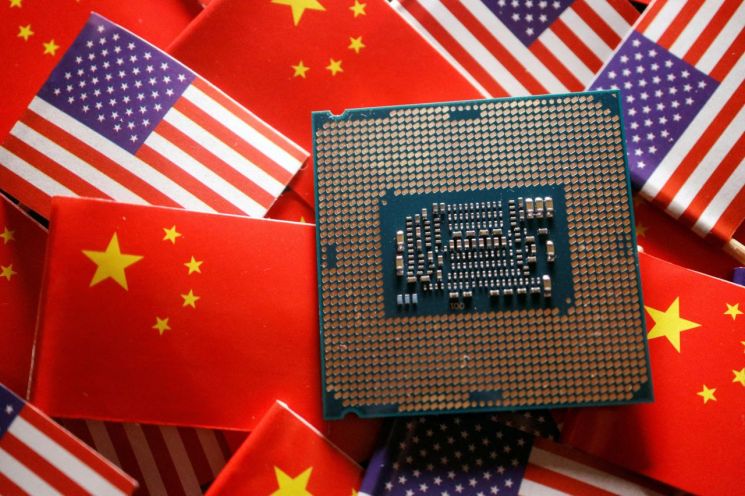
On this day, President Trump also signed a proclamation instructing the initiation of negotiations with trading partner countries to ensure that imports of critical minerals are aligned with U.S. national security interests. According to the proclamation, the Department of Commerce and the Office of the U.S. Trade Representative (USTR) may consider measures such as setting minimum import prices for certain critical minerals, depending on the outcome of the negotiations. Consequently, tariffs on critical minerals, including rare earth elements, will be suspended for the time being.
Instead of imposing tariffs immediately, President Trump stated, "We will pursue negotiations with foreign governments to secure sufficient supplies of critical minerals for the United States and to mitigate supply chain vulnerabilities as quickly as possible." Bloomberg News pointed out that the Trump administration's decision not to immediately impose tariffs on critical minerals is a signal of its intention not to undermine the U.S.-China trade truce agreed upon last fall.
President Trump also signed a bill passed by the Senate on this day, allowing public schools participating in the federal school lunch program to provide students with whole milk. This repeals the previous guideline from the Barack Obama administration that required only low-fat milk to be offered to students.
© The Asia Business Daily(www.asiae.co.kr). All rights reserved.



















