500,000 Won After-School Voucher for All Third Graders
Transition from Neulbom to Integrated Care System
The Busan Metropolitan Office of Education will provide an "After-School Program Voucher" worth up to 500,000 won per year to all third-grade elementary school students in Busan starting this year. The initiative aims to guarantee access to elective after-school classes by targeting grades with relatively higher demand for after-school education.
On January 15, the Busan Metropolitan Office of Education announced the full-scale implementation of its "Elementary After-School and Care" policy, which centers on these measures. The existing "Neulbom School" program has been renamed "Elementary After-School and Care" to align with national policy terminology changes, and a system will be established for schools and local institutions to jointly operate integrated programs and care services.
The core of this policy is universal support for all third-grade elementary students. The Busan Metropolitan Office of Education explained that, in addition to using Ministry of Education funds to initially support about 60% of all third graders, it has secured additional funding from the Special Education Development Zone budget so that 100% of third-grade students in Busan will benefit from the after-school voucher. Students can use the voucher to select and enroll in paid after-school programs of their choice.
The scope of after-school and care services will also be expanded. This year, all elementary schools in Busan will operate after-school and care programs, with at least one care classroom per school operating until 8 p.m. Customized care services will be provided to meet demand, including morning, afternoon, evening, and gap-time care.
First- and second-grade elementary students will be offered 10 hours per week of free after-school programs, while paid after-school programs will also be available for students in grades 1 through 6. The office also plans to expand after-school programs utilizing AI technology.
Community-based care infrastructure will be strengthened as well. The number of "Our Neighborhood Jarimteo" centers, operated in apartment community centers and welfare centers near schools, will increase from 10 last year to 16 this year. Integrated after-school school programs will be run in collaboration with universities and local institutions, and out-of-school care in partnership with local care agencies will also be expanded.
Dedicated Neulbom schools serving as hubs to absorb in-school demand will continue to operate. Along with Myungji and Jeonggwan Neulbom schools, the Yunsan Neulbom school will serve small schools and areas targeted for balanced educational development, helping to reduce regional disparities in care services.
The policy also emphasizes reducing teachers' administrative burdens. By increasing the deployment of Neulbom administrative staff and dedicated care personnel, the principle of exempting teachers from after-school and care administrative work will be maintained. In the first half of the year, a (tentatively named) Elementary After-School and Care Integrated Platform will be established to further reduce on-site administrative work at schools.
Busan Superintendent of Education Kim Seokjun stated, "Elementary after-school and care services are a critical foundation for ensuring students' safety and learning even after school hours." He added, "We will work to establish after-school programs and a comprehensive care system tailored to demand in collaboration with schools and the community." He further emphasized, "We will stably implement policies that students and parents can trust."
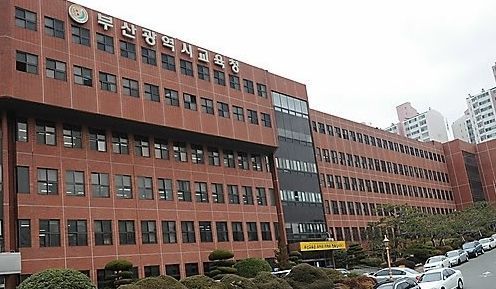 Busan Metropolitan Office of Education.
© The Asia Business Daily(www.asiae.co.kr). All rights reserved.
![Clutching a Stolen Dior Bag, Saying "I Hate Being Poor but Real"... The Grotesque Con of a "Human Knockoff" [Slate]](https://cwcontent.asiae.co.kr/asiaresize/183/2026021902243444107_1771435474.jpg)















