Fed Releases Beige Book
Modest Growth in Consumer Spending Led by High-Income Households
Labor Market Stable, Prices Rising Modestly
The Federal Reserve (Fed) has assessed that U.S. economic activity showed a moderate recovery in most regions toward the end of last year. Some companies, which had previously absorbed tariff costs themselves, have begun to pass these costs on to consumers as they deplete their inventories.
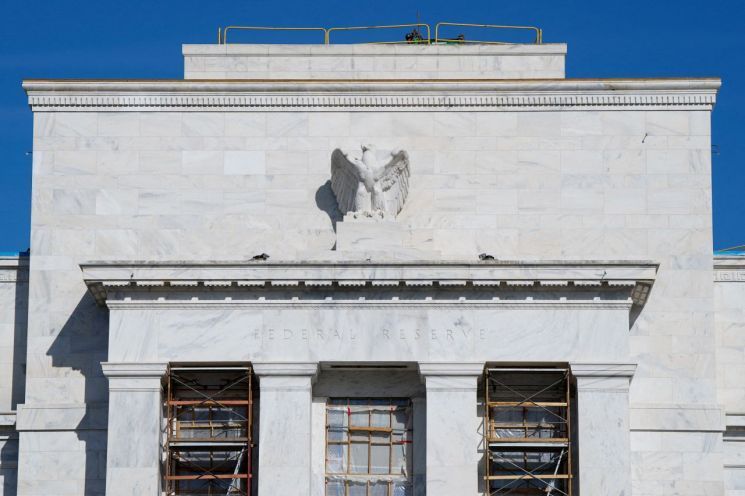
In its Beige Book, an economic trend report released on the 14th (local time), the Fed stated, "In eight out of the twelve Federal Reserve Districts, overall economic activity improved at a slight to moderate pace." Three regions saw no change, while one region recorded a modest decline.
The report explained, "This is an improvement compared to the last three reporting cycles, during which most regions assessed that there was little to no change."
Consumer spending increased modestly in most regions, mainly attributed to the year-end shopping season. In several regions, spending by high-income consumers remained relatively strong, with increased expenditures on luxury goods, travel and tourism, and experiential activities. In contrast, middle- and low-income consumers became more price-sensitive and hesitated to spend on non-essential goods and services, resulting in a continued 'K-shaped' polarization of consumption.
The employment situation remained generally stable. According to the report, in eight out of twelve regions, employment levels showed little change, and wages rose at a modest pace. The Fed noted, "Several contacts mentioned that the pace of wage growth has returned to 'normal' levels."
Prices also rose moderately in most regions. However, the report pointed out, "Some companies that initially absorbed tariff-related costs themselves have started to pass these costs on to consumers as inventories acquired before the tariffs were depleted or as pressures to maintain profitability intensified."
This assessment is in line with the recent views of Fed officials. Fed governors believe that, although the labor market is generally slowing, it still maintains a stable foundation. However, some officials have expressed caution about further rate cuts, noting that inflation remains above the Fed's 2% target and that President Donald Trump's tariff policies may create additional upward pressure on prices.
The market is currently placing more weight on the possibility of the benchmark interest rate being held steady for the time being. Investors expect that, after the Fed cut rates by a total of 0.75 percentage points in three moves since last September, there will be no further cuts at least until June.
© The Asia Business Daily(www.asiae.co.kr). All rights reserved.
![Clutching a Stolen Dior Bag, Saying "I Hate Being Poor but Real"... The Grotesque Con of a "Human Knockoff" [Slate]](https://cwcontent.asiae.co.kr/asiaresize/183/2026021902243444107_1771435474.jpg)
















