National Health Insurance Service Presents Evidence of Smoking-Cancer Link in 15 Rounds of Arguments
"Preventing Financial Losses and Holding Tobacco Companies Accountable"
Plans to Appeal to Supreme Court Even in Case of Partial Victory
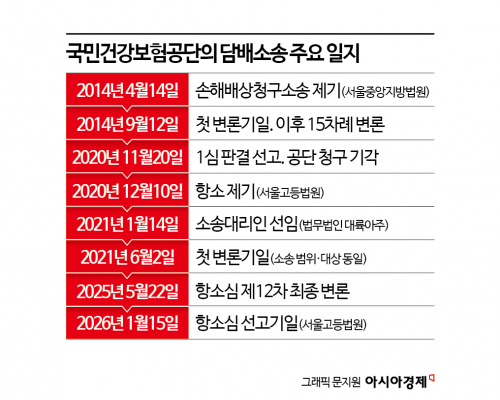
The Seoul High Court will deliver its verdict on January 15 in the appeal trial for the 53.3 billion won damages lawsuit filed by the National Health Insurance Service against tobacco companies including KT&G, Korea Philip Morris, and BAT Korea. With the trial now in its twelfth year, attention is focused on whether this case will become a turning point in preventing financial losses in the health insurance system due to smoking and in holding tobacco companies accountable for their social responsibilities.
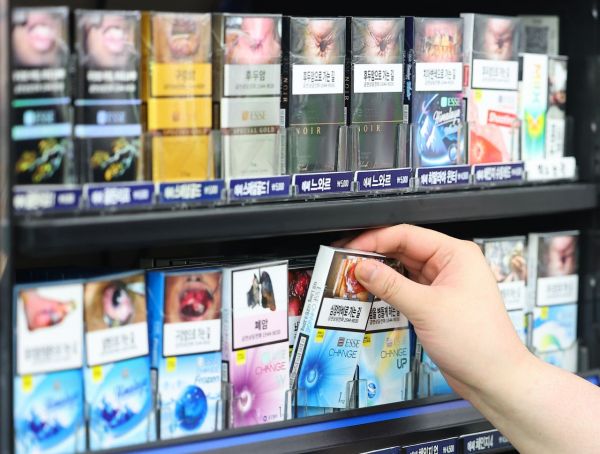
According to the National Health Insurance Service, the tobacco lawsuit, which began in April 2014, targets 3,465 patients who smoked for at least 20 pack-years (one pack per day for 20 years) or more than 30 years and were subsequently diagnosed with squamous cell lung cancer, small cell lung cancer, or laryngeal cancer. These types of cancer are known to have a very strong correlation with smoking. The lawsuit amount of 53.3 billion won represents the total medical expenses paid by the insurance service for these patients over a ten-year period from 2003 to 2012.
However, in January 2020, the court of first instance sided with the tobacco companies after more than six years of legal proceedings. The court did not recognize causality, citing the possibility that factors other than smoking could have caused the cancers. The tobacco companies argued that smoking is a matter of personal choice and free will, and that there were no legal defects or illegal acts in the manufacture or sale of their products.
In response, the National Health Insurance Service selected 1,467 lung cancer patients for whom no other risk factors such as family history or lifestyle could be identified, and submitted their medical records to the court. The service also presented research tracking 136,956 health screening participants from 2004 to 2013, which found that those who smoked for more than 30 years and had a consumption of over 20 pack-years had up to 54.49 times higher incidence of lung cancer compared to non-smokers. According to a study released in 2024, 97.5% of small cell lung cancer cases and 96.4% of squamous cell lung cancer cases were attributable to smoking.
The insurance service asserts that "the causal relationship between smoking and cancer is already an established fact, supported by numerous research findings." Since filing the appeal in December 2020, the service has made efforts to overturn the first-instance verdict through as many as 15 hearings over approximately five years.
The insurance service also pointed out that tobacco companies did not adopt designs to reduce the risks of their products, despite being aware of those risks, and that warnings about addictiveness were insufficient. The use of terms such as "low nicotine" and "low tar" misled consumers into believing the products were less harmful, which the service defined as "deceptive acts," though this argument was not accepted by the court.
The court also ruled that the National Health Insurance Service did not have the right to claim damages directly, reasoning that the medical expenses paid were simply the fulfillment of the insurer's obligations. In response, the insurance service argued that, as the party that suffered actual financial loss through the payment of benefits, it is entitled to both direct and subrogation claims, continuing the legal dispute on this point.
Regarding this appeal, the legal community largely expects that, since the tobacco companies already won in the first trial, the outcome of the second trial will not differ significantly. However, the insurance service maintains that the causal link between smoking and lung cancer, as well as the responsibility of tobacco companies for lung cancer, should be recognized at least in part. If the service loses the appeal, it plans to immediately file a further appeal to the Supreme Court, while also pursuing legislative support activities, such as promoting the "Tobacco Liability Act," which would presume product defects in tobacco and include health insurance benefit payments as part of the damages.
Globally, tobacco company liability is increasingly being recognized. In the United States, a settlement was reached in 1998 between 46 state governments and tobacco companies, resulting in payments exceeding 260 trillion won. In Quebec, Canada, a settlement of approximately 33 trillion won was recently approved.
Jung Ki-seok, a pulmonologist and President of the National Health Insurance Service, stated, "With annual health insurance expenditures for smoking-related medical care exceeding 3.8 trillion won, we cannot simply stand by and allow financial losses to continue. We will do our utmost to ensure that the public recognizes that 'lung cancer is caused by smoking' and to hold tobacco companies accountable in order to protect public health."
© The Asia Business Daily(www.asiae.co.kr). All rights reserved.


















