Yen Weakness Continues Amid Early Election News
LDP Victory Expected to Strengthen Fiscal Spending Stance
Expanded Fiscal Spending Likely to Prolong Yen Weakness
Juckes Report: "Low Likelihood of Major Fiscal Expansion in Japan"
"Could Be a Buying Opportunity at the Yen's Bottom"
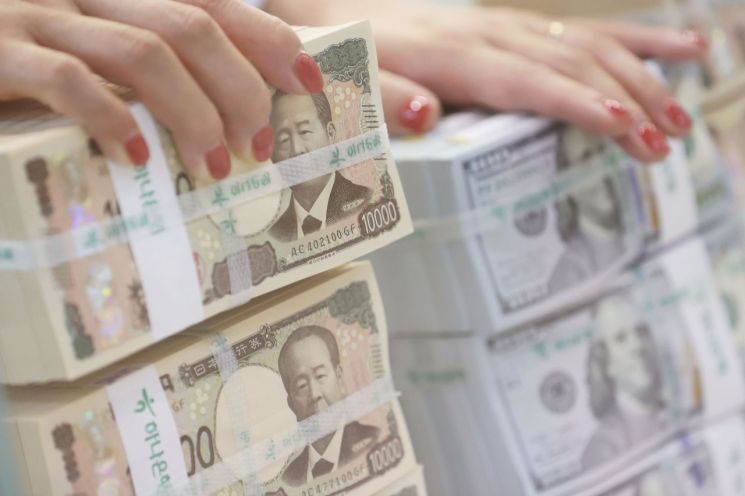 There is an analysis that the early general election being discussed in Japan is contributing to the weakness of the yen. Yonhap News Agency
Amid the ongoing weakness of the yen against the US dollar, there is growing analysis that the Japanese government may intervene in the market. Observers suggest that, as in 2024, if the Bank of Japan (BOJ) intervenes in the foreign exchange market, a sharp adjustment could occur.
According to Bloomberg on January 13 (local time), Eurizon SLJ Capital and Societe Generale have both stated that the continued depreciation of the yen is increasing the likelihood of Japanese government intervention, and that the risk of a sharp correction in the yen in the foreign exchange market is also rising as a result.
On this day, the yen-dollar exchange rate was trading at around 159.3 yen per US dollar in the Tokyo foreign exchange market. This is the lowest level in about a year and six months since July 2024, when the Japanese government last intervened in the market by buying yen to influence the exchange rate.
Reports that Japanese Prime Minister Sanae Takaichi may dissolve the House of Representatives and push for an early general election on the opening day of the regular Diet session on January 23 are also seen as contributing to the yen’s weakness.
This is due to expectations that if the Liberal Democratic Party wins the early general election, Prime Minister Takaichi’s active fiscal policies will be strengthened. There are concerns that a significant increase in fiscal spending could undermine confidence in the yen, which analysts say is contributing to the continued weakness of the currency.
Stephen Jen, CEO of Eurizon SLJ Capital, stated in a report, “The yen-dollar exchange rate is highly likely to fall this year,” adding, “If Japanese authorities intervene at an appropriate time, it could trigger a full-scale adjustment (a drop in the exchange rate).”
Market experts view 160 yen per dollar as the psychological threshold for intervention. The Bank of Japan previously intervened in 2024 when the yen rose to 160.17 yen per dollar. However, Japanese authorities have emphasized that they are more focused on excessive volatility and the speed of fluctuations, rather than any specific exchange rate level.
The criteria for determining when the yen’s fluctuations are considered excessive have not been made public. One market participant noted, “In 2024, a 10-yen rise in a single month was regarded as a sharp move,” and added, “A 4% move in a two-week time span would be inconsistent with fundamentals.”
On the other hand, some believe that the current weakness of the yen has already priced in these concerns and that the currency may be at a bottom. Kit Juckes, Chief FX Strategist at Societe Generale, stated in a report, “Despite the Takaichi administration holding a majority in the lower house, concerns about the sustainability of government debt make it unlikely that aggressive fiscal expansion policies will be pursued,” and analyzed, “This could be a buying opportunity for both Japanese government bonds and the yen.”
© The Asia Business Daily(www.asiae.co.kr). All rights reserved.

















