Key Player in Establishing Korea's Textile Industry in the 1950s
Major Overhaul Driven by Global Market Fluctuations and Petrochemical Downturn
Pivoting to Beauty and Healthcare for Fundamental Transformation
Taekwang Industrial, long known as a "reclusive company" focused on traditional businesses such as petrochemicals and textiles, is breaking a 70-year taboo and undergoing a bold transformation. The company is rapidly shifting its decades-old B2B (business-to-business) model toward beauty and healthcare, encompassing cosmetics and pharmaceuticals, effectively embarking on a complete overhaul of its corporate DNA.
On January 14, Taekwang Industrial announced that its board of directors had approved the acquisition of Dong Sung Pharmaceutical on January 7. Founded in 1957, Dong Sung Pharmaceutical is a mid-sized pharmaceutical company with high public recognition for products such as "Jeongro-hwan" and the hair dye "Seven-Eight." Taekwang Industrial's move to secure management rights of a pharmaceutical company-after signaling its entry into the consumer goods market by acquiring Aekyung Industrial-demonstrates a strong commitment not only to expanding its portfolio but also to immediately acquiring manufacturing and R&D capabilities to restructure its mid- to long-term growth strategy.
Ending 'Reclusive Management' and Entering the Ring for Survival
Taekwang Industrial laid the foundation for Korea's textile industry in the 1950s and has marked significant milestones in Korean industrial history, including being the first in the country to produce acrylic fiber and achieving vertical integration in petrochemicals. However, due to its conservative management style and aversion to external exposure, the company has always been regarded in the market as a "hidden powerhouse."
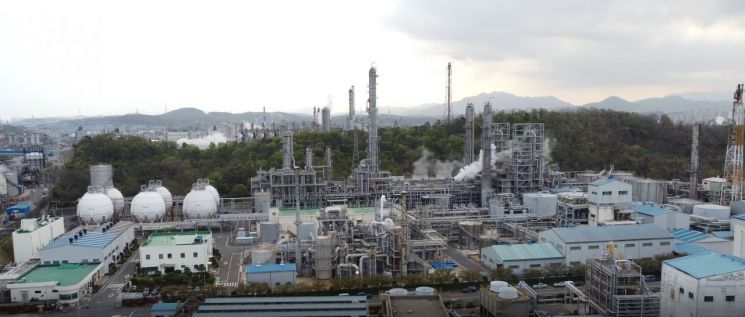 A view of the Taekwang Industrial Petrochemical Plant No. 3 located in Ulsan. The Asia Business Daily DB
Paradoxically, it was a "crisis of survival" that finally moved the seemingly impregnable Taekwang. The company faced an unprecedented situation of three consecutive years of losses, driven by the dual pressures of low-priced competition from Chinese firms and a structural downturn in the global petrochemical industry. As of the third quarter last year, cumulative losses reached 58.1 billion won. The realization that sustainable growth was no longer possible through the basic materials business alone became the driving force behind this "big deal."
The Aekyung-Dong Sung-SIL Triad: Riding the K-Beauty and Health Wave
Taekwang's strategy is clear: it has identified the high value-added consumer markets of beauty and healthcare as future growth engines and aims to internalize the entire process from product planning to manufacturing and distribution.
To this end, Taekwang Industrial recently established a cosmetics subsidiary called "SIL" and positioned Aekyung Industrial and Dong Sung Pharmaceutical as its two main pillars. The plan is to build a "beauty and healthcare platform" by combining Aekyung Industrial's manufacturing and distribution network with Dong Sung Pharmaceutical's expertise in pharmaceuticals and haircare R&D. In particular, the company intends to leverage its chemical technology accumulated through its existing B2B business to compete in the high-performance "derma-cosmetics" market.
Going forward, Taekwang Industrial will pursue a "two-track" strategy. While seeking to establish a foothold in the market through Aekyung Industrial, the company will accelerate "digital-first" marketing led by the new subsidiary SIL, focusing on sophisticated branding and content strategies. Once its brands are established, Taekwang plans to maximize consumer touchpoints by mobilizing group assets such as T-broad (home shopping), media commerce, and hotel infrastructure.
A Taekwang Industrial representative stated, "The acquisition of Dong Sung Pharmaceutical is a strategic decision to enhance our competitiveness in the K-beauty market by combining Dong Sung's R&D experience and haircare expertise with Taekwang's ongoing cosmetics business strategy. We will sequentially complete the value chain from product planning to manufacturing and distribution, laying the foundation for sustainable mid- to long-term growth."
© The Asia Business Daily(www.asiae.co.kr). All rights reserved.
![Clutching a Stolen Dior Bag, Saying "I Hate Being Poor but Real"... The Grotesque Con of a "Human Knockoff" [Slate]](https://cwcontent.asiae.co.kr/asiaresize/183/2026021902243444107_1771435474.jpg)
















