Hwaseong City: "Allocation Should Be Based on Demand Such as Area and Population"
Osan City: "Integrated License Issuance Must Be Introduced"
The conflict between Hwaseong City and Osan City in Gyeonggi Province over the allocation of 92 new taxi licenses, which increased due to the "taxi quota system," continues into the new year. Hwaseong City insists that the additional licenses should be distributed based on population and area, while Osan City argues for issuing integrated licenses that go beyond individual local governments within the "integrated business district."
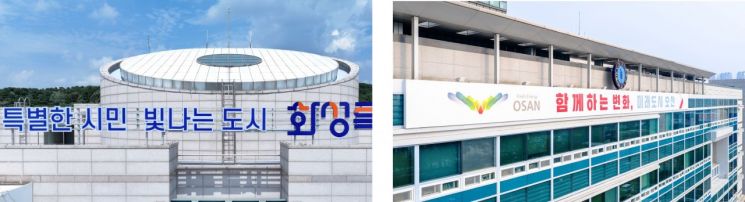
According to Hwaseong City and Osan City on January 13, the Gyeonggi Provincial Dispute Mediation Committee is scheduled to hold a second review on January 16 to mediate the conflict between the two cities regarding the allocation of taxi licenses in the integrated business district, where their taxi service areas overlap.
This dispute arose over the allocation of 92 additional taxis under the fifth Gyeonggi Province taxi quota system. The conflict stems from Osan City's claim that, based on a 2018 agreement between the unionized taxi companies of both cities, the licenses within the integrated business district should be divided in a 75 to 25 ratio, while Hwaseong City argues for a 9 to 1 distribution based on population and area. The integrated business district is an area where taxis from multiple regions can operate freely across administrative boundaries.
During the second review, the committee is expected to listen to and coordinate the positions of both cities regarding the "integrated license issuance" proposed by Osan City during the first review held in December of last year. Integrated license issuance refers to a system in which taxi licenses, previously issued by each city or county, are unified to manage all taxi operations collectively.
Osan City has suggested that changing to an integrated license issuance system, which manages the entire integrated business district as a single operational unit, could reduce long-term conflicts between local governments over the allocation of new licenses.
Hwaseong City, however, has stated that it cannot accept this proposal. The city pointed out, "Currently, the number of people per taxi in Hwaseong is 752, which is more than twice as many as Osan's 340. In particular, unlike Osan, which has a high urbanization rate, Hwaseong includes not only industrial complexes but also vast rural and fishing areas, making the inconvenience felt by citizens due to taxi shortages much more severe."
Hwaseong City added that although it is deploying "Happiness Taxis" and "Voucher Taxis" in areas with poor public transportation, the absolute shortage of taxis means that citizens are having their basic right to mobility threatened, even for essential activities such as visiting hospitals or purchasing daily necessities.
Hwaseong City also argues that the 70,000 registered foreign nationals excluded from taxi demand calculations should be considered. The city claims that foreign workers in industrial complexes, facing taxi shortages, are being tempted into "illegal paid transportation," which poses a safety risk to all citizens.
An official from Hwaseong City stated, "Above all, the safety and convenience of citizens must be the top priority in the allocation of taxi licenses. We hope for a rational decision that narrows the severe taxi supply gap between Hwaseong and Osan and reflects the unique characteristics of each region."
© The Asia Business Daily(www.asiae.co.kr). All rights reserved.

















