Fine Dust Reduction Forests and Green Welfare Forest to Be Established Within the Year
Gwangju Metropolitan City will establish 10 new urban forests throughout the city this year to address the intensifying heat waves and urban heat island effect caused by climate change.
On January 13, Gwangju City announced that it will invest a total of 2.06 billion won (1.31 billion won from the national government and 750 million won from the city budget) to create nine fine dust reduction forests and one green welfare forest by the end of this year. The national funding was secured last year through public contests held by the Korea Forest Service and other central government agencies.
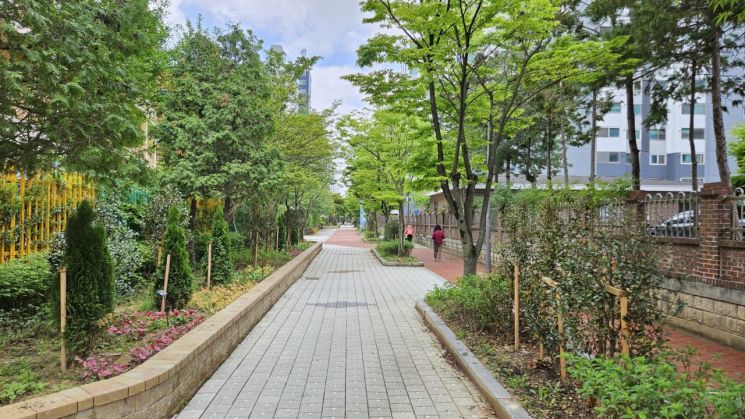
The fine dust reduction forest initiative will be carried out across three projects at nine locations. The urban wind path forests will be established in five areas: Pilmun-daero in Dong-gu, landscape green space in Pungam-dong, Seo-gu, Hyocheon 3-ro in Nam-gu, Yuan Neighborhood Park in Nam-gu, and the pedestrian-only road in Suwan-dong, Gwangsan-gu. The Child Safety Green Forests will be created at three elementary schools: Bangnim Elementary School and Wolsan Elementary School in Nam-gu, and Seonun Elementary School in Gwangsan-gu. In addition, one community-oriented outdoor garden will be established at Chonnam National University in Buk-gu.
The green welfare forest will be created at Boram's House in Gwangsan-gu. This forest is designed to provide forest welfare and accessibility for vulnerable groups.
Through the creation of urban forests, Gwangju City expects to increase urban greenhouse gas absorption, lower the perceived temperature during heat waves, block fine dust, and provide spaces for relaxation.
The project sites were finalized in December last year following a review by the Urban Forest Creation and Management Committee. Experts, civic groups, and resident committee members comprehensively reviewed the effectiveness of the projects, the appropriateness of scale, and regional balance.
Jung Kangwook, Director of Green Policy, stated, "Urban forests are urban infrastructure that help mitigate heat waves and reduce fine dust," adding, "We will continue to expand green spaces that citizens can tangibly benefit from in response to climate change."
On January 16, Gwangju City will hold a policy workshop for officials in charge of parks and green spaces to share the main work plans for the parks and green spaces sector for 2026.
© The Asia Business Daily(www.asiae.co.kr). All rights reserved.
![Clutching a Stolen Dior Bag, Saying "I Hate Being Poor but Real"... The Grotesque Con of a "Human Knockoff" [Slate]](https://cwcontent.asiae.co.kr/asiaresize/183/2026021902243444107_1771435474.jpg)
















