"Theft Prevention? Or Just an Excuse?"
Privacy Concerns Grow as Major US Retailers Expand Use of Facial Recognition
Regulation Still Lags Behind Despite Misidentification and Discrimination Controversies
Major US retailers are introducing facial recognition technology under the pretext of preventing in-store theft, sparking controversy over privacy infringement. As biometric technology rapidly spreads beyond the realm of law enforcement, such as police and immigration authorities, into everyday consumer spaces, concerns are mounting over potential abuse of the technology and violations of civil liberties.
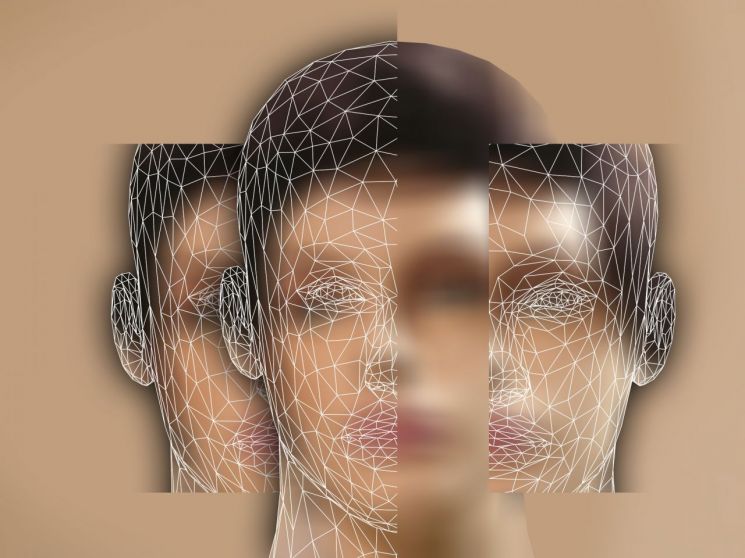 Major US retailers are introducing facial recognition technology under the pretext of preventing in-store theft, sparking privacy infringement controversies. Photo is unrelated to the specific content of the article. Pixabay
On January 12 (local time), international media including CNN reported that major US supermarket chain Wegmans is facing controversy after recently implementing facial recognition technology at its New York City stores. Wegmans locations in Manhattan and Brooklyn have recently posted notices at their entrances stating that they collect facial, eye, and voice data. This is in accordance with a law enacted by New York City in 2021, which requires businesses to notify customers in advance if they collect or store biometric information. Wegmans explained that the measure is intended to ensure the safety of employees and customers, and clarified that the technology is used solely to identify individuals previously classified as having engaged in "problematic behavior" at their stores. However, customers have expressed discomfort and resistance, saying they feel like they are being surveilled simply for going grocery shopping.
Not only Wegmans, but also major retailers such as Walmart, Kroger, and Home Depot have stated in their privacy policies that they may use biometric technologies, including facial recognition. These companies reportedly maintain internal "watch lists" to prevent theft, using the technology to send real-time alerts to employees when individuals on these lists enter the store.
The controversy has also extended to entertainment venues. MSG Entertainment has sparked debates over privacy infringement by operating an "exclusion list" that automatically identifies and restricts entry for certain individuals at Madison Square Garden and Radio City Music Hall. Experts point out that while most large and medium-sized retailers in the US already utilize biometric technology, ordinary citizens have strong objections to such practices.
Facial Recognition for Theft Prevention Leads to Actual Cases of Harm
The core issue is that regulation has not kept pace with the rapid spread of the technology. The US Federal Trade Commission (FTC) warned in 2023 that "as biometric surveillance technology becomes more sophisticated and widespread, it threatens privacy and civil rights," yet comprehensive federal regulation remains insufficient. Actual cases of harm have occurred. Rite Aid, a pharmacy chain, agreed in 2023 to suspend the use of facial recognition technology for five years after it mistakenly identified customers as criminals due to facial recognition errors and was accused of unfairly targeting people of color. Jeremy Scott, an attorney at the Electronic Privacy Information Center (EPIC), pointed out that "in the absence of oversight and transparency, the risk of abuse of the technology is extremely high."
Expansion to Immigration Enforcement... Growing Concerns Over a 'Surveillance Society'
Such controversy is not limited to the private sector. According to the Wall Street Journal, the US Immigration and Customs Enforcement (ICE) has introduced a smartphone-based facial recognition app called "Mobile Fortify" to enhance the efficiency of illegal immigrant crackdowns. Enforcement officers can simply take a photo of a suspicious person's face on-site, and the app instantly verifies their identity and immigration status through criminal and immigration databases.
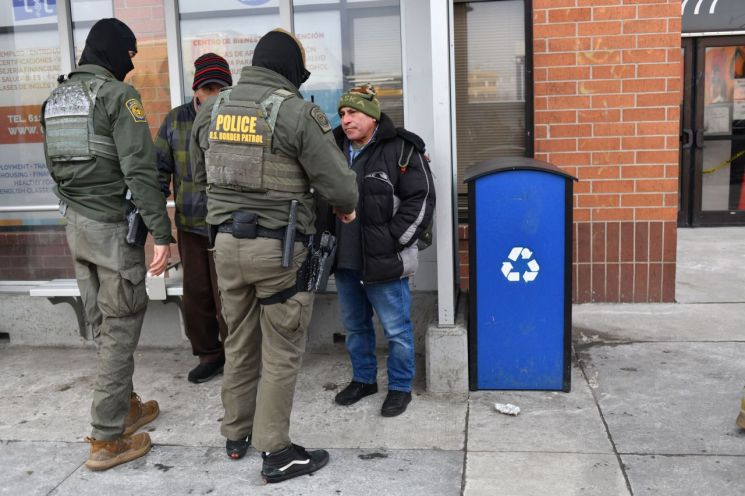 The U.S. Immigration and Customs Enforcement (ICE) has introduced a smartphone-based facial recognition app called "Mobile Fortify" to enhance the efficiency of illegal immigrant crackdowns. Enforcement officers can simply take a photo of a suspicious person's face on-site, and the app instantly verifies their identity and immigration status through criminal and immigration databases. Photo by AFP Yonhap News Agency
The app has already been used more than 100,000 times, and ICE has stated that it does not require the subject's consent when taking photos. During President Trump's second term, ICE received a significant budget increase, and full-scale testing of various biometric technologies, including facial and iris recognition, began. Experts warn that as facial recognition technology becomes routinely used across retail stores and government agencies, consumers' right to know and citizens' freedoms are being structurally threatened. Furthermore, although the stated goals are theft prevention and crime deterrence, there is still a lack of social consensus on the technology's accuracy, potential for discrimination, and transparency in data management.
© The Asia Business Daily(www.asiae.co.kr). All rights reserved.
![Clutching a Stolen Dior Bag, Saying "I Hate Being Poor but Real"... The Grotesque Con of a "Human Knockoff" [Slate]](https://cwcontent.asiae.co.kr/asiaresize/183/2026021902243444107_1771435474.jpg)

















