Supreme Court Overturns Appellate Ruling and Remands Case
The Supreme Court has ruled that even if a landlord refuses to provide relevant information when brokering a lease contract for a multi-family house, a licensed real estate agent is still obligated to explain to the tenant about any prior-ranking claims.
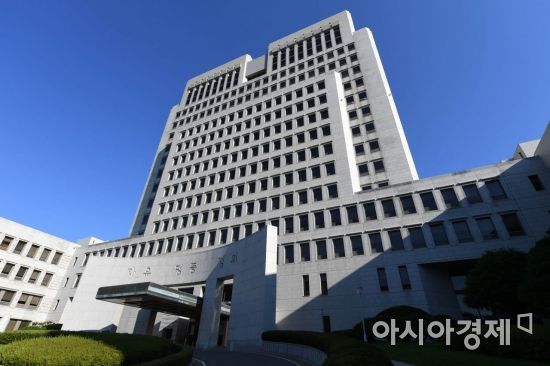
According to the legal community on January 13, the Supreme Court's Second Division (Presiding Justice Oh Kyungmi) overturned the lower court's ruling, which had dismissed the claim filed by Mr. A against the Korea Association of Realtors for compensation, and remanded the case to the Seoul Central District Court.
In April 2020, Mr. A, through the brokerage of Mr. B, signed a lease contract for one unit of a multi-family house in Suwon with a deposit of 110 million won. At the time, a maximum secured claim of 715 million won was registered as a mortgage on the property, and the combined total of prior-ranking lease deposit claims on the other units amounted to 740 million won. The property confirmation and explanation document provided by Mr. B included information about the mortgage and only stated, "It was verbally explained that there are multiple prior-ranking claims due to the landlord's refusal to submit documents."
Later, auction proceedings began for the multi-family house, and as the prior-ranking creditors received preferential distribution, Mr. A did not receive the full amount of his deposit. Mr. A then filed a lawsuit, claiming that he suffered losses due to Mr. B's breach of duty of care.
The court of first instance recognized the agent's breach of duty of care and ruled partially in favor of Mr. A. However, the appellate court ruled against Mr. A, stating, "Although Mr. A became aware of the landlord's refusal to provide documents and the existence of multiple prior-ranking lease contracts through the agent's explanation, he still entered into the contract, and it is reasonable to view that he did so at his own risk and responsibility."
However, the Supreme Court's judgment differed. The bench stated, "Even if the landlord refused to provide the relevant documents, it is possible to verify, based on the size of the multi-family house, the total number of units, and the prevailing lease deposit prices in the area, how much in prior-ranking lease deposit claims exist that have acquired enforceability or a fixed date, or are protected as small-amount tenants."
The court further explained, "A real estate agent has a duty to diligently investigate and confirm, with the care of a good manager and in good faith, how much in prior-ranking lease deposit claims may exist for the multi-family house, and must faithfully explain this to the tenant client. If the agent, through intent or negligence, breaches this duty and causes financial loss to the tenant client, the agent is liable to compensate for such damages."
© The Asia Business Daily(www.asiae.co.kr). All rights reserved.

















