Han Byungdo Stresses "No Differences Between Party and Government" Amid Efforts to Calm Tensions
Kim Seungwon and Kim Yongmin Warn of "Creation of a Special Investigations Unit"
Concerns Raised Over Retention of Supplementary Investigative Powers
Tensions are rising within the ruling party over the Prosecution Office Act and the Serious Crimes Investigation Agency (SCIA) Act, both of which are being promoted as part of prosecution reform. While the Democratic Party leadership insists there are no differences of opinion between the party and the government regarding these bills, dissenting voices are emerging within the ruling bloc.
On January 13, Han Byungdo, floor leader of the Democratic Party, stated at his first party strategy meeting since taking office, "Yesterday, the government announced the legislative notice for the Prosecution Office Act and the SCIA Act. Some are expressing concern, suspecting differences between the party and the government, but there is no such disagreement." Han added, "Abolishing the Prosecution Service for the first time in 78 years and fully separating investigation and indictment is a massive project akin to building a new house for Korea's judiciary. It is only natural to engage in intense debate over the blueprint to ensure a solid structure. We will do our utmost to achieve prosecution reform that truly protects democracy and human rights."
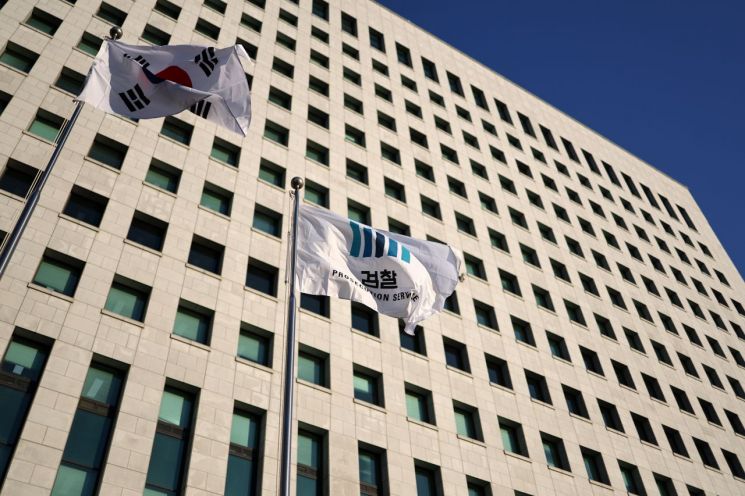
The previous day, the Prosecution Reform Task Force under the Prime Minister's Office unveiled the draft of the SCIA Act. The bill would allow the new agency to exclusively investigate not only corruption and economic crimes, which the prosecution previously handled, but also the so-called "nine major serious crimes": public officials, elections, defense procurement, large-scale disasters, narcotics, national security crimes such as insurrection and foreign exchange violations, and cybercrime. The agency's personnel would be divided into "judicial investigators" and "specialist investigators."
Despite the leadership's insistence that there are no differences with the government, the internal atmosphere is markedly different. Regarding the SCIA Act, Democratic Party lawmaker Kim Seungwon said on a YouTube broadcast that day, "The prosecution has accumulated excessive power over 80 years, leading to many abuses, including manipulation of investigations that could even alter the people's legitimate choices. To prevent this, investigation and indictment were separated, but now it seems like a special investigations unit has been created, which I see as a regression."
Kim Yongmin, the Democratic Party's chief member on the Legislation and Judiciary Committee, remarked, "The SCIA's dual structure is the best plan devised by those seeking to block prosecution reform," and expressed concern that "after the Lunar New Year, the issue will be pushed to June due to the local elections in March."
In political circles, there is concern that the underlying reason for the backlash within the ruling bloc is the possibility that the prosecution will retain supplementary investigative powers. Supplementary investigative power allows prosecutors to directly investigate or request further investigation from the relevant agency if they find deficiencies in cases transferred by the police or the SCIA. Kim Yongmin pointed out that the government's SCIA Act "was essentially drafted on the premise of granting supplementary investigative powers to the prosecution, and the dual structure of the SCIA could create various problems." Hwang Unha, a lawmaker from the Rebuilding Korea Party, argued, "Whether supplementary investigative powers remain in the Criminal Procedure Act or the principle of full case transfer (requiring all police investigation cases, including those deemed 'no charges,' to be transferred to the Prosecution Office) is revived, both depend on the Criminal Procedure Act. Since there is no schedule for amending the Criminal Procedure Act, it appears there is an intention to leave supplementary investigative powers in place by delaying the amendment amid a period of confusion."
The Rebuilding Korea Party, which is classified as part of the ruling bloc, is also pushing back. Lawmakers Cha Kyugeun, Hwang Unha, and Shin Jangshik held a press conference at the National Assembly that morning, stating, "The Prosecution Office Act and SCIA Act announced by the government yesterday deviate from the essence of prosecution reform. They only pretend to separate investigation and indictment, but in reality, they are a ploy to subtly extend the prosecution's vested interests," and called for a fundamental review of the so-called "second Prosecution Service Act."
They pointed out, "The government insists that deleting the provision for prosecutors to initiate investigations in the Prosecution Office Act will eliminate abuse of investigative power, but the prosecutor's fundamental authority to investigate remains in Article 196 of the Criminal Procedure Act." Regarding the dual structure of the SCIA's personnel, they argued, "Suspicions that the SCIA and the Prosecution Office might be merged again depending on future political circumstances are by no means excessive. This is not what separation of investigation and indictment truly means."
For now, the Democratic Party plans to hold a general assembly of its lawmakers on January 15 to gather opinions. Kim Hyunjung, the Democratic Party's floor spokesperson, stated, "We plan to proceed with discussions quickly starting today and will collect opinions from the Legislation and Judiciary Committee and other relevant lawmakers, focusing on the party's floor leadership."
© The Asia Business Daily(www.asiae.co.kr). All rights reserved.
![Clutching a Stolen Dior Bag, Saying "I Hate Being Poor but Real"... The Grotesque Con of a "Human Knockoff" [Slate]](https://cwcontent.asiae.co.kr/asiaresize/183/2026021902243444107_1771435474.jpg)











