Capital One Financial down 6.42%... Citigroup down 2.98%
Industry: "Harm to American Households... Weakening the Economy"
Experts: "Short-Term Help... No Additional Loans Possible"
On January 12 (local time), the share prices of major card companies, banks, and other financial firms plummeted on the New York Stock Exchange following U.S. President Donald Trump’s remarks about capping credit card interest rates at 10%. The industry is pushing back, arguing that a 10% cap would actually harm American households and weaken the economy.
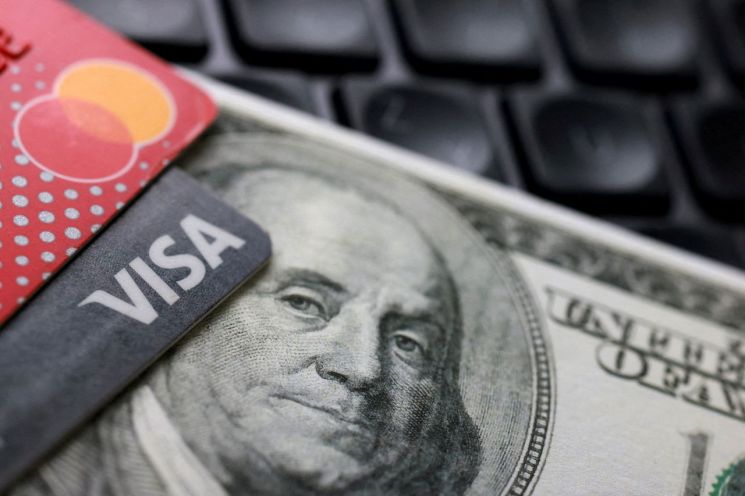
On this day, American Express closed down 4.27%, while Capital One Financial dropped 6.42%. JPMorgan Chase fell 1.43%, Bank of America declined 1.18%, and Citigroup decreased by 2.98%. Even Visa and Mastercard, which operate payment networks but do not engage in lending, showed weakness, falling by 1.88% and 1.61% respectively.
Previously, on January 9, President Trump posted on his social media platform, Truth Social, stating, “I will make sure credit card companies can no longer rip off Americans,” and demanded that credit card interest rates be capped at a maximum of 10% for one year. He announced plans to introduce this interest rate cap starting January 20, marking the first anniversary of the launch of his second administration. However, the specific policy details and how card companies would be required to comply remain unclear.
The credit card interest rate is the fee charged on unpaid balances from card spending. According to the Federal Reserve Bank of New York, about 60% of credit card users carry a revolving balance.
According to LendingTree, the average credit card interest rate in the United States as of January was 23.79%. Matt Schulz, Chief Credit Analyst at LendingTree, explained that if a consumer repaid a $7,000 balance at an annual interest rate of 23.79% by making monthly payments of $250, it would take 41 months to pay off the debt, with $3,314 paid in interest. However, if the rate were 10%, the debt could be cleared in 32 months with only $1,004 in interest.
The Vanderbilt Policy Accelerator at Vanderbilt University estimated that setting the credit card interest rate at 10% would reduce Americans’ annual interest burden by $100 billion.
This proposal appears to be a pledge aimed at public sentiment, with “affordability” emerging as the most pressing issue ahead of the midterm elections.
Banks and card companies, for whom credit card interest is a major source of revenue, quickly issued rebuttals. The Electronic Payments Coalition, which consists of major banks and card companies, stated that applying a 10% cap would result in 82-88% of existing credit card accounts being closed or severely restricted. They argued that such a policy would harm American households, limit opportunities, and weaken the economy.
Michael Miller, an analyst at Morningstar, noted that President Trump’s remarks did not include any policy or legislative announcements, saying, “I think the likelihood of the cap being implemented is low, but if it is, it would have a serious negative impact on credit card profitability.”
Experts warn that consumers with no credit history or low credit scores may find it harder to obtain cards and could be pushed toward riskier lenders. Odysseas Papadimitriou, CEO of WalletHub, commented, “It would help consumers with debt in the short term, but once they pay off their debt, they may no longer qualify for additional loans.”
© The Asia Business Daily(www.asiae.co.kr). All rights reserved.

















