Artificial intelligence (AI) technology has been developed to diagnose depression and evaluate the effectiveness of treatment. Because depressive feelings are complex and ambiguous, it is difficult to ensure objectivity through subjective surveys and interviews. In contrast, AI can diagnose depression by analyzing daily behaviors, which allows for objectivity and the proposal of personalized treatment strategies, making this approach significant.
On January 13, KAIST announced that a research team led by Distinguished Professor Heo Wondo from the Department of Biological Sciences has developed AI technology that analyzes the daily behavioral patterns of animal models, demonstrating that depression symptoms can be detected in everyday behaviors depending on gender and severity.
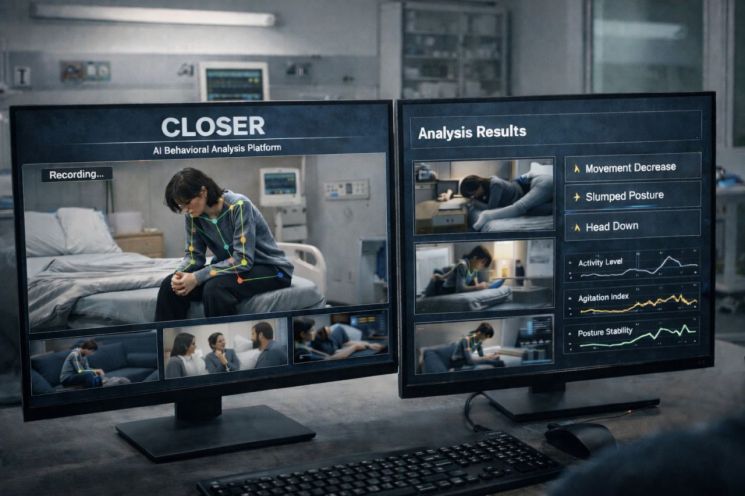 A research team at KAIST has developed an AI platform called "Closer" that objectively analyzes depressive feelings by examining daily behavior patterns and proposes personalized treatment strategies. Provided by KAIST (AI-generated image)
The research team first focused on the fact that the movements of the arms and legs, as well as posture and facial expressions, differ between patients with depression and the general population.
To precisely identify 'psychomotor' phenomena-where emotions and emotional states are expressed through motor abilities-the team developed an AI platform called 'Closer' (Contrastive Learning-based Observer-free analysis of Spontaneous behavior for Ethogram Representation·CLOSER). This platform automatically detects subtle behavioral changes associated with depressive states by analyzing the posture and movements of experimental animals in three dimensions.
Closer uses a 'contrastive learning' algorithm, an AI technique, to distinguish and analyze subtle behavioral differences. This enables the accurate identification of even minute behavioral changes that are difficult to detect with the human eye.
Utilizing this technology, the research team created a mouse model of Chronic Unpredictable Stress (CUS), which most closely resembles depression, and verified whether depressive states in daily life could be distinguished based solely on behavior. As a result, Closer accurately distinguished depressive states that varied according to gender and symptom severity.
In particular, behavioral syllables altered by stress in the depression model showed distinct differences by gender. For example, male mice exhibited reduced exploratory and rotational behaviors, while these behaviors actually increased in female mice. These behavioral changes in daily life became more pronounced with longer periods of stress exposure.
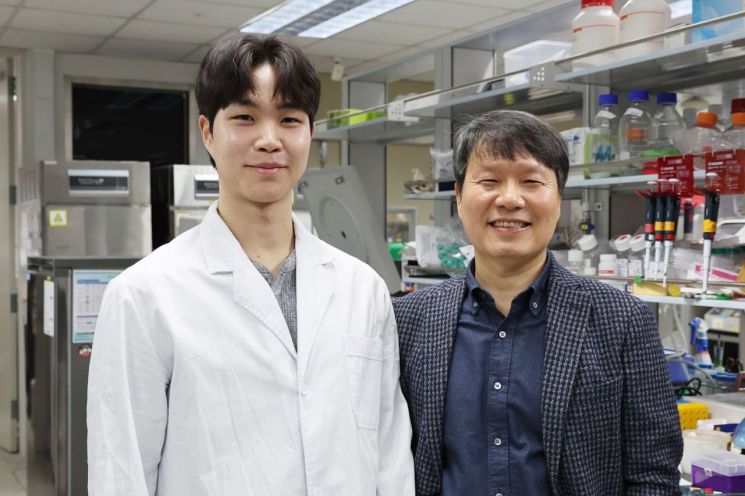
The research team further analyzed inflammation-based depression models and stress hormone (corticosterone)-based depression models to determine whether the causes of depression are reflected in behavioral patterns.
The results showed that when depressive states were induced by sustained stress or inflammation, daily behaviors changed noticeably, whereas administering only stress hormones resulted in little to no behavioral change. This demonstrates that observing everyday behaviors alone can distinguish between different states of depression based on cause or gender.
Furthermore, the team analyzed the effects of antidepressants-either already used in depression treatment or currently in clinical trials-on depressive symptoms manifested in behavior. When antidepressants were administered to the depression model, both behavioral syllables (basic units of behavior) and behavioral grammar (the flow and patterns of behavior) that had changed due to stress were partially restored.
The team also found that each antidepressant restores human behavior in different ways. They identified a 'behavioral fingerprint' that can distinguish which medication is more effective simply by observing behavior. This suggests that, in the future, it will be possible to select the most effective antidepressant for each individual by analyzing behavioral changes, enabling personalized treatment.
Professor Heo stated, "This research is a preclinical framework that enables personalized diagnosis and treatment assessment for depressive disorders by integrating an AI-based daily behavior analysis platform into depression diagnosis. We expect it will serve as an important foundation for developing personalized therapeutics and precision medicine for patients with mental disorders in the future."
Meanwhile, Hyunsik Oh, a doctoral candidate in the Department of Biological Sciences at KAIST, participated as the first author in this study. The research results (paper) were recently published online in the international journal Nature Communications.
© The Asia Business Daily(www.asiae.co.kr). All rights reserved.
![Clutching a Stolen Dior Bag, Saying "I Hate Being Poor but Real"... The Grotesque Con of a "Human Knockoff" [Slate]](https://cwcontent.asiae.co.kr/asiaresize/183/2026021902243444107_1771435474.jpg)

















