Direct Contrast with Major Parties' Multi-Million-Won Nomination Fees
Low-Cost Election Model: Can It Become an Alternative to Vested-Interest Politics?
Political Circles Focus on Lee Junseok's Nomination Reform
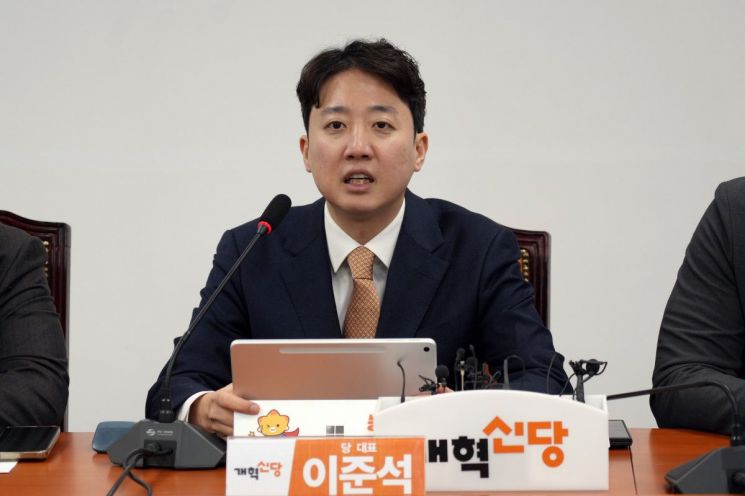
The "990,000 Won Nomination" experiment proposed by Lee Junseok, leader of the Reform New Party, is drawing simultaneous attention from both the political sphere and the younger generation ahead of the June 3 local elections. If Lee's plan to drastically lower election costs and nomination barriers leads to actual institutional reform, it is expected to have a significant impact on the local political structure, which has long been dominated by the two major parties.
The short 30-second video released by Lee on the 9th surpassed 1.8 million views as of the 11th, just three days after its release. The video contained the message, "We will reduce the cost of running for basic councilor to 990,000 won," and the comments section was filled with reactions such as "Let's clean things up in a big way," "Politics has finally come down to reality," and "At this rate, even I want to give it a try." The number of comments alone reached approximately 3,500.
Previously, Lee Junseok emphasized on Facebook, "Until now, running for office has been out of reach for ordinary people, and in the end, only those with money, time, and connections remained in politics," adding, "Without changing the structure of nomination and election expenses, generational change in politics is impossible." Amid recent controversy over alleged nomination donations within the Democratic Party, the Reform New Party's nomination method is gaining attention as an "alternative model."
The core of the nomination reform plan proposed by the Reform New Party is: ▲ complete elimination of internal screening fees and deposits ▲ 100% online nomination procedures ▲ production of essential campaign materials at minimal cost. Previously, running for basic councilor typically required around 30 million won, including not only the deposit paid to the state but also internal party expenses such as document screening fees, interview fees, and campaign material production. For metropolitan councilors, costs often exceeded 50 million won.
In fact, during the 2022 local elections, both the Democratic Party and the People Power Party collected screening fees and deposits amounting to several million won from preliminary candidates. It is reported that the two parties earned over 10 billion won in a single local election through these fees. When adding campaign vehicle rentals, office leases, and campaign worker wages, the actual financial burden on individual candidates soars to tens of millions of won even for basic councilor races, and to hundreds of millions for metropolitan mayor or National Assembly elections.
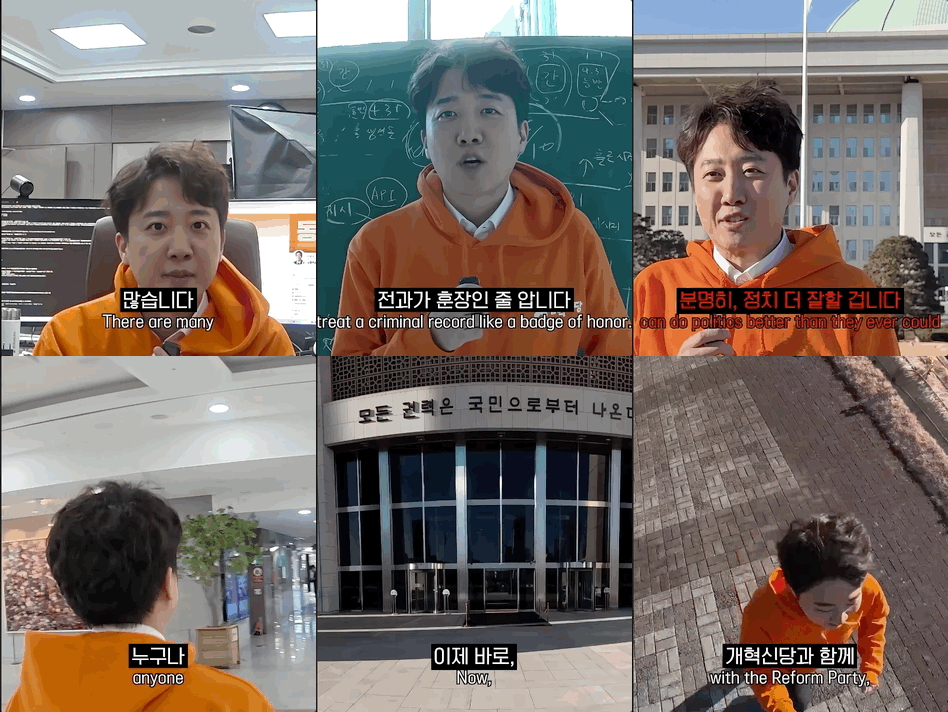 A short 30-second video released by Lee Junseok, leader of the Reform New Party, surpassed 1.8 million views as of the 11th, three days after its release. The video contained the message, "We will reduce the cost of running for a basic council member to 990,000 won." Reform New Party official YouTube channel
In contrast, the Reform New Party stated, "The very structure of collecting money during the candidate selection process is the starting point of vested-interest politics," and announced that it would completely abolish screening fees. The 990,000 won only covers the legally mandated minimum cost for campaign materials, and the use of campaign vehicles or hiring campaign workers is left to the candidate's discretion.
There is also an assessment that this "low-cost election" experiment has already been tested once. In last year's June presidential election, Lee Junseok ran as the Reform New Party candidate and spent about 2.836 billion won on the campaign. This is about one-twentieth of the amount spent by Democratic Party candidate Lee Jaemyung (about 53.5 billion won) and People Power Party candidate Kim Moonsu (about 45 billion won) at the time. Lee did not employ any paid campaign workers except for volunteers and operated only four campaign vehicles.
The political community is also responding. Seoul Mayor Oh Sehoon mentioned during a party lecture on the 9th, "There is a possibility that a large number of young talents will flock to the Reform New Party's candidate recruitment method," and added, "Whether through mergers or alliances, existing parties will need to consider how to respond." Attention is focused on whether the Reform New Party's 990,000 won nomination will remain a one-time experiment or lead to a structural change that shakes up local politics.
© The Asia Business Daily(www.asiae.co.kr). All rights reserved.
![Clutching a Stolen Dior Bag, Saying "I Hate Being Poor but Real"... The Grotesque Con of a "Human Knockoff" [Slate]](https://cwcontent.asiae.co.kr/asiaresize/183/2026021902243444107_1771435474.jpg)

















