Maximum Interest Rate of 18.9%, Average 14.1%... Interest Income Estimated at 700?800 Million Won
Criticism: "Effectively a Secured Loan, But Charged Unsecured Loan Rates"
The Coupang Financial loan product for sellers on the Coupang platform has recorded nearly 2,000 transactions and a cumulative loan amount of 18.2 billion won within about half a year since its launch. However, controversy over the appropriateness of its interest rates is growing.
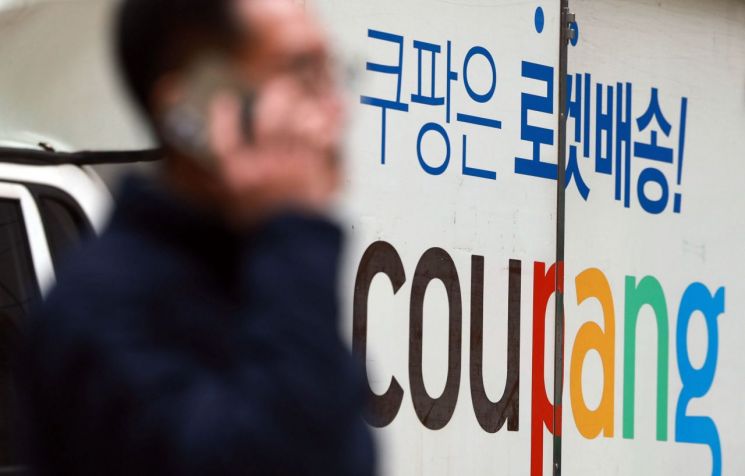
According to data obtained by Assemblyman Kang Min-guk, a member of the National Assembly’s Political Affairs Committee, from the Financial Supervisory Service on January 11, the "Coupang Seller Growth Loan" has been sold 1,958 times since its launch at the end of July last year, with a cumulative loan amount reaching 18.174 billion won as of last month. As of the end of last year, the outstanding loan balance stood at 13.414 billion won, and new sales were temporarily suspended starting December 29 of the same year.
The product allows sellers on Coupang to borrow up to 50 million won, with an annual interest rate of up to 18.9%. If a delinquency occurs, the principal and interest are recovered using the seller’s Coupang settlement funds as collateral.
The monthly applied interest rates were 14.0% in July, 13.6% in August, 13.8% in September, 14.0% in October, 14.3% in November, and 14.3% in December. The average interest rate for the entire July to December period was 14.1%.
Applying the average interest rate to the outstanding loan balance at the end of last year and simply calculating for the approximately five-month period since launch, it is estimated that interest income of about 700 million to 800 million won was generated.
The Financial Supervisory Service is investigating whether Coupang Financial leveraged its dominant position in the large-scale distribution platform market to impose excessively high interest rates on sellers. On January 7, a prior notice of inspection was sent to Coupang Financial, and an on-site inspection began the following day.
The core issue is whether Coupang Financial sold the product as an unsecured loan, even though the settlement funds receivable from sellers were effectively tied as the repayment source. There are concerns that, despite having a structure where principal and interest are first recovered from settlement funds, the company may have applied interest rates typical for unsecured loans, which are determined solely based on credit without collateral.
Additionally, the plan is to examine whether the method of automatically repaying 5% to 15% of Coupang sales from the seller’s settlement on the repayment date could potentially violate the Financial Consumer Protection Act. The investigation will also check whether the impact of this automatic deduction structure on the seller’s cash flow and business operations was clearly disclosed.
An official from the Financial Supervisory Service stated, "We will examine whether the interest rate calculation, as well as the loan origination and repayment methods, comply with the regulations of the Financial Consumer Protection Act."
Coupang argues that the high interest rates were inevitable because the product targets financially marginalized sellers, such as those with mid- to low credit scores. According to Coupang Financial, 89.4% of all users were mid- to low-credit individuals (the bottom 50% by credit score), and 48.9% had average monthly sales of less than 10 million won.
A Coupang Financial representative explained, "As a specialized credit finance company, our business structure inevitably results in higher interest rates than commercial banks," adding, "Our rates are similar to those in the specialized credit finance and secondary banking sectors."
However, the product requires eligibility criteria such as monthly sales of at least 500,000 won and a sales history of at least six months. It is designed so that only sellers with a certain level of business continuity can use it. Some counter that the platform structure absorbs a significant portion of the low-credit risk.
Assemblyman Kang criticized, "Under the pretext of making loans easily available to self-employed sellers with low credit ratings on the Coupang platform, the company has in reality engaged in usury with a maximum interest rate of 18.9%."
Meanwhile, according to Assemblyman Kang Min-guk’s office, Coupang Financial’s competitor, Naver Financial, currently operates three dedicated loan products for its platform sellers (Smart Store) and applies lower interest rates than Coupang Financial.
For example, Mirae Asset Capital’s loan product had an average annual interest rate of 12.4% last year (ranging from a maximum of 16.0% to a minimum of 8.7%), Woori Bank’s loan product had an annual rate of 6.89% (ranging from 7.91% to 5.92%), and IBK Industrial Bank of Korea’s loan product had a rate of 3.94% (ranging from 4.77% to 3.25%).
© The Asia Business Daily(www.asiae.co.kr). All rights reserved.
![Clutching a Stolen Dior Bag, Saying "I Hate Being Poor but Real"... The Grotesque Con of a "Human Knockoff" [Slate]](https://cwcontent.asiae.co.kr/asiaresize/183/2026021902243444107_1771435474.jpg)
















