Lim Miae: “The K-Steel Act Is the Starting Point for Transforming the Industrial Landscape, Beyond Reviving Pohang’s Economy”
On January 8, Assemblywoman Lim Miae of the Democratic Party of Korea and Chair of the North Gyeongsang Provincial Party visited the Pohang Chamber of Commerce and Industry to express her gratitude for the efforts made by the local business community in responding to the crisis in the steel industry. She also discussed strategies for revitalizing the Pohang economy, using the K-Steel Act as a catalyst.
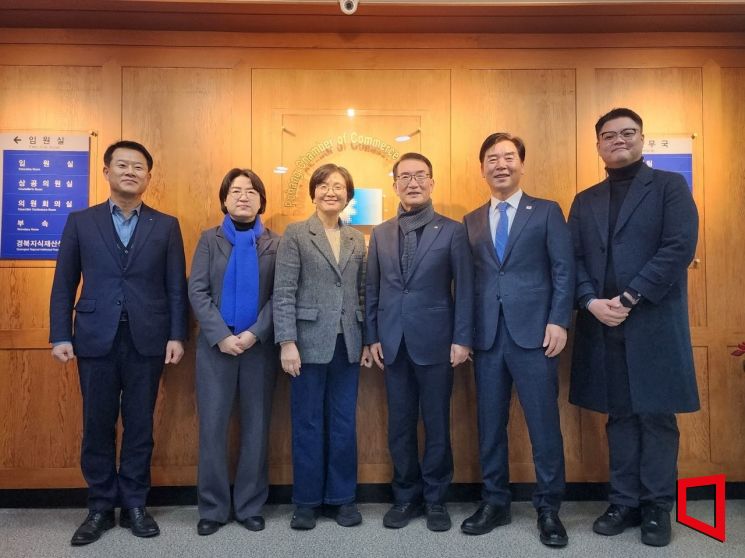
This visit was arranged to assess the structural crisis facing Pohang’s steel industry amid the triple challenges of global oversupply, strengthened protectionism, and rising energy costs, and to seek practical solutions that would ensure that policies and budgets lead to tangible recovery on the ground.
Pohang was designated as a preemptive industrial crisis response area in August last year, and later included as a preemptive employment crisis response area. In November of the same year, the “Special Act on Strengthening the Competitiveness of the Steel Industry and Transition to Carbon Neutrality,” commonly known as the K-Steel Act, was passed by the National Assembly, marking an institutional turning point.
During a meeting attended by Chairman Na Jooyoung and executives of the Pohang Chamber of Commerce and Industry, Assemblywoman Lim stated, “The solidarity and efforts shown by Pohang’s business leaders to overcome the crisis during the downturn in the steel industry were by no means easy choices. The proactive request for the K-Steel Act and designation as a preemptive industrial crisis response area, as well as the joint submission of a petition to the government together with the Gwangyang and Dangjin chambers of commerce, are prime examples of urgent needs at the grassroots level translating into policy.”
She continued, “The Lee Jaemyung administration and the Democratic Party of Korea did not turn a blind eye to these demands from the field, passing the K-Steel Act in a plenary session of the National Assembly and consecutively securing the designations of industrial and employment crisis response areas. As a member of the Special Committee on Budget and Accounts, I also focused on securing budgets for new growth drivers in Pohang, such as the construction of the Pohang-Yeongdeok Expressway, secondary compensation support for local industry crisis response, and the establishment of an AI convergence demonstration hub.”
Voices from the field called for more concrete policy measures. Chairman Na Jooyoung stated, “With China’s low-price offensive and trade pressure from the United States, the competitiveness of Korea’s steel industry itself is being shaken. In particular, the burden of energy costs is directly linked to the survival of companies, so effective cost relief measures, such as support for electricity bills, must be implemented swiftly.”
Meanwhile, the Pohang Chamber of Commerce and Industry plans to attend a national policy briefing by Prime Minister Kim Minseok at the Daejam Hall of Pohang City Hall’s Culture Building at 4 p.m. on January 23, where it will officially present the pressing issues of Pohang’s business community regarding the steel industry crisis response and regional economic recovery to the government. Attention is focused on whether the K-Steel Act will go beyond being a mere institutional declaration and take root as an industrial policy that is truly felt at the grassroots level.
The passage of the K-Steel Act and the designation of preemptive industrial and employment crisis response areas are highly significant, as they provide the minimum institutional foundation for Pohang’s steel industry to move beyond mere survival and toward structural transformation. However, for the law and designations to translate into tangible recovery on the ground, the speed and effectiveness of follow-up policies-such as energy cost relief, financial support, and investment linked to new industries-will be key. The upcoming national policy briefing is expected to be a critical juncture for elevating the crisis of Pohang’s steel economy to a national industrial agenda.
© The Asia Business Daily(www.asiae.co.kr). All rights reserved.
![Clutching a Stolen Dior Bag, Saying "I Hate Being Poor but Real"... The Grotesque Con of a "Human Knockoff" [Slate]](https://cwcontent.asiae.co.kr/asiaresize/183/2026021902243444107_1771435474.jpg)
















