Siblings and Cousins of Public Officials to Be Included as Restricted Parties for Private Contracts
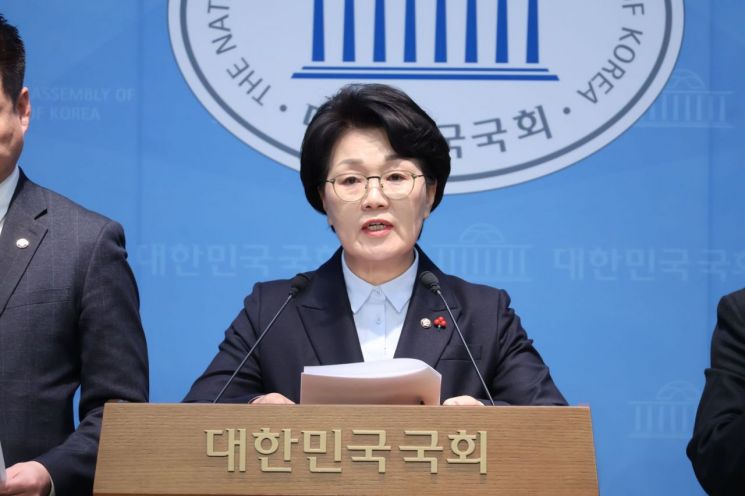
Hyangyeop Kwon, a member of the National Assembly from the Democratic Party of Korea (representing Suncheon, Gwangyang, Gokseong, and Gurye), announced on January 9 that she has sponsored an amendment to the "Conflict of Interest Prevention Act" that would require public officials to disclose to the public any private contracts they enter into with relatives.
Currently, Article 12 of the law defines the "restricted parties for private contracts" as the spouse of the public official, direct ascendants and descendants, direct ascendants and descendants of the spouse (only if living together), ▲ corporations or organizations represented by the public official or these individuals, and corporations or organizations in which the public official or these individuals own a certain percentage of shares or equity ("specially related business entities").
As a result, there have been repeated cases where public officials enter into private contracts with family members or relatives such as siblings or cousins who are not included in the restricted parties. Despite ongoing criticism of preferential treatment among relatives, the current law lacks adequate sanctions.
Accordingly, the proposed amendment expands the scope of "restricted parties for private contracts" to include "relatives" as defined in Article 777 of the Civil Act. If a private contract must be signed for unavoidable reasons, the public official would be required to obtain a written confirmation specifying which category of restricted party the counterparty falls under, and to disclose this information in a publicly accessible manner, such as posting it on a website.
Currently, Article 14 of the Enforcement Decree of the Conflict of Interest Prevention Act requires confirmation of which restricted party the counterparty to a private contract belongs to, but does not impose an obligation to obtain or disclose a written confirmation. The purpose of the amendment is to elevate this requirement to the level of law and institutionalize it as a mandatory procedure.
Hyangyeop Kwon stated, "Making the disclosure of private contracts among relatives mandatory will help fundamentally prevent preferential private contracts," adding, "We must further strengthen transparency in the public sector to meet the expectations of the public."
© The Asia Business Daily(www.asiae.co.kr). All rights reserved.

















