Significant Increase in 2026 Basic Pension Eligibility Threshold
Individuals with Monthly Income up to 4.68 Million Won, Couples up to 7.96 Million Won Also Eligible
Calls for Reform Amid Concerns Over Fiscal Burden
As the eligibility threshold for the Basic Pension rises rapidly each year, even middle-class seniors with substantial earned income are now included among the recipients. With the advent of a super-aged society, the Basic Pension has become a core system for securing income in old age. However, as benefits expand through increased pension amounts and reduced deductions for couples, concerns about fiscal burden are also growing. Since the eligibility threshold is now close to the median income level, some argue that it is necessary to more selectively adjust the pool of recipients.
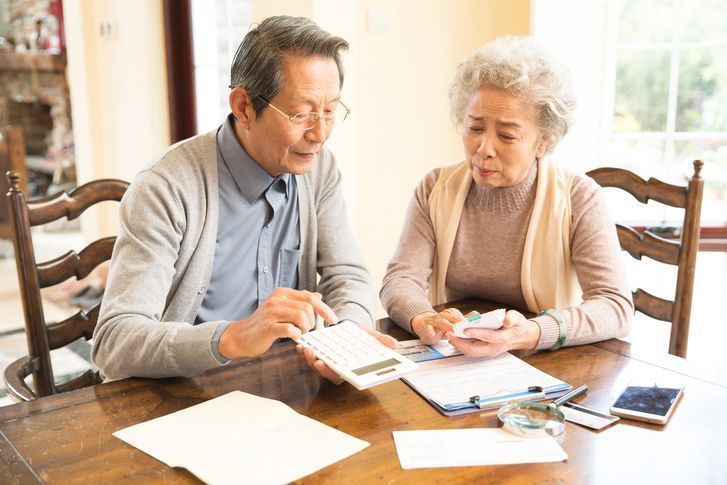
According to the Ministry of Health and Welfare on January 8, the government has set the 2026 Basic Pension eligibility threshold at 2.47 million won per month for single-person households and 3.952 million won per month for couples. This represents an increase of 190,000 won (8.3%) compared to the 2025 threshold of 2.28 million won for single-person households.
Impact of Increased Income and Assets Among the Baby Boomer Generation
The Basic Pension is provided to seniors aged 65 or older whose recognized income falls below the eligibility threshold. The criteria are adjusted each year, reflecting income and asset levels, inflation, and other factors, so that about 70% of all seniors qualify as recipients.
This year’s increase in the eligibility threshold is attributed to the overall growth in income and assets among the elderly. In particular, it is seen as a result of the relatively well-prepared baby boomer generation entering the senior population in earnest. The 2026 single-person household threshold of 2.47 million won amounts to 96.3% of the median income for that year (2.564 million won), meaning that a significant number of seniors with middle-level incomes will be included as recipients.
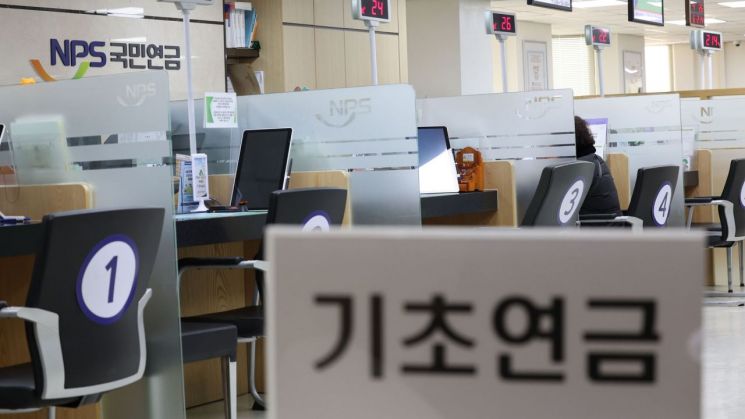 A consultation desk at the Songpa branch of the National Pension Service in Seoul. Photo by Yonhap News
Dual-Income Couples with Annual Income of 95 Million Won Also Eligible
When various deductions are applied, the actual income level eligible for benefits becomes even higher. For earned income, a basic deduction of 1.16 million won is subtracted, and then an additional 30% deduction is applied to the remaining amount. For general assets, up to 135 million won in large cities, 85 million won in small and medium-sized cities, and 72.5 million won in rural areas are deducted, along with a 20 million won deduction from financial assets.
Applying these deductions, a single senior with only earned income and no other assets or income can receive the Basic Pension with a monthly earned income of up to approximately 4.688 million won. For dual-income senior couples, even those with an annual income of 95 million won, or about 7.96 million won per month, can be included among the recipients.
Calls for Urgent Reform to Ensure Sustainability
Among experts, there is a growing call to revise the rigid “bottom 70% of income” standard. Since the eligibility threshold has now reached the median income level, some argue that the system should be reformed to focus more on truly poor seniors while increasing the benefit amount for them.
The government is currently working to gradually increase the monthly Basic Pension from 334,810 won to 400,000 won, focusing on vulnerable groups, and to reduce the “couple deduction” that lowers pension amounts when both spouses receive benefits. However, as the fiscal burden increases due to population aging, concerns about the sustainability of the system are also being raised.
© The Asia Business Daily(www.asiae.co.kr). All rights reserved.


















