First-Ever Special Classification Introduced for Recycling Industry
Targeting 20% Recycling Rate for Core Minerals by 2030
The government is redefining the core mineral recycling industry, shifting it from the traditional domain of "waste management" to that of a "manufacturing industry," and is actively establishing an institutional framework for this sector. In a global environment where supply chain instability and resource weaponization have become commonplace, the government's plan is to foster an industry that transforms domestic waste resources into strategic assets as a new growth engine.
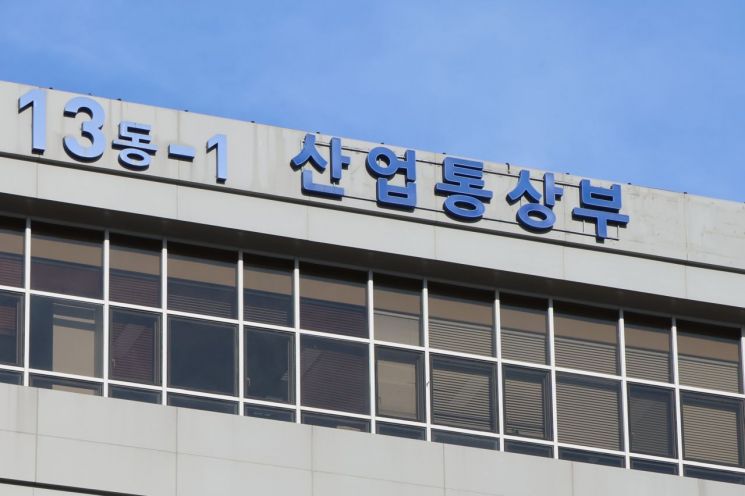
On January 8, the Ministry of Trade, Industry and Energy announced the creation and official notification of a new "Special Classification for the Core Mineral Recycling Industry," which systematizes core mineral recycling as an independent industry. This new classification will be formally incorporated into the national data system and serve as a reference point for future industrial surveys, statistical development, government subsidy programs, regulatory improvements, and other policy initiatives.
Until now, core mineral recycling was dispersed across the standard industrial classifications of manufacturing (C) and waste management and raw material recycling (E). As a result, it was difficult to accurately assess the size of the industry or the status of its companies, and policy support was left in an ambiguous position between "environment" and "resources."
The new system consists of four major categories, ten mid-level categories, and thirty-two subcategories, encompassing the entire process from raw material collection, dismantling, and pre-processing to intermediate and final material manufacturing, equipment and chemical production, distribution and brokerage, as well as research, analysis, and certification services.
This policy shift is rooted in the instability of global core mineral supply chains. With the proliferation of electric vehicles, batteries, semiconductors, and renewable energy, demand for key minerals such as lithium, nickel, cobalt, and rare earth elements is rising rapidly, while supply remains concentrated in a handful of countries. Repeated export controls and geopolitical risks are accelerating the competition to secure these resources.
The government has set a goal to meet 20% of the demand for the top ten strategic core minerals through recycling by 2030. To achieve this, it plans to nurture the recycling industry not as a simple waste management step, but as a "manufacturing value chain" that extends from raw material recovery to the production of intermediate and final materials.
Currently, there are about 200 core mineral recycling companies in Korea. With the exception of a few large corporations, most are small and medium-sized enterprises, and their main focus is on items such as waste batteries and spent catalysts. Without sufficient technological capabilities and capital, it is difficult for these companies to move up the value chain to intermediate and final material production.
The new special classification includes not only lithium, nickel, cobalt, manganese, and graphite but also highly strategic minerals such as rare earth elements, platinum group metals, and tungsten. This is intended to broaden the scope of the recycling industry while encouraging technological advancement. It reflects the understanding that the industry must expand beyond simple recovery and refining into high value-added areas directly linked to the battery, semiconductor, and advanced materials sectors.
This year, the government plans to prioritize companies included in this special classification for the newly launched "Core Mineral Recycling Facility and Equipment Support Program."
Additionally, the government will work with relevant ministries to support the entry of recycling companies into industrial complexes and promote the easing of waste-related regulations. Although recycling processes are highly technology- and capital-intensive, under the current system they are still classified as waste treatment facilities, which has imposed restrictions on site selection and permitting. The government intends to revise relevant laws and regulations to ensure that "recycling as manufacturing" can be implemented in practice.
Yoon Changhyun, Director General for Resource Industry Policy at the Ministry of Trade, Industry and Energy, stated, "The establishment of the special classification for the recycling industry is the first step toward recognizing recycling as a 'core mineral manufacturing' industry. We will actively pursue policies to foster the recycling industry and build an industrial ecosystem to achieve localization of core mineral supply chains."
© The Asia Business Daily(www.asiae.co.kr). All rights reserved.

















