Trump Demands Increased Investment in Production Facilities and R&D from Defense Contractors
Proposes $5 Million Cap on Executive Compensation
Plans to Ban Institutional Investors from Purchasing Single-Family Homes to Stabilize Housing Prices
President Donald Trump of the United States criticized defense industry companies for being passive in investing in weapons production facilities and research and development (R&D), declaring that he would not allow dividend payments or share buybacks until they expand their investments. He also announced plans to prohibit large institutional investors from purchasing single-family homes as a measure to stabilize housing prices.
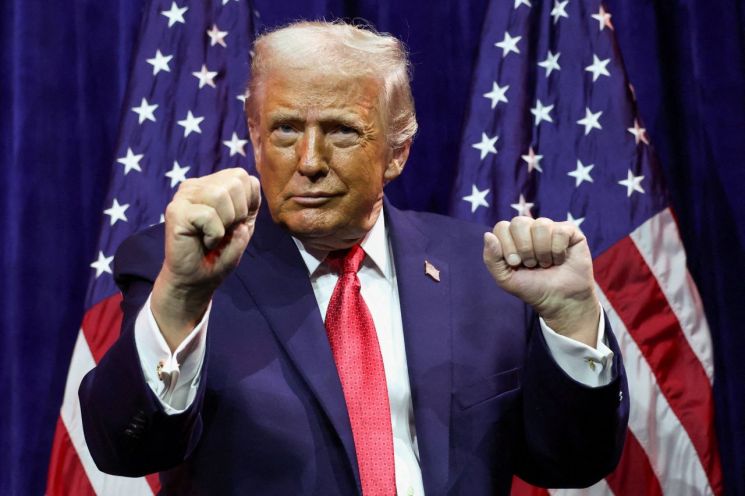
On January 7 (local time), President Trump wrote on his self-created social networking service, Truth Social, "Defense contractors are not producing excellent military equipment fast enough, nor are they maintaining and repairing equipment properly and quickly."
He argued that "until new and modern production plants capable of manufacturing cutting-edge military equipment for the future are built," excessive shareholder-friendly policies should be restricted, and executive compensation at defense contractors should be capped at less than $5 million (approximately 7.25 billion won). According to Bloomberg, Kathy Warden, CEO of Northrop Grumman, received total compensation of $24 million (about 3.48 billion won) in 2024, while Jim Taiclet, CEO of Lockheed Martin, received $23.75 million (about 3.445 billion won).
President Trump stated, "Until these issues are resolved, I will not permit defense contractors to pay dividends or buy back shares, nor will I allow executive salaries and compensation," emphasizing, "Instead of relying on loans from financial institutions or government support, they must cut dividends, share buybacks, and excessive executive compensation, and immediately invest in equipment production." He added, "In the long run, this will benefit both executives and shareholders and will greatly help the United States."
However, President Trump did not specify how he intends to enforce these demands. Bloomberg News, citing sources, reported that the Trump administration is considering an executive order on this matter. In December of last year, President Trump also met with top executives of major defense contractors to pressure them to allocate funds for investment instead of share buybacks, dividends, and executive compensation.
Pressure on defense contractors is also mounting at the administrative level. Secretary of Defense Pete Hegseth criticized in November of last year that the weapons procurement process at defense contractors is excessively slow, with repeated budget overruns and delivery delays. He publicly demanded that defense contractors invest their own capital to increase delivery speed and production volume.
In addition, President Trump hinted at introducing regulations to restrict institutional investors from purchasing homes as a measure to stabilize housing prices.
On Truth Social, he stated, "Due to the record-high inflation caused by former President Joe Biden and the Democratic Party, the American Dream is becoming increasingly out of reach for many, especially young Americans," and added, "I will take immediate action to ban large institutional investors from making additional purchases of single-family homes and urge Congress to legislate this."
President Trump added that he would further discuss this issue, including measures to ease housing and living costs, in his speech at the World Economic Forum (WEF) in Davos, Switzerland, scheduled for two weeks later. According to the Federal Housing Finance Agency (FHFA), U.S. home prices rose by approximately 55% between 2020, when the COVID-19 pandemic began, and 2025.
© The Asia Business Daily(www.asiae.co.kr). All rights reserved.

















