To Be Supplied to Large Supermarkets and Food Ingredient Companies This Month
The government has decided to conduct a pilot import of fresh eggs from the United States this month in preparation for a potential deterioration in domestic egg supply due to the spread of highly pathogenic avian influenza (AI).
According to the Ministry of Agriculture, Food and Rural Affairs on January 7, the Korea Agro-Fisheries & Food Trade Corporation (aT) will import eggs from the United States and supply them to large supermarkets and food ingredient companies that wish to sell them starting at the end of this month. The ministry also announced plans to consider additional imports depending on future supply and demand conditions.
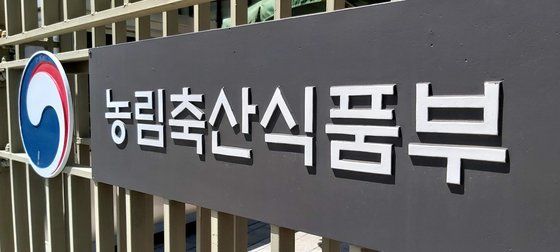
An official from the Ministry of Agriculture, Food and Rural Affairs stated, "Currently, the number of laying hens and egg production are at similar levels to last year, so the egg supply is stable. However, given that 4.32 million laying hens have been culled due to AI as of January 7, and the infectivity of this year's AI is ten times higher than usual, there are concerns about further outbreaks on laying hen farms. Therefore, we plan to pilot import 2.24 million fresh eggs from the United States."
This egg import is a preemptive measure to review response plans for stabilizing supply in the event of additional outbreaks of highly pathogenic AI. It aims to minimize trial and error and supply the domestic market with the needed quantity immediately in case of an emergency.
The imported eggs will undergo sanitary inspection in the exporting country and, before customs clearance in Korea, will be subject to quarantine and sanitary checks. Only eggs that pass these inspections will be cleared for entry. After water washing and disinfection at egg sorting and packaging facilities, the eggs will be distributed to the market.
Unlike domestically produced eggs, which are mostly brown, American eggs are white. Domestic eggs are marked on the shell with a 10-digit code (laying date + farm identification number + rearing environment), while imported eggs are marked with a 5-digit code (laying date + rearing environment) without a farm identification number, making it possible to distinguish imported eggs and check the laying date.
Meanwhile, there have been a total of 33 confirmed cases of highly pathogenic AI during this winter season, from September 12 of last year to January 6 of this year.
© The Asia Business Daily(www.asiae.co.kr). All rights reserved.
![Clutching a Stolen Dior Bag, Saying "I Hate Being Poor but Real"... The Grotesque Con of a "Human Knockoff" [Slate]](https://cwcontent.asiae.co.kr/asiaresize/183/2026021902243444107_1771435474.jpg)
















