If Executive Overreach Is Confirmed,
Shockwaves Expected in Trade Order and U.S. Politics
With the U.S. Supreme Court set to announce a major ruling on January 9 (local time), there is speculation that the fate of "reciprocal tariffs" could be decided.
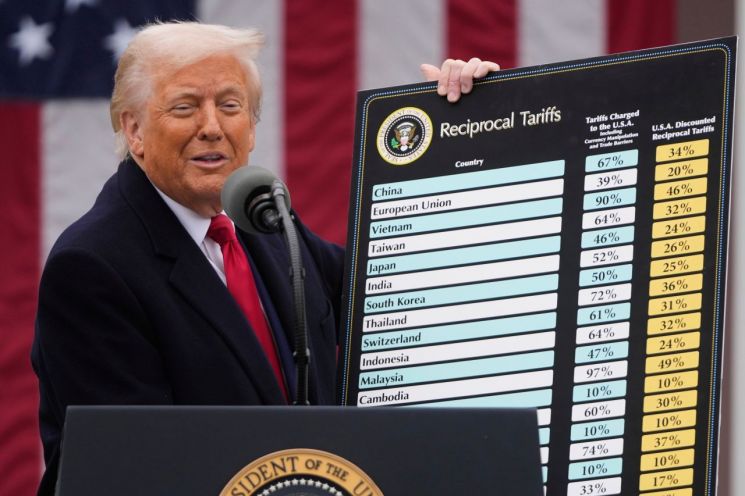
According to Bloomberg and other sources, the Supreme Court announced on January 6 via its website that it may issue decisions on cases currently under review when the justices convene on January 9. However, it did not specify which cases would be decided.
Bloomberg highlighted that the most closely watched case among those being considered by the Supreme Court concerns the legality of reciprocal tariffs. The Court is reviewing whether the tariffs imposed by President Donald Trump-who declared the U.S. trade deficit a national emergency and expanded executive authority to impose them-were lawful. This includes reciprocal tariffs imposed on countries around the world, as well as high tariffs levied on China, Canada, and Mexico to pressure them to curb drug smuggling.
The Supreme Court has been examining whether President Trump acted unlawfully by invoking the International Emergency Economic Powers Act (IEEPA), enacted in 1977, to impose these tariffs under the pretext of a national emergency. Previously, U.S. federal courts at both the district and appellate levels ruled in favor of the plaintiffs, declaring the reciprocal tariffs illegal. In May of last year, the U.S. Court of International Trade determined that the president had abused his authority and invalidated the reciprocal tariffs, and the appellate court upheld this ruling in August.
The current composition of the Supreme Court stands at six conservative justices to three liberal justices, and it has often delivered rulings favorable to the conservative Trump administration. However, there is growing speculation that the legitimacy of the reciprocal tariffs may not be upheld as President Trump wishes. During hearings last November, justices from both the liberal and conservative wings expressed skepticism about the legality of the reciprocal tariffs.
Amid this atmosphere, President Trump has acknowledged the possibility of defeat. On January 2, he stated, "If we lose the ability to impose tariffs on countries that treat us unfairly, it would be a terrible blow to the United States." He later added, "Thanks to tariffs, our country is much more financially and in terms of national security, and is more respected than ever before."
If the Supreme Court ultimately rules the reciprocal tariffs illegal, it is expected to cause turmoil in the global trade order. Additionally, within the United States, the Trump administration's approach of maximizing executive authority across multiple policy areas could come under scrutiny.
Reuters also reported that the Supreme Court is reviewing cases related to voting rights and freedom of expression in LGBTQ conversion therapy counseling, suggesting that the upcoming ruling may not necessarily pertain to reciprocal tariffs.
© The Asia Business Daily(www.asiae.co.kr). All rights reserved.

















