National Research Institute Publishes Investigation Handbook
Field Expertise, Not Just Theory, Compiled
A massive Gwaebul (large Buddhist banner painting), standing 10 meters tall and weighing several hundred kilograms. The secrets behind these masterpieces, uncovered by a decade of dedicated research, have now been compiled into a single book.
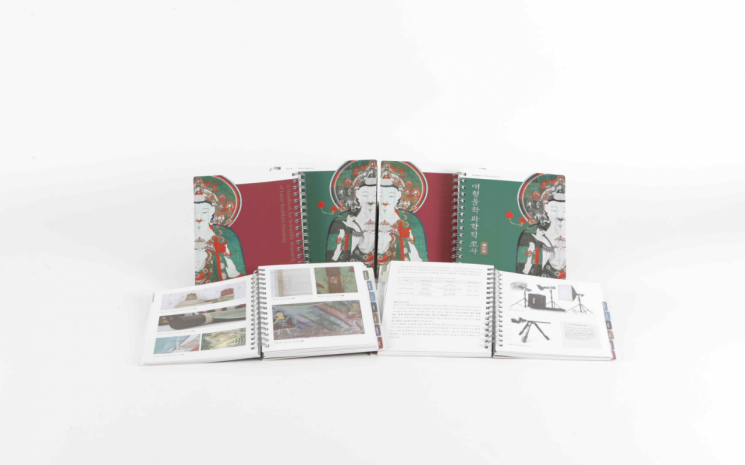
On January 6, the Cultural Heritage Conservation Science Center of the National Research Institute of Cultural Heritage under the National Heritage Administration published the "Handbook for Scientific Investigation of Large Buddhist Paintings." This publication is the culmination of practical know-how accumulated over a thorough examination of sixty-four national treasures, including the Gwaebultang of Cheoneunsa Temple in Gurye, from 2015 to 2024.
This book is based on field experience, not just desk-bound theory. It covers every core process of conservation science, from infrared imaging techniques that reveal underdrawings invisible to the naked eye, to analyses of textiles, pigments, and lining paper, as well as methods for collecting microorganisms that are primary causes of damage. The appendix further enriches the content with photographs of wood species used for the upper and lower supports of Gwaebul paintings and microphotographs of pigments.
The book is also highly accessible. By scanning the QR codes included on each page, readers can instantly access the full detailed investigation reports of each Gwaebul. The center stated, "We expect this handbook to become a new 'compass' for the future of cultural heritage conservation on the ground."
The materials are freely available to anyone on the National Research Institute of Cultural Heritage's "Cultural Heritage Knowledge Link" website.
© The Asia Business Daily(www.asiae.co.kr). All rights reserved.
![Clutching a Stolen Dior Bag, Saying "I Hate Being Poor but Real"... The Grotesque Con of a "Human Knockoff" [Slate]](https://cwcontent.asiae.co.kr/asiaresize/183/2026021902243444107_1771435474.jpg)
















