On January 6, the Korea Corporate Governance Forum criticized, "The essence of the Coupang personal information leak incident is poor governance," adding, "The selfishness of CEO Bom Kim, who is trying to minimize his own legal risks even at the expense of customers and shareholders, is exacerbating the situation." The Forum also called on Coupang's board of directors to immediately form an independent special committee to conduct an objective assessment of the risks posed by CEO Kim and to take necessary action.
In a statement released on the same day, the Governance Forum said, "CEO Kim holds 74% of the voting rights through a 29-fold differential voting rights structure. This grants him unchecked power, making any form of oversight impossible." The Governance Forum is a non-profit incorporated association comprised of over 120 domestic and international members, including financiers, legal professionals, and academics, aiming to advance the capital market through improved corporate governance.
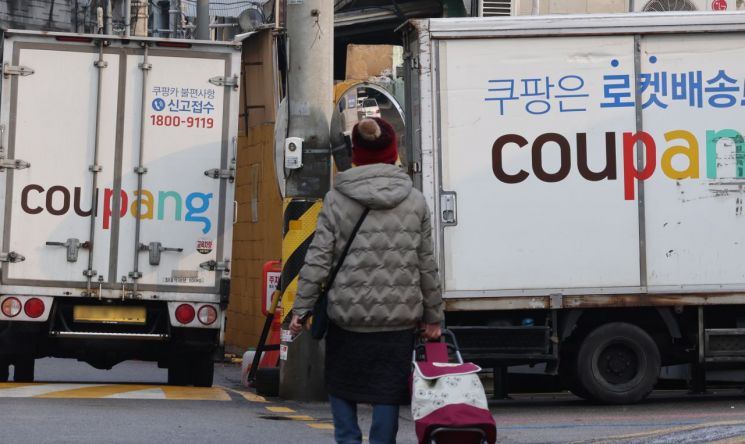
First, the Forum pointed out that after Coupang became aware of the customer data breach on November 18 last year, it first disclosed the incident in Korea on November 29. In the United States, it was not until nearly a month later, on December 16, that the company revealed the breach of 33.7 million individuals' personal information through an unscheduled disclosure. From November 18, when Coupang became aware of the leak, until the day before this statement, the company’s share price had dropped by 19%, wiping out 14 trillion won in market capitalization. This contrasts sharply with the U.S. stock market rising by 1% and the KOSPI increasing by 14% over the same period.
The Forum criticized, "Despite being aware of the leak, Coupang remained silent for nearly a month before belatedly disclosing the information. Even in the December 29 disclosure, the company failed to mention any significant risks from the shareholders' perspective, such as the police raid on its headquarters, a special tax investigation, confrontations with government authorities, or CEO Bom Kim's absence from the National Assembly hearing." The Forum added, "The key man risk associated with CEO Kim is extremely high."
Furthermore, the Forum stated, "Coupang's response disregards the financial losses of ordinary shareholders and the damages suffered by customers, while seeking to protect CEO Kim, who holds 74% of the voting rights through the differential voting rights system." The Forum continued, "The Coupang board of directors, chaired by CEO Kim, has remained consistently silent. As a result of this incident, the information asymmetry between insiders (management, directors, etc.) and outsiders (general shareholders and stakeholders) has deepened, leading to reduced transparency and a decline in corporate value."
In particular, the Forum compared this situation to the Volkswagen diesel scandal in Germany. From September 2015, when the diesel scandal was revealed, Volkswagen's share price plummeted by 58% over six months, erasing 110 trillion won in market capitalization. The share price has still not recovered to its pre-scandal level. The Forum noted, "When hidden negative factors accumulate over a long period and reach a critical point, they are disclosed all at once, resulting in a share price crash." The Forum emphasized that Volkswagen suffered severe damage to customer trust and brand value, in addition to tens of trillions of won in fines, recalls, lawsuits, and criminal convictions for former and current executives.
The Forum also mentioned that such behavior by Coupang's management had been somewhat anticipated by corporate governance experts. According to the governance quality score by ISS, the world's largest proxy advisory firm, Coupang consistently ranks in the bottom 10% compared to other U.S.-listed companies. The company scores poorly in all four categories: shareholder rights, board composition, executive compensation, and accounting and audit oversight.
The Forum pointed out, "One share (Class B) held by CEO Kim carries 29 times the voting rights of a single share (Class A) held by ordinary shareholders." The Forum noted that in the U.S., Meta founder Mark Zuckerberg and Google co-founders Larry Page and Sergey Brin each have 10-fold differential voting rights, while Chairman Kim holds as much as 29-fold. The Forum explained that this unchecked control means that even major shareholders or independent directors cannot impose any real disadvantage on Chairman Kim. The Forum further warned, "If the differential voting rights system advocated by economic organizations is introduced in Korea, a second or third Coupang-like incident could occur in succession due to abuse of the system."
The Forum also raised concerns about the independence of Coupang's board of directors. The board consists of CEO Kim as an inside director and seven independent directors, totaling eight members. The Forum criticized, "With CEO Bom Kim, who holds 74% of the voting rights, also serving as chairman of the board, it is fundamentally impossible to provide any checks and balances on management, resulting in poor governance." The Forum added, "In addition to being CEO, Chairman Kim also holds the official title of Chief Operating Decision Maker (CODM) at the U.S. headquarters." Furthermore, the Forum pointed out, "The seven independent directors receive average annual compensation of 470 million won, yet they have failed to fulfill their fiduciary duties in this incident."
The Forum urged Coupang's directors to immediately visit Korea, meet key stakeholders in person, and listen to expert opinions to uncover the truth behind the incident. Specifically, the Forum called for "Jason Child, the lead independent director, to take the initiative in forming a special committee to objectively assess the incident and announce countermeasures, in order to strengthen fairness." The Forum emphasized, "CEO Kim should be excluded from the special committee, which must be composed of truly independent directors. An objective assessment and action regarding the key man risk of the CEO are necessary."
© The Asia Business Daily(www.asiae.co.kr). All rights reserved.
![Clutching a Stolen Dior Bag, Saying "I Hate Being Poor but Real"... The Grotesque Con of a "Human Knockoff" [Slate]](https://cwcontent.asiae.co.kr/asiaresize/183/2026021902243444107_1771435474.jpg)











