Results of Comparative Review of 20 Advanced Countries
Denmark Administers Only 10 Types of Vaccines
Medical Community Points Out "U.S. and Denmark Have Different Population Sizes"
The Donald Trump administration has significantly reduced the number of diseases for which it recommends vaccination for all children, cutting the list from 17 to 11.
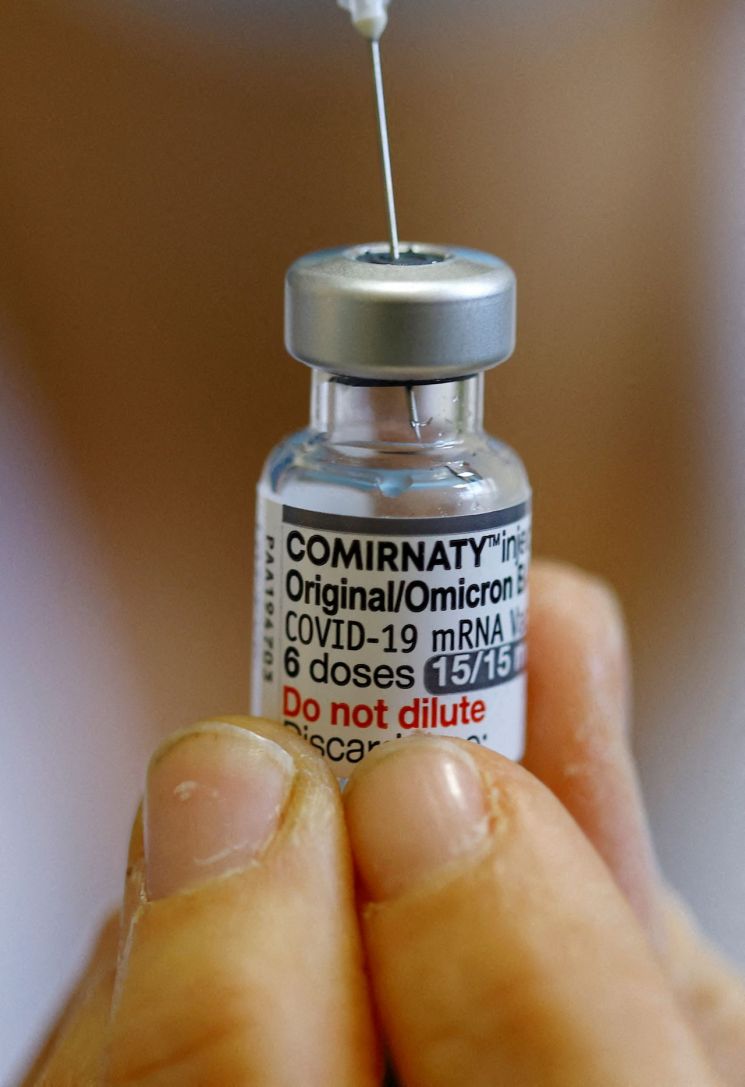
On January 5 (local time), the U.S. Department of Health and Human Services announced in a press release that, "Following President Trump's directive and after reviewing the practices of several advanced countries, we have accepted scientific recommendations for evaluating U.S. childhood vaccination practices and instructed the CDC (Centers for Disease Control and Prevention) to implement them."
Under the new recommendations, the CDC has categorized childhood vaccinations into three groups: vaccinations recommended for all children, vaccinations recommended for specific high-risk groups or populations, and vaccinations based on shared clinical decision-making. Of these, 11 vaccines have been classified as recommended for all children.
The included diseases are measles, mumps, rubella, polio, pertussis (whooping cough), tetanus, diphtheria, Haemophilus influenzae type B (Hib), pneumococcal disease, human papillomavirus (HPV), and varicella (chickenpox).
This marks a reduction of six vaccines from the 17 that the CDC had recommended for all children as of the end of 2024.
Additionally, the CDC has decided to reduce the number of HPV vaccine doses from two to one, based on the determination that a single dose is as effective as two doses.
Vaccines for respiratory syncytial virus (RSV), hepatitis A and B, dengue fever, and meningococcal disease, which were previously recommended for all children, will now be recommended only for specific high-risk groups or populations. Vaccines for rotavirus, COVID-19, and influenza will be classified as vaccinations based on clinical decision-making, meaning they are recommended only at the discretion of a physician.
The U.S. government explained that these recommendations resulted from a comparative review of 20 advanced countries, noting that Denmark, for example, administers vaccines for only 10 diseases.
Robert Kennedy Jr., Secretary of Health and Human Services, stated, "President Trump instructed us to review how other advanced countries protect their children and to take action if there is a better way. After thoroughly reviewing the evidence, we have decided to align the U.S. childhood vaccination schedule with the international consensus, while enhancing transparency."
However, the healthcare community immediately pushed back. Dr. Sean O'Leary of the American Academy of Pediatrics told the Associated Press that countries around the world carefully consider their vaccine recommendations based on disease prevalence and health systems, saying, "You can't simply copy and paste public health policy, but that seems to be exactly what they (the U.S. government) are doing right now." He added, "Literally, the health and lives of children are now at risk."
Bloomberg News pointed out that Denmark, which the U.S. government cited as a comparison, has a population of about 6 million, similar in size to Colorado or Minnesota. The total population of the United States exceeds 340 million.
© The Asia Business Daily(www.asiae.co.kr). All rights reserved.
![Clutching a Stolen Dior Bag, Saying "I Hate Being Poor but Real"... The Grotesque Con of a "Human Knockoff" [Slate]](https://cwcontent.asiae.co.kr/asiaresize/183/2026021902243444107_1771435474.jpg)











