Basic Fare Raised Again After Two Years
Cumulative Increases Add to the Burden on Ordinary Citizens
The basic fare for the New York City subway has been raised to $3 (approximately 4,340 KRW), sparking widespread discontent among citizens. Although the increase is only 10 cents (about 145 KRW), complaints are mounting that the cumulative burden has reached a breaking point after years of gradual fare hikes.
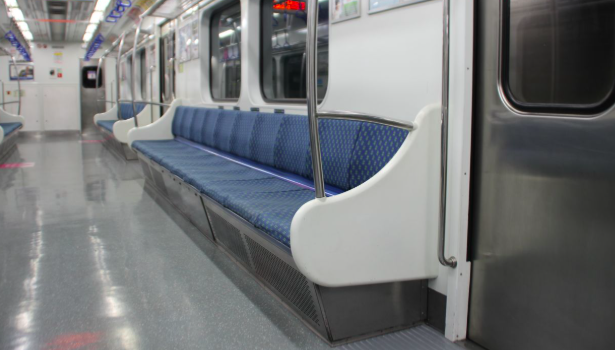
"Even 10 cents adds up"...Citizen Backlash
According to the New York Post and other sources on January 4 (local time), the Metropolitan Transportation Authority (MTA) raised the single subway fare from the previous $2.90 (about 4,190 KRW) to $3 (about 4,340 KRW) starting that day. This marks the first increase in two years since 2023 and is seen as a continuation of the phased fare adjustments that have been ongoing since 2015. Previously, the New York subway fare rose from $2.50 (about 3,620 KRW) to $2.75 (about 3,980 KRW) in 2015, then remained frozen for a long period before being raised to $2.90 in 2023.
Citizen reactions have been cold. Maeon Crampton, a 20-something office worker commuting from Hoboken, New Jersey to Manhattan, said, "Ten cents may not seem like much, but if you use the subway every day, it eventually becomes a burden." Phaidra Phaedid, a 30-something office worker commuting from Chinatown in Manhattan, expressed strong dissatisfaction, saying, "With my current salary, I simply can't afford it anymore."
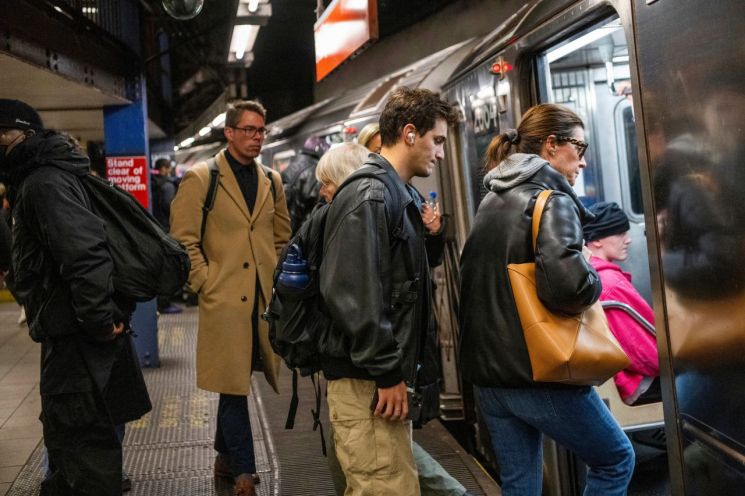
"The Problem Is Not the Fare, but the Operation"...MTA's Finances and Service Under Fire
Some citizens are more concerned about the MTA's financial management and service quality than the fare increase itself. Seana Steel, in her 40s, said, "Before raising fares, they should first review how the existing budget is being used," and pointed out, "Instead of spending money only on improving turnstiles to prevent fare evasion, priority should be given to addressing train delays and improving service quality."
In fact, it is reported that the MTA lost more than $400 million (about 577 billion KRW) last year alone due to fare evasion. While significant resources are being invested in facility upgrades to address this, user dissatisfaction with aging infrastructure and frequent delays remains unresolved. This has fueled the perception that fare hikes are being used to shift the burden onto citizens without addressing structural issues.
Out of Step with 'Relieving Transportation Costs' Pledge
This fare increase has become even more controversial as it comes shortly after the inauguration of Zohran Mamdani, the Mayor of New York City, who pledged to make city buses completely free. Mayor Mamdani has stated that he plans to fund the approximately $700 million (about 1.01 trillion KRW) needed for free buses through tax increases on large corporations and high-income earners.
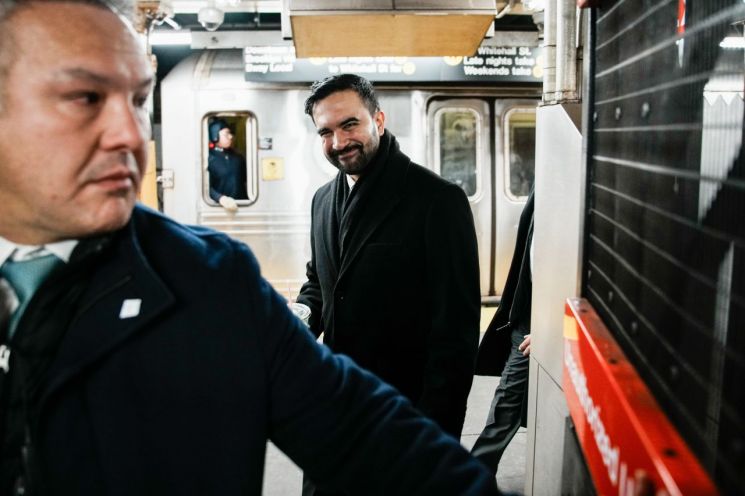 Zohran Mamdani, the Mayor of New York City, is touring the New York City Hall subway station. Photo by AP Yonhap News
There are also calls from political circles to freeze fares. Adem Bunkedeko, a candidate for New York State Comptroller, said, "Prices keep rising, but there is no need to further increase the cost of mobility for ordinary people," adding, "What is needed now is not a fare hike, but a freeze."
© The Asia Business Daily(www.asiae.co.kr). All rights reserved.



















