From Bogwan and Eungwan to the Highest Honor
Minister Choi Hwi-young Visits Funeral Hall to Present Medal
Honoring Dedication to Korean Cinema, Including Screen Quota Protection
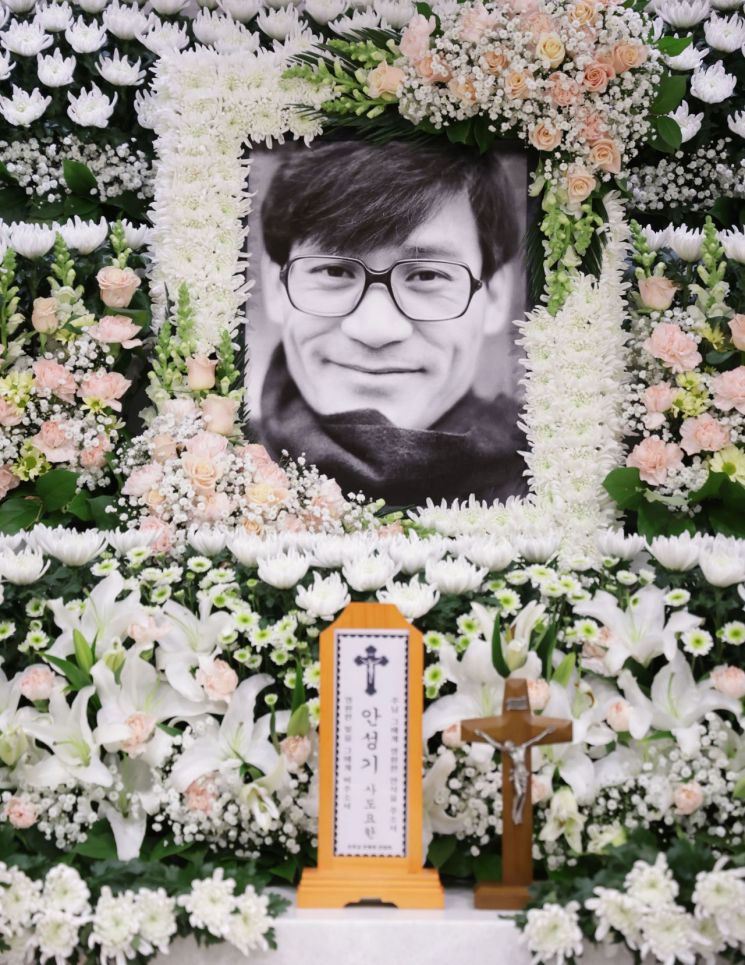
The government has decided to posthumously award the Geumgwan Order of Cultural Merit, the highest honor for artists and cultural figures, to the late "national actor" Ahn Sungki, who passed away on January 5. This is the government's final tribute to his 69-year acting career.
The Ministry of Culture, Sports and Tourism announced on the same day, "We have decided to bestow the Geumgwan Order of Cultural Merit in recognition of the late actor's outstanding contributions to the growth and development of Korean cinema." Minister Choi Hwi-young is scheduled to visit the funeral hall later in the afternoon to personally deliver the medal to the bereaved family.
This is the third Order of Cultural Merit that the late actor received during his lifetime, completing the full set of honors. He was awarded the Bogwan Order of Cultural Merit (third class) in 2005 and the Eungwan Order of Cultural Merit (second class) in 2013. The government decided to confer the first-class medal in recognition of his achievements in expanding the scope of the film industry, spanning the early days, the period of growth, and the renaissance of Korean cinema.
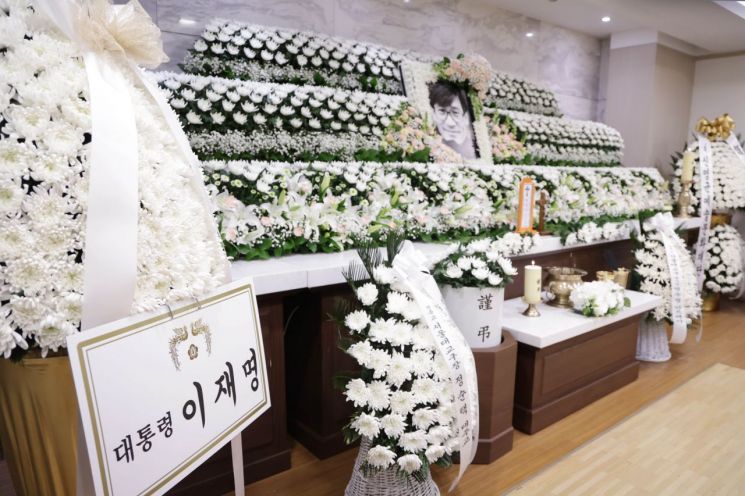
The late actor made his debut in 1957 with the film "Twilight Train" and went on to appear in more than 130 works throughout his life. He delivered performances that resonated across generations in masterpieces such as "The Windy But Pleasant Day," "Whale Hunting," "Two Cops," and "Nowhere to Hide." In 2003, with the film "Silmido," he ushered in a new era in Korean cinema by attracting over 10 million viewers for the first time in history, driving explosive growth in the industry.
His dedication extended beyond the screen. He served as co-chairman of the Emergency Committee for the Protection of Screen Quotas and as deputy executive director of the Busan International Film Festival, playing a leading role in establishing the institutional foundations of Korean cinema. As chairman of the Shin Young-kyun Arts and Culture Foundation, he was also committed to nurturing younger generations, and in recognition of these contributions, he was elected as a member of the National Academy of Arts of the Republic of Korea in 2024.
© The Asia Business Daily(www.asiae.co.kr). All rights reserved.
![Clutching a Stolen Dior Bag, Saying "I Hate Being Poor but Real"... The Grotesque Con of a "Human Knockoff" [Slate]](https://cwcontent.asiae.co.kr/asiaresize/183/2026021902243444107_1771435474.jpg)












