National Health Insurance Service and World Bank Joint Study Published in International Journal
83% of Costs Covered by National Health Insurance Fund
An analysis has found that South Korea's National Health Insurance medical expenditures due to direct and indirect smoking have reached 40.7 trillion won over the past 11 years.
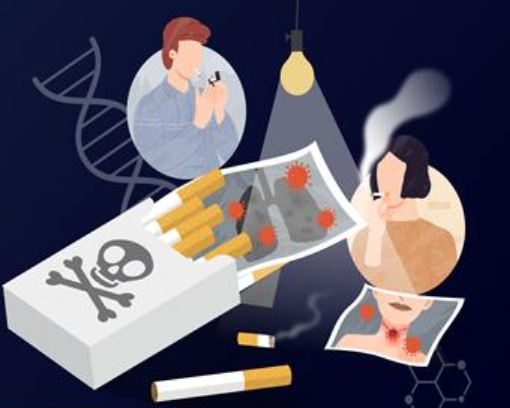
The National Health Insurance Service's Health Insurance Research Institute announced on the 5th that, in collaboration with the World Bank, it conducted a study on the scale of health insurance expenditures caused by smoking and published the results in the international journal 'The Lancet Regional Health - Western Pacific.'
This study estimated the National Health Insurance medical expenditures attributable to direct and indirect smoking by applying the Global Burden of Disease research methodology.
According to the study, the smoking-related medical expenses for last year alone were estimated at approximately 4.6 trillion won, of which about 82.5% was covered by the National Health Insurance fund. This result demonstrates that the harms of smoking extend beyond individual health issues and impose a significant burden on the health insurance system as well.
Both direct and indirect smoking were found to impose a substantial burden on the National Health Insurance fund. In particular, among women, about 48% of smoking-related medical expenses were attributed to indirect smoking, confirming that the damage from smoking spreads not only to smokers themselves but also to surrounding non-smokers.
By age group, around 80.7% of smoking-related medical expenses occurred among those aged 50 to 79, indicating that past exposure to smoking continues to impact the health insurance fund over a long period.
From 2014 to 2024, the cumulative medical expenses due to smoking amounted to 40.7 trillion won (approximately 29.86 billion dollars). By disease group, cancer-related medical expenses accounted for 14 trillion won (about 10.52 billion dollars), representing 35.2% of the total, with lung cancer making up the largest share at 7.9 trillion won (about 5.8 billion dollars).
In particular, medical expenses related to lung cancer more than doubled, rising from 435.7 billion won (about 320 million dollars) in 2014 to 998.5 billion won (about 730 million dollars) in 2024. This is interpreted as reflecting the characteristics of the disease, which requires prolonged and repeated high-cost cancer treatments.
The National Health Insurance Service explained that this study confirms that direct and indirect smoking have had a significant and sustained impact on the health insurance fund over a long period, and specifically shows that medical expenses due to smoking are concentrated in severe diseases such as lung cancer.
Jang Sungin, Director of the Health Insurance Research Institute, emphasized, "With the appellate verdict on the tobacco lawsuit scheduled for the 15th, we expect that jointly proving the scale of health insurance damages caused by smoking with the World Bank will serve as an important scientific basis for future rulings."
© The Asia Business Daily(www.asiae.co.kr). All rights reserved.
![Clutching a Stolen Dior Bag, Saying "I Hate Being Poor but Real"... The Grotesque Con of a "Human Knockoff" [Slate]](https://cwcontent.asiae.co.kr/asiaresize/183/2026021902243444107_1771435474.jpg)

















