Upper Class Economic Outlook Plunges 30 Points in a Month
High Exchange Rate and Global Uncertainty Weigh on Sentiment
As the domestic economy continues to slow, the economic outlook of high-income and asset-owning groups-previously considered relatively resilient-has deteriorated sharply within just one month. Analysts point to the combined effects of a surging exchange rate and heightened global economic uncertainty, which have even turned the upper class pessimistic. There are growing concerns that this contraction in sentiment among the upper class could impact overall consumption and investment, thereby hindering economic recovery.
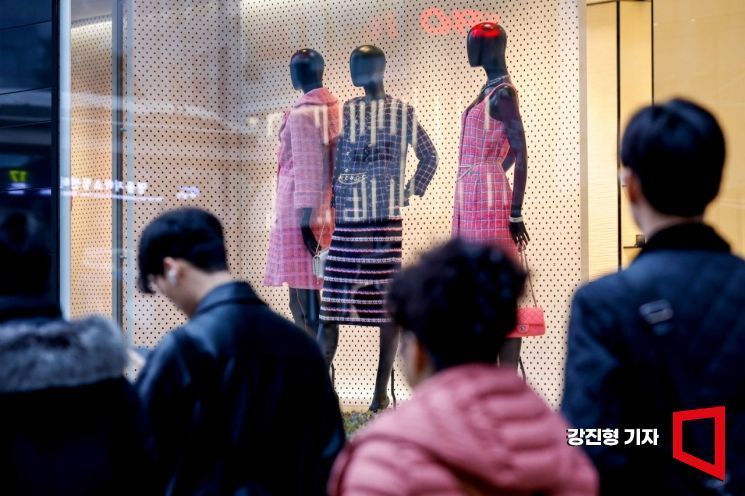 Clothes displayed in a department store window in Jung-gu, Seoul. This photo is for illustrative purposes and is unrelated to the article content.
‘Economic Pessimism’ Spreads to the Upper Class... Outlook Reverses in a Month
According to an economic outlook survey by Gallup Korea released on January 4, the economic outlook net index (the percentage of optimistic responses minus pessimistic responses) among the 'upper' and 'upper-middle' living standard groups fell to minus (-)16 last month. This represents a sharp 30-point drop from 14 the previous month-the largest decline among all groups. The previously dominant optimism about the economy was completely reversed in a short period.
Notably, the proportion of optimistic responses among the 'upper' living standard group was 31%, virtually indistinguishable from the 'middle' (30%) and 'lower' (29%) groups. In contrast, the proportion of pessimistic responses was highest among the upper group at 47%, about 10 percentage points higher than the middle and lower groups. This is interpreted as a sign that the upper class is no longer an 'exceptional zone' in terms of economic sentiment.
‘Psychological Defense Line’ Shaken by Exchange Rate Shock
Experts attribute this shift to concerns about asset values and the financial environment. They explain that groups with a higher proportion of financial and overseas assets are inevitably more sensitive to exchange rate fluctuations and global financial market trends.
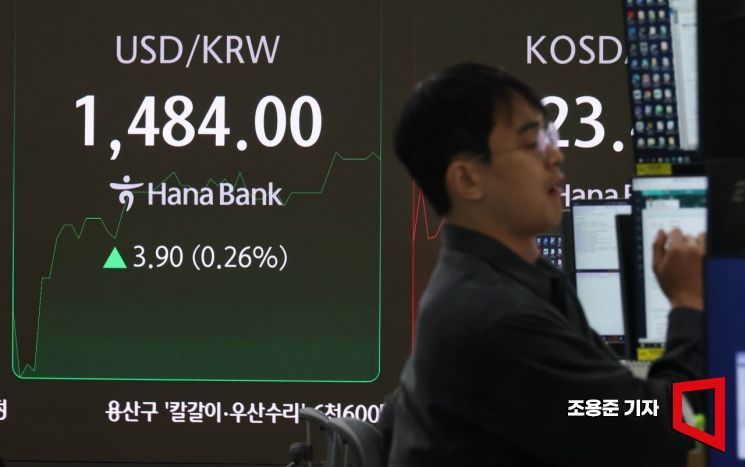 On the 23rd of last month, the exchange rate of KRW/USD and the KOSPI index were displayed on the status board of the dealing room at Hana Bank in Jung-gu, Seoul.
The sharp rise in the KRW/USD exchange rate since the end of the year is cited as a key factor triggering the deterioration in sentiment. The recent exchange rate has climbed to levels exceeding the annual average during the foreign exchange crisis, significantly heightening perceived anxiety. Additionally, adjustments in expectations for assets related to artificial intelligence (AI) and growing caution toward risk assets overall have compounded uncertainty about the direction of asset markets.
Upper Class Contraction Raises Concerns for Domestic Demand Recovery
Experts are particularly wary of the ripple effects stemming from this shift in upper-class sentiment. With middle- and lower-income groups already nearing their limits, if even those with spending power close their wallets, the momentum for domestic demand recovery could weaken significantly.
Market participants identify the spread of the perception that 'things could get even worse' as the biggest risk factor. On the policy front, there is increasing consensus that efforts to reduce uncertainty-through both stabilizing exchange rate volatility and providing consistent, predictable policy signals-are essential to restoring sentiment.
© The Asia Business Daily(www.asiae.co.kr). All rights reserved.
![Clutching a Stolen Dior Bag, Saying "I Hate Being Poor but Real"... The Grotesque Con of a "Human Knockoff" [Slate]](https://cwcontent.asiae.co.kr/asiaresize/183/2026021902243444107_1771435474.jpg)

















