Retail Prices Up 16% Year-on-Year, Wholesale Prices Soar 40%
Surge in Imported Strawberries for Processing Leads to Mass Discarding at Production Sites
Despite strawberry prices continuing to soar due to increased demand at the end and beginning of the year, there have been repeated cases of harvested strawberries being discarded at production sites. While consumers are experiencing rising prices, strawberries harvested in rural areas are being thrown away without fetching proper value, once again highlighting the disconnect in the distribution structure.
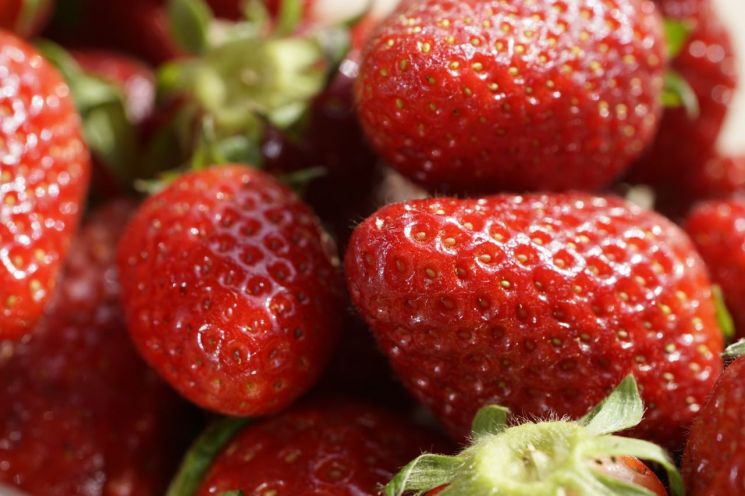
According to the Korea Agro-Fisheries & Food Trade Corporation (aT) Agricultural Products Distribution Information (KAMIS) as of January 2, the retail price of strawberries was recorded at 2,820 won per 100g. This is approximately 16% higher than last year's average (2,430 won) and about 24% higher than the average for previous years (2,275 won). On the same day, the wholesale price for 2kg of strawberries was 45,980 won, about 36% higher than last year and over 40% higher than the average for previous years.
Industry experts analyze that the increase in demand for strawberries used as cake decorations during the year-end and New Year period, as well as the expansion of strawberry dessert sales in cafes and bakeries, have driven up prices. As a result, prices for mid-grade strawberries have risen to the level of premium products.
However, the situation at production sites is diverging from consumer price trends. According to a KBS report, there have been ongoing cases in rural areas where harvested strawberries are simply discarded. As fixed contract volumes are not being delivered to processing companies such as bakeries and beverage makers, vendors are throwing away hundreds of kilograms of strawberries daily, and more farmers are giving up shipments and plowing their fields under.
This phenomenon is attributed to the rapid increase in the market share of imported frozen strawberries in the processing market. The price of imported frozen strawberries for processing is only about half that of domestically produced strawberries. Last year, imports of frozen strawberries for processing exceeded 16,000 tons, an increase of more than 30% compared to the previous year, rapidly encroaching on the processing market.
Experts also point out that the cost structure is a weakness for domestic strawberries. The Korea Rural Economic Institute analyzed that the burden of production costs, such as nutrient solution expenses and labor costs, undermines the price competitiveness of domestic strawberries. In a structure where it is difficult to narrow the price gap with imported products, the vicious cycle of "strawberries being discarded immediately after harvest" is repeating itself in production areas.
Ultimately, as consumers feel burdened by rising strawberry prices and farmers are forced to bear losses due to unsold produce, there are growing calls for improvements to the overall distribution structure.
© The Asia Business Daily(www.asiae.co.kr). All rights reserved.
![Clutching a Stolen Dior Bag, Saying "I Hate Being Poor but Real"... The Grotesque Con of a "Human Knockoff" [Slate]](https://cwcontent.asiae.co.kr/asiaresize/183/2026021902243444107_1771435474.jpg)
















