Simultaneous Increase in Salary- and Income-Based Premium Caps
Higher Burden for High-Income Earners... A Move to Strengthen Fiscal Stability
With the start of the new year in 2026, the upper limit on health insurance premiums that ultra-high-income employees must pay has been raised. In particular, for those with not only high salaries but also additional income such as interest, dividends, or rental income, health insurance premiums are now levied separately on both salary and side income, opening up the possibility that the monthly payment could exceed 9 million won. This reform is interpreted as an effort to enhance the fairness and sustainability of health insurance funding by reflecting the payment ability of high-income individuals.

Ultra-High-Income Employees: Personal Burden Alone Reaches 4.59 Million Won Per Month
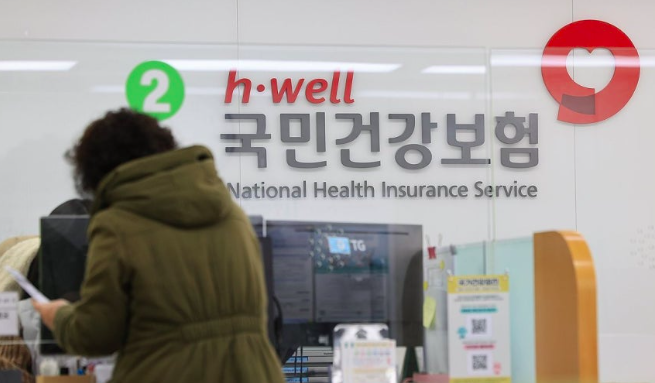
According to the Ministry of Health and Welfare on the 5th, the revised notice on the "Upper and Lower Limits of Monthly Health Insurance Premiums" has come into full effect this year, resulting in increased social contributions for the ultra-high-income group compared to last year. The core of the revision is the change in the upper limit of the "salary-based monthly premium" imposed on employees’ salaries.
From January this year, the upper limit for the salary-based monthly premium for workplace subscribers has been raised from 9,008,340 won to 9,183,480 won. Since the principle is that health insurance premiums are split equally between the employee and the company, the actual upper limit paid by the ultra-high-income employee from their salary has increased from 4,504,170 won per month last year to 4,591,740 won this year. As a result, these individuals will pay about 87,570 won more per month and approximately 1.05 million won more annually compared to last year.
The More Non-Salary Income, the Greater the Burden
The upper limit for the "income-based monthly premium," which is separately imposed on employees with significant non-salary income such as interest, dividends, or rental income, has also been adjusted to 4,591,740 won per month starting this year. Accordingly, a high-income employee who reaches the upper limit solely from non-salary income will have to pay 4,591,740 won per month under this category alone. If both salary and side income reach their respective upper limits, the combined personal health insurance premium can exceed 9 million won per month.
This adjustment to the upper limit is intended to ensure that premiums do not rise indefinitely regardless of income, while also reflecting recent changes in salary levels to maintain fairness. At the same time, the lower limit for premiums, designed to protect the socially vulnerable, has been slightly raised: the minimum monthly premium for both workplace and regional subscribers increased by about 380 won, from 19,780 won last year to 20,160 won this year.
While most ordinary employees may not feel a significant impact from this measure, it is meaningful in that it maintains a premium system appropriate to the payment ability of high-income earners, thereby enhancing the stability of health insurance finances and the sustainability of the system.
© The Asia Business Daily(www.asiae.co.kr). All rights reserved.
![User Who Sold Erroneously Deposited Bitcoins to Repay Debt and Fund Entertainment... What Did the Supreme Court Decide in 2021? [Legal Issue Check]](https://cwcontent.asiae.co.kr/asiaresize/183/2026020910431234020_1770601391.png)

















