Optimal Timing for Administrative Integration under the Lee Jaemyung Administration
Toward Region-Led Growth Beyond Seoul-Centric Dominance
Urgent Need to Address Population Issues and Achieve Balanced Regional Development
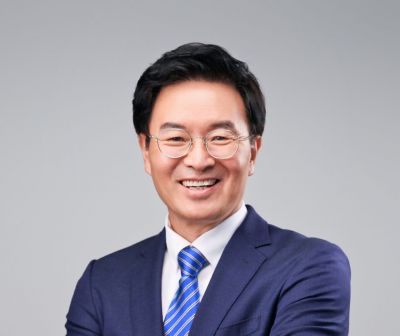
Jinwook Jung, a National Assembly member from the Democratic Party of Korea representing Gwangju Dongnam-gap, stated, "The administrative integration of Gwangju and Jeonnam has become an urgent task that can no longer be delayed," adding, "In the upcoming local elections in June, not only should administrative integration be pursued, but there should also be an election for a unified head of the two local governments."
On January 4, Assemblyman Jung issued a statement emphasizing, "Administrative integration between metropolitan governments is the most practical and powerful solution for regions to create their own growth engines," and added, "Only by increasing the population and economic scale through administrative integration and expanding the scope of policy decision-making units can we achieve region-led growth that can compete on equal footing with the Seoul metropolitan area."
He continued, "Through administrative integration, Gwangju and Jeonnam can comprehensively design and promote industries such as AI, future mobility, agrivoltaics, offshore wind power, energy, advanced manufacturing, and agricultural bio-industries at the megacity level," explaining, "This will serve as a concrete strategy to enhance regional competitiveness by attracting national projects and securing government budgets."
In line with this intention, Assemblyman Jung participated as a steering committee member of the 'Naju Citizens' Committee for Attracting the Artificial Sun Research Facility,' hosted by Naju City, and personally attended the launch ceremony held in the Innovation City on November 4 last year.
Assemblyman Jung identified 'real estate,' 'regional extinction,' and 'population decline' as the biggest issues facing South Korea, further explaining that many of these problems are side effects caused by the overconcentration in the Seoul metropolitan area.
He stressed, "Only by achieving region-led growth through administrative integration between metropolitan governments can we address population issues, achieve balanced regional development, and create new growth engines to revitalize South Korea," adding, "Ultimately, this will lead to an improved quality of life for local residents."
Assemblyman Jung also stated, "The five-pole, three-special national balanced development strategy of the Lee Jaemyung government based on popular sovereignty will serve as a new hope for Gwangju and Jeonnam," and predicted, "In particular, the Lee Jaemyung administration is strongly supporting administrative integration by planning to grant integrated cities and provinces the same status and organizational privileges as Seoul, as well as bold incentives such as additional allocation of local grants and priority relocation of public institutions."
He continued, "Now is the optimal time for administrative integration, as Gwangju Metropolitan City and Jeollanam-do are actively responding by establishing a tentatively named 'Gwangju-Jeonnam Integration Promotion Council,'" and argued, "A systematic integration strategy should be developed to secure groundbreaking support that goes beyond existing incentives such as additional allocation of local grants and priority relocation of public institutions currently under government review."
Assemblyman Jung concluded, "This local election should be one that selects the unified head of Gwangju and Jeonnam," cautioning, "If this is delayed and separate heads are elected again in Gwangju and Jeonnam, there is a high risk that the process will fall apart after repeated negotiations and discussions, so we must act decisively while the opportunity is ripe."
© The Asia Business Daily(www.asiae.co.kr). All rights reserved.