From the K-Vietnam Valley to the Healing Industry
Eighth-Term Promises to Be Proven Through Tangible Results This Year
Bonghwa County has designated 2026 not as a "year of planning" but as a "year of achievement," focusing its administrative capabilities on completing the major pending projects it has been pursuing.
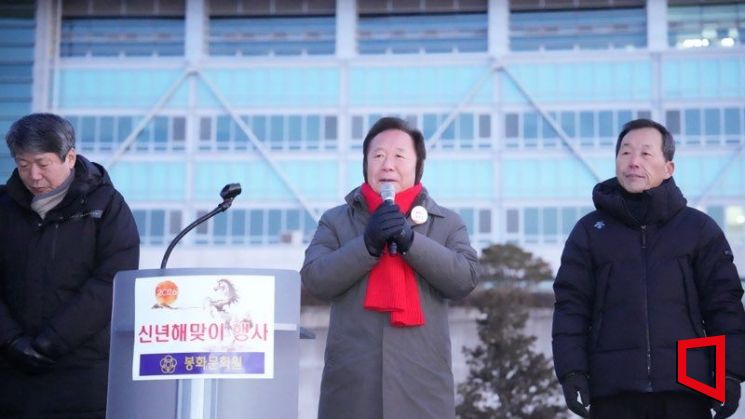 Park Hyunguk, Governor of Bonghwa County, stated, "The year 2026 will be a year of determination and success, a time when the efforts made so far will be proven through results," adding, "We will prepare for both completion and leap forward to further strengthen the future of Bonghwa."
In its New Year's county administration direction, announced to mark the arrival of the Byeongo Year, Bonghwa County stated, "Rather than listing new ideas, we will take responsibility for completing what we have started, ensuring that the results are tangible for our residents," clearly emphasizing a "completion-oriented administration." This comes from the recognition that, having reached the midpoint of the 8th popularly elected term, it is time to deliver on the promises made with concrete results.
◆ K-Vietnam Valley, Bringing Bonghwa to the Global Stage
This year, Bonghwa County will focus on global exchanges and the convergence of industry and tourism as a key strategy. In particular, the K-Vietnam Valley is Bonghwa's core future project, combining advanced industries, cultural tourism, and international exchange. The county is accelerating efforts to secure regulatory exemptions and incentives through designation as a specialized regional development zone.
Based on the private investment demand confirmed through Korea-Vietnam friendship exchanges, the county plans to gradually realize projects such as the development of hotels and resorts and the establishment of health check-up centers in partnership with major domestic hospitals. Through these efforts, Bonghwa aims to grow into an "exchange-oriented global city."
◆ Making Agriculture Stronger and More Sustainable
In the agricultural sector, the region's foundational industry, Bonghwa will enhance competitiveness by expanding smart farms and shifting to high value-added crops. The county will address labor shortages by increasing the introduction of foreign workers and improving their working conditions, while also building a sustainable agricultural structure through the expansion of joint farming, double cropping, and fostering young farmers.
Efforts will also be made to develop subtropical crops in response to abnormal weather, expand agricultural water infrastructure, and promote joint livestock manure resource projects, thereby creating a disaster-responsive and eco-friendly agricultural environment.
◆ From "Passing-Through Tourism" to "Stay-Over Tourism"
The core of Bonghwa's tourism policy is to transform the structure to increase both the length of stay and spending by visitors. The county will enhance its signature seasonal festivals, such as the Sweetfish, Pine Mushroom, and Santa Festivals, and strengthen the foundation for stay-over tourism by developing unique accommodations and adventure and leisure facilities.
Plans include expanding nature-friendly tourism infrastructure such as the Santa Village Flower Garden and ecological parks, as well as improving the operation of existing amusement facilities and theme parks. The goal is to create a virtuous cycle in which tourism drives the local economy. Systematic expansion of cultural and sports infrastructure will also begin this year in preparation for hosting the Gyeongbuk Provincial Sports Festival in 2027.
◆ Welfare for All: From Care to Youth and Children
In the welfare sector, Bonghwa County will strengthen support for vulnerable groups, such as the elderly and people with disabilities, through an integrated care system. The county aims to reduce the burden on residents by expanding practical care services, such as increased support for hospital in-patient caregivers.
Additional initiatives will include tailored support for multicultural families, women's empowerment programs, and youth voucher programs. Creating a safe and happy environment for children to grow, based on the county's child-friendly city certification, has also been identified as a key administrative priority.
◆ Forest and Healing Industries: Bonghwa's New Growth Engine
Bonghwa County is also accelerating its future strategy that combines forestry and healing. By attracting the National Forest Safety Institute, which is part of the presidential pledge, the county aims to become a hub for forestry education and research, while also pursuing the establishment of the Baekdudaegan Humanities and Forestry Convergence Graduate School.
Additionally, Bonghwa will develop a "Bonghwa-style Healing Industry Mid-to-Long-Term Vision," including the creation of healing gardens and healing roads, and the operation of meditation and therapy programs, with the goal of becoming a leading inland healing industry city.
◆ All-Out Efforts for Balanced Development and Improved Living Conditions
Bonghwa County will complete projects focused on town centers and basic living hubs, as well as urban regeneration projects, to reduce regional disparities. The county also plans to improve living conditions by expanding residential infrastructure to accommodate more than 600 households, including attracting private apartment developments.
The county will introduce a residential and cultural convergence model using the Ministry of Land, Infrastructure and Transport's Regional Vitality Town initiative, and plans to continuously revitalize the local economy through environmental improvements in agro-industrial complexes, expansion of renewable energy infrastructure, and the designation of autonomous commercial zones.
The county stated, "2026 will be a year of Yujigyeongseong (Determined Will Leads to Success), a time when the efforts made so far will be proven by results," and added, "We will prepare for both completion and leap forward simultaneously to further strengthen the future of Bonghwa."
© The Asia Business Daily(www.asiae.co.kr). All rights reserved.

![Clutching a Stolen Dior Bag, Saying "I Hate Being Poor but Real"... The Grotesque Con of a "Human Knockoff" [Slate]](https://cwcontent.asiae.co.kr/asiaresize/183/2026021902243444107_1771435474.jpg)















