Focusing R&D on Strengthening Research Institutes and Cultivating Talent
Strategic Investment from Space Risk Response to Core Mission Technologies
The Korea Aerospace Administration has designated the structural advancement of the research and development (R&D) ecosystem as its top policy priority for 2026. The agency will invest a total of 949.5 billion won to provide comprehensive support across the entire cycle, including strengthening the capabilities of directly affiliated research institutes, fostering specialized space professionals, and establishing a national response system for space-related risks.
On January 5, the Korea Aerospace Administration announced that it had finalized the "2026 Comprehensive Implementation Plan for R&D Projects." This plan covers 53 specific projects, representing an increase of 41 billion won compared to 2025 (908.6 billion won). The figure excludes basic operating expenses and non-R&D projects from the agency's total budget of 1.1201 trillion won.
 Sunrise at the 'Space Launch Observatory' in Goheung County, Jeonnam. Photo by The Asia Business Daily Database
Intensifying Competition in Space Security and Industry... Complete Overhaul of R&D Strategy
The agency cited the intensifying strategic competition over space security and resource utilization, as well as rapid changes in the aerospace industry environment driven by innovation in air traffic and services, as the background for this plan. The global space economy is shifting from infrastructure-centered to industry- and application-centered, with projections of nearly threefold growth by 2035. Technological innovation is also progressing rapidly, led by the private sector.
Accordingly, the Korea Aerospace Administration plans to secure competitiveness through self-reliance in core technologies and the convergence of science and technology, and to implement a comprehensive R&D strategy that links research and development, talent cultivation, and policy coordination.
In the field of aerospace policy and industry, the agency will diversify the research portfolios of directly affiliated institutes such as the Korea Aerospace Research Institute and the Korea Astronomy and Space Science Institute, and foster a researcher-centered environment to strengthen mission execution capabilities. A total of 191.3 billion won will be allocated for research operations and facility support for these institutes.
The agency also plans to systematically secure PhD-level advanced personnel and convergent innovation talent through the operation of the Future Space Education Center, the cultivation of New Space leaders, and field-linked projects based on industry-academia cooperation. In addition, it will establish an optical surveillance system and an integrated space risk response system, and create an end-to-end support framework from technology accumulation to commercialization through the Space-K BIG Project and the National Space Situational Awareness System (K-SSA).
Focusing on Core Missions: Launch Vehicles, Satellites, and Orbital Transportation
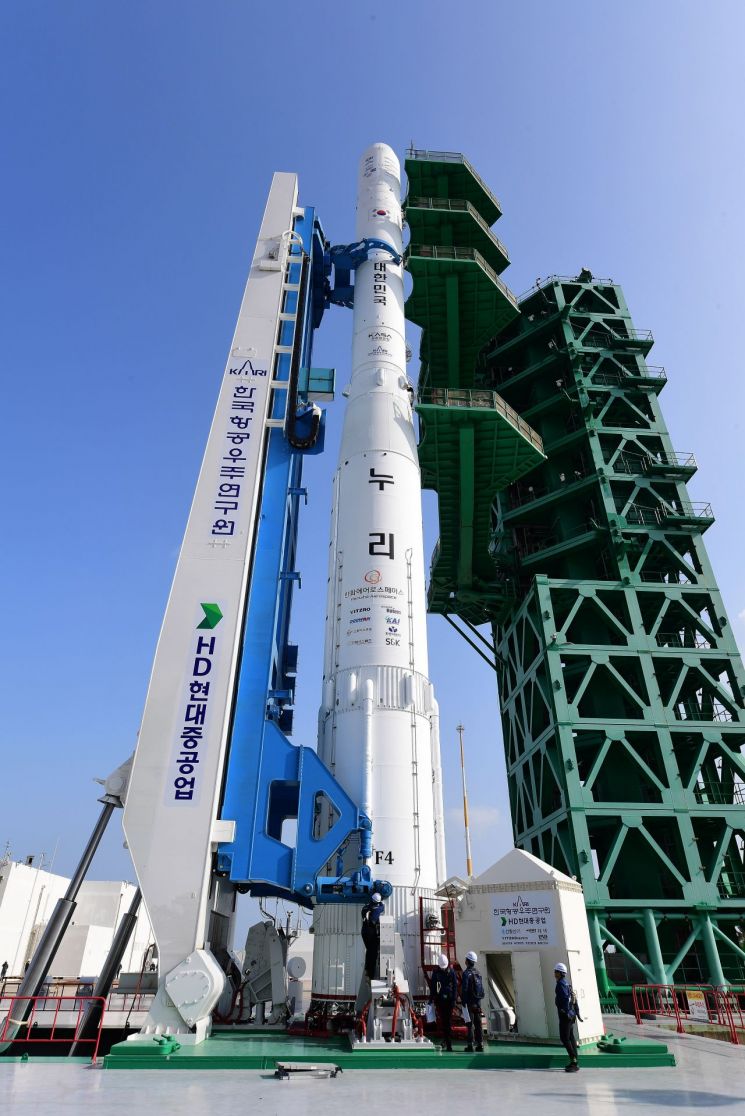
The Aerospace Mission Headquarters will focus on achieving self-reliance in launch vehicle technology and laying the foundation for a private sector-led space economy. By repeatedly launching the Nuri rocket, the agency aims to enhance reliability and transfer technology to the private sector. At the same time, it will develop small and next-generation launch vehicles to meet the demand for launching large satellites and space exploration. The development of a flight model for orbital transfer vehicles, aimed at inter-orbital movement and mission diversification, will also be newly pursued.
In the satellite sector, the agency will secure high-frequency Earth observation capabilities through ultra-small and cluster satellite systems, and lay the groundwork for entering the global market and eliminating communication blind spots by developing public composite communication satellites and low Earth orbit satellite communication systems. The development of the Korean Positioning System (KPS), ultra-high-resolution optical and radar satellites, and weather and space weather satellites will also continue.
The Korea Aerospace Administration plans to secure independent lunar landing and surface exploration capabilities through international joint research involving private lunar landers and the second phase of lunar exploration. It will also support the creation of a new space industry and a technology commercialization and startup ecosystem through cooperation on the international Square Kilometer Array (SKA) radio telescope, a space environment manufacturing platform, and projects to promote the practical application of space technology.
In the eco-friendly and intelligent aviation sector, the agency will work to strengthen the competitiveness of future air mobility and the aviation industry by developing turbofan aircraft engines, electric and turbine hybrid propulsion systems, stratospheric drones, and aviation AI safety technologies.
The Korea Aerospace Administration will organically link policy and industrial foundations with core mission technologies to enhance technological self-reliance and industrial competitiveness in aerospace, and will accelerate the transition to a private sector-led space economy. The schedule for new projects and tasks under this implementation plan will be released on the agency's website on January 5.
© The Asia Business Daily(www.asiae.co.kr). All rights reserved.


















